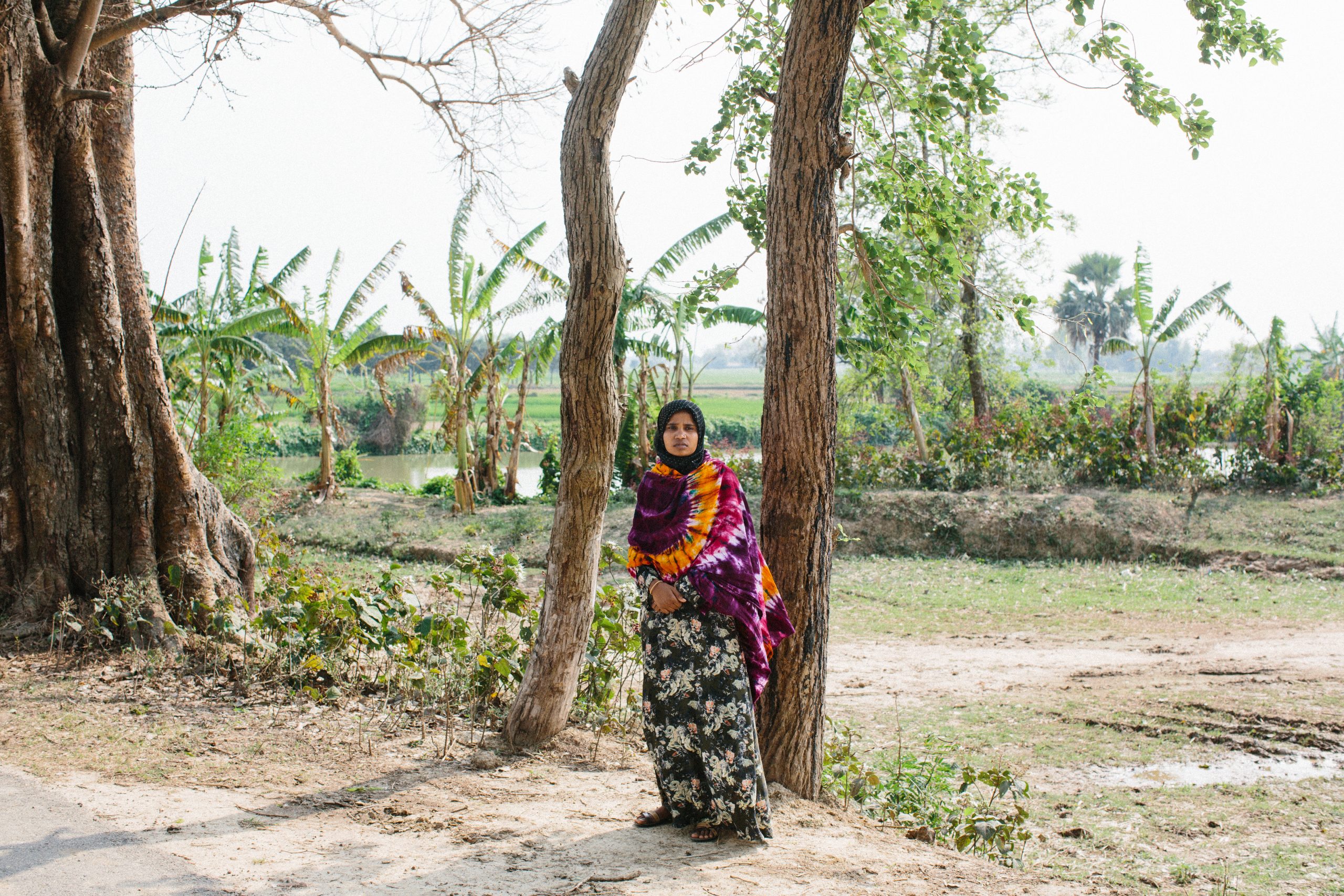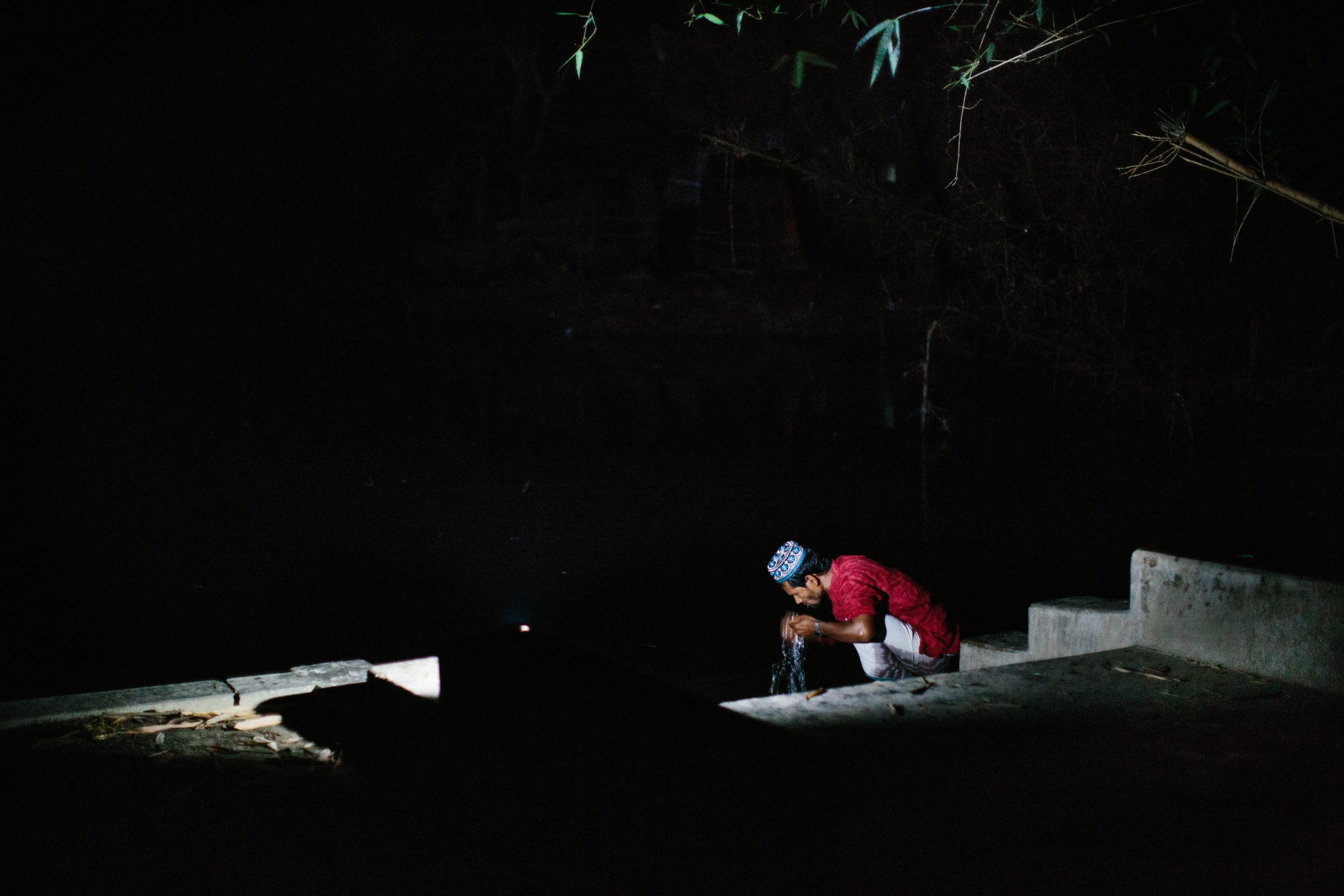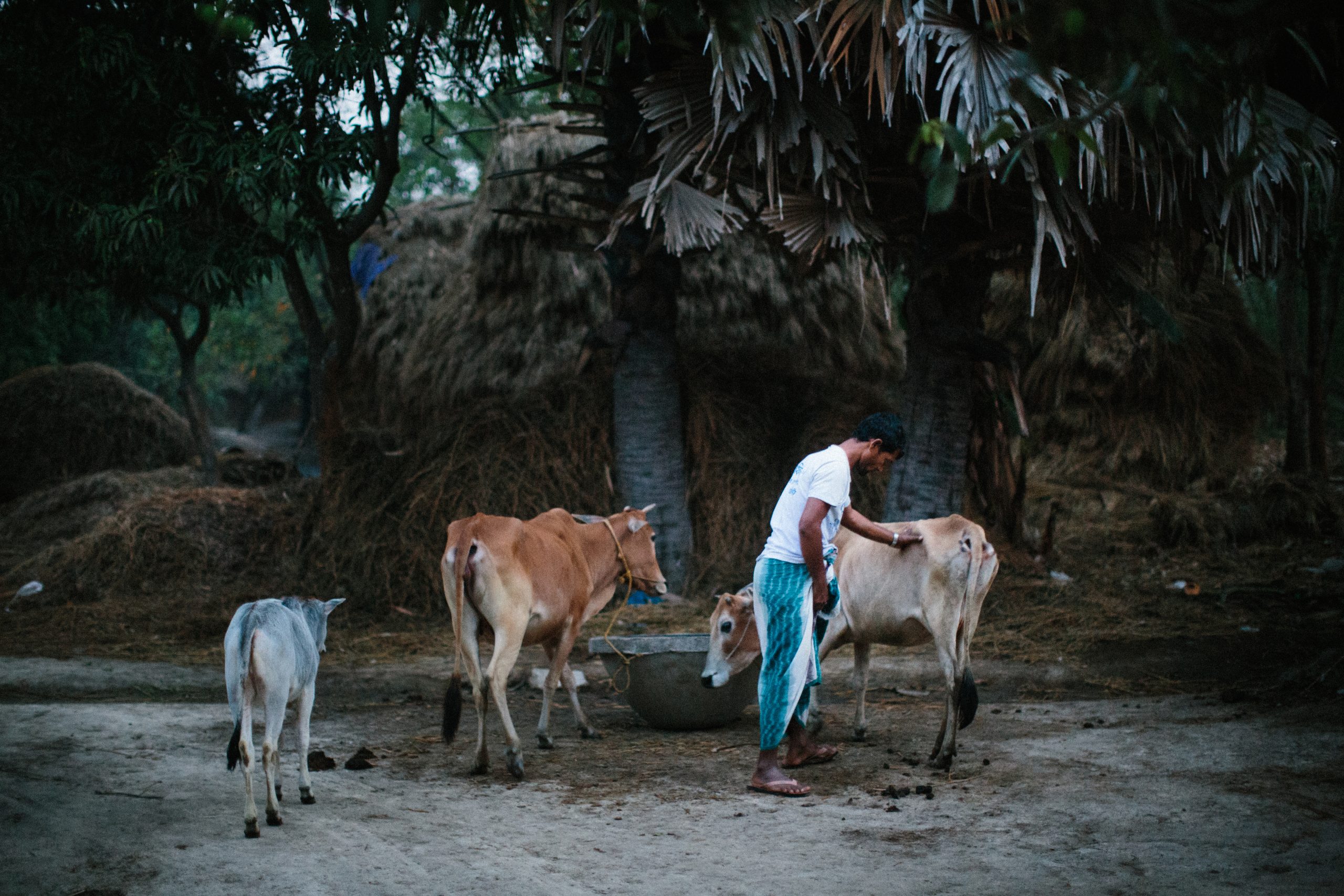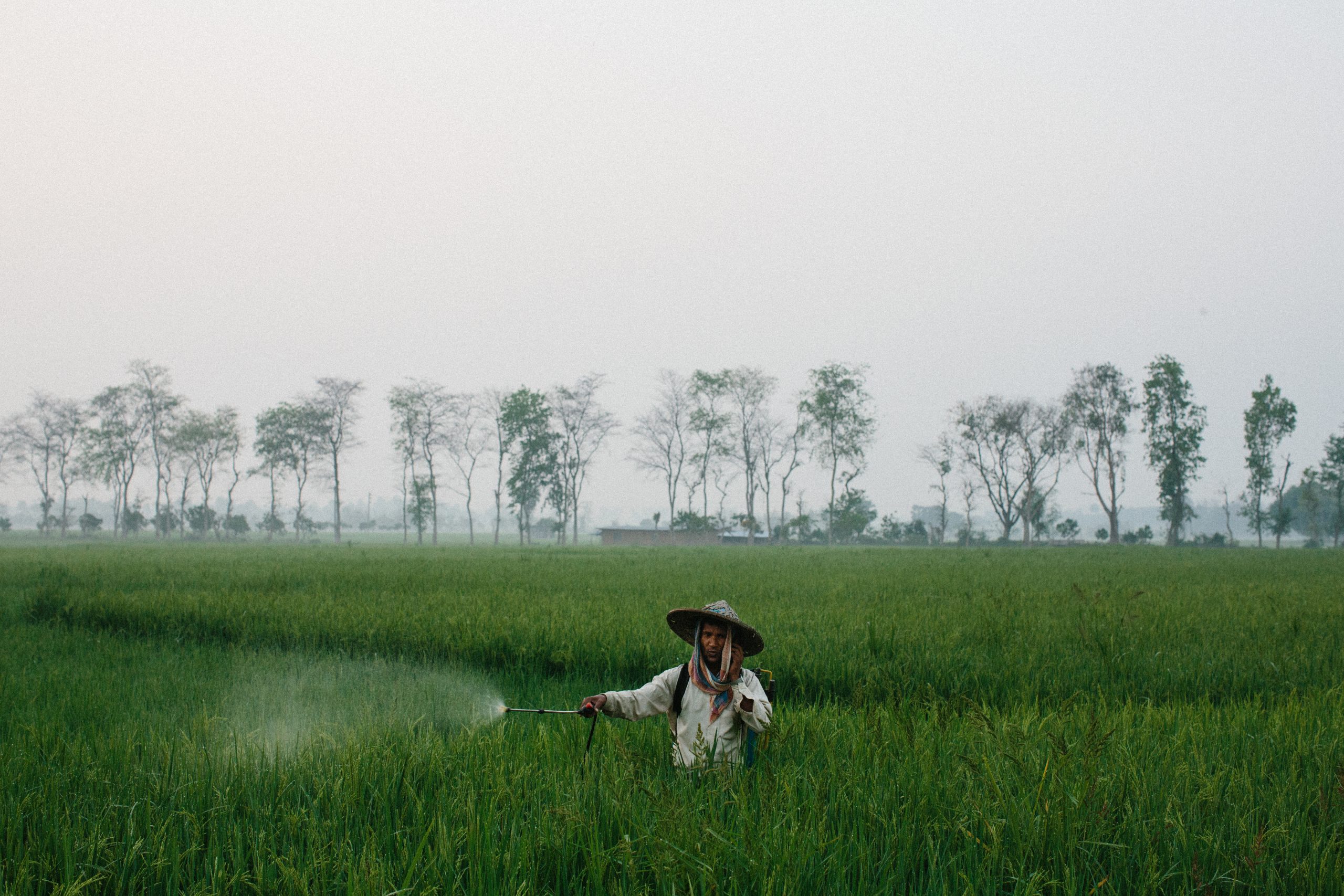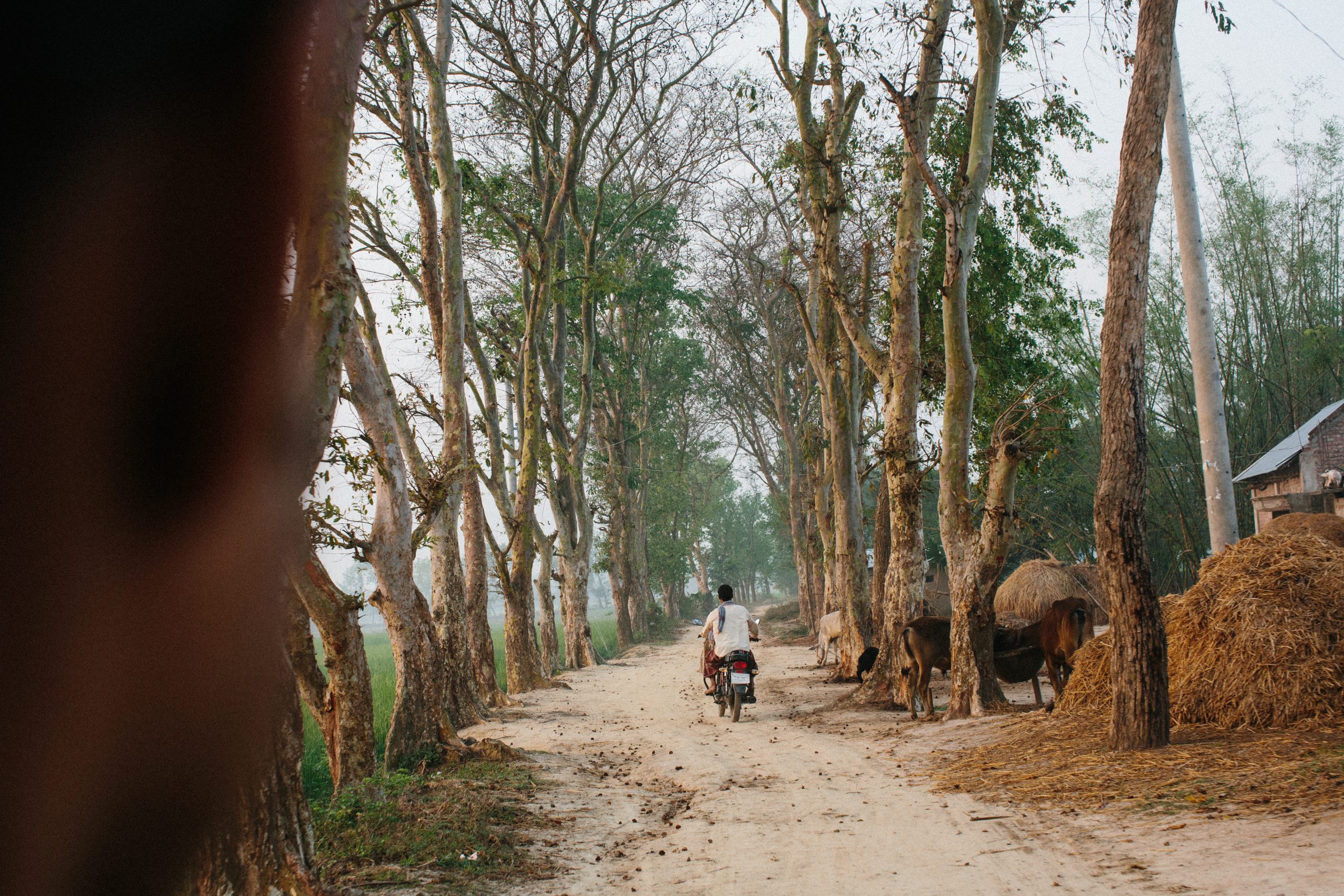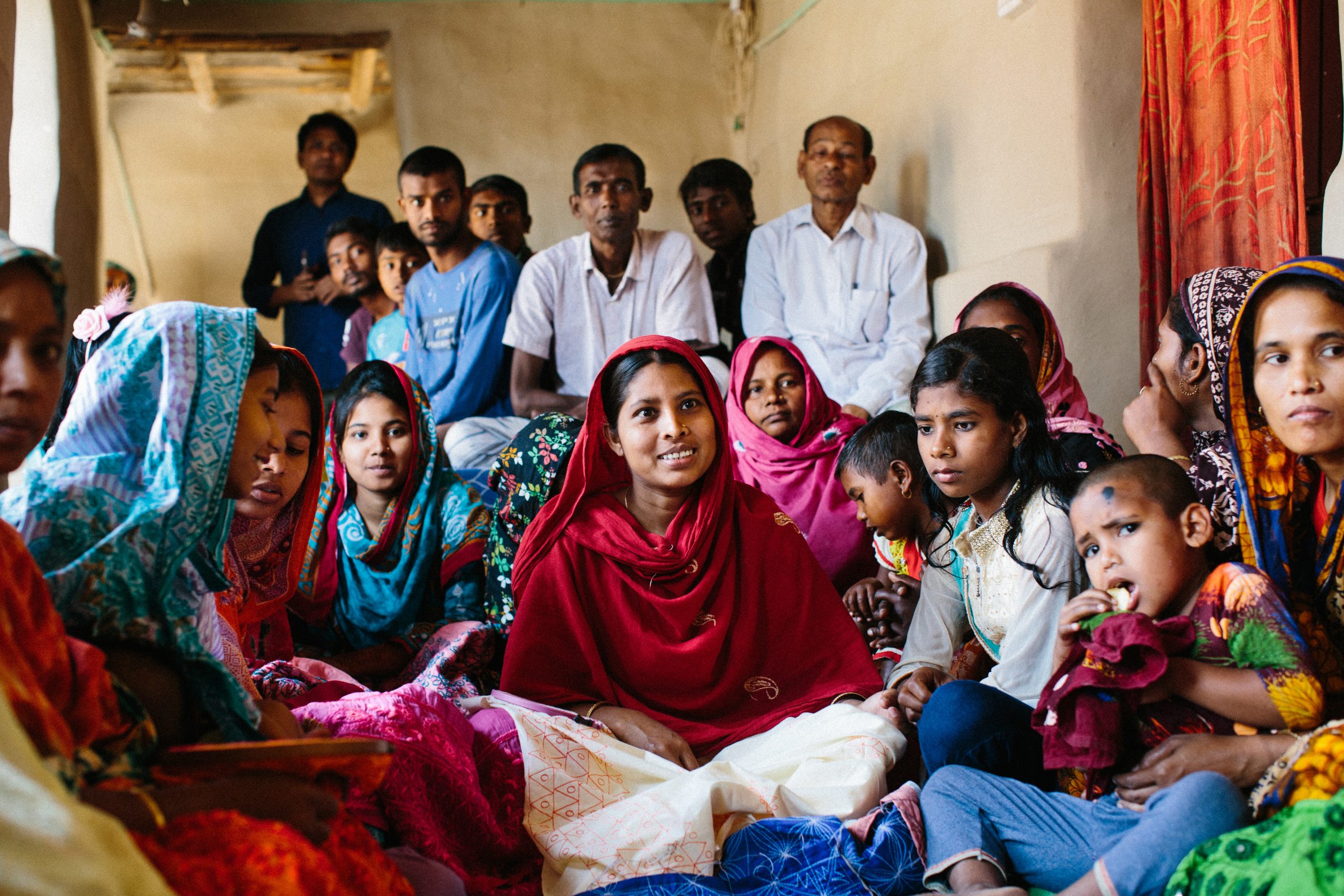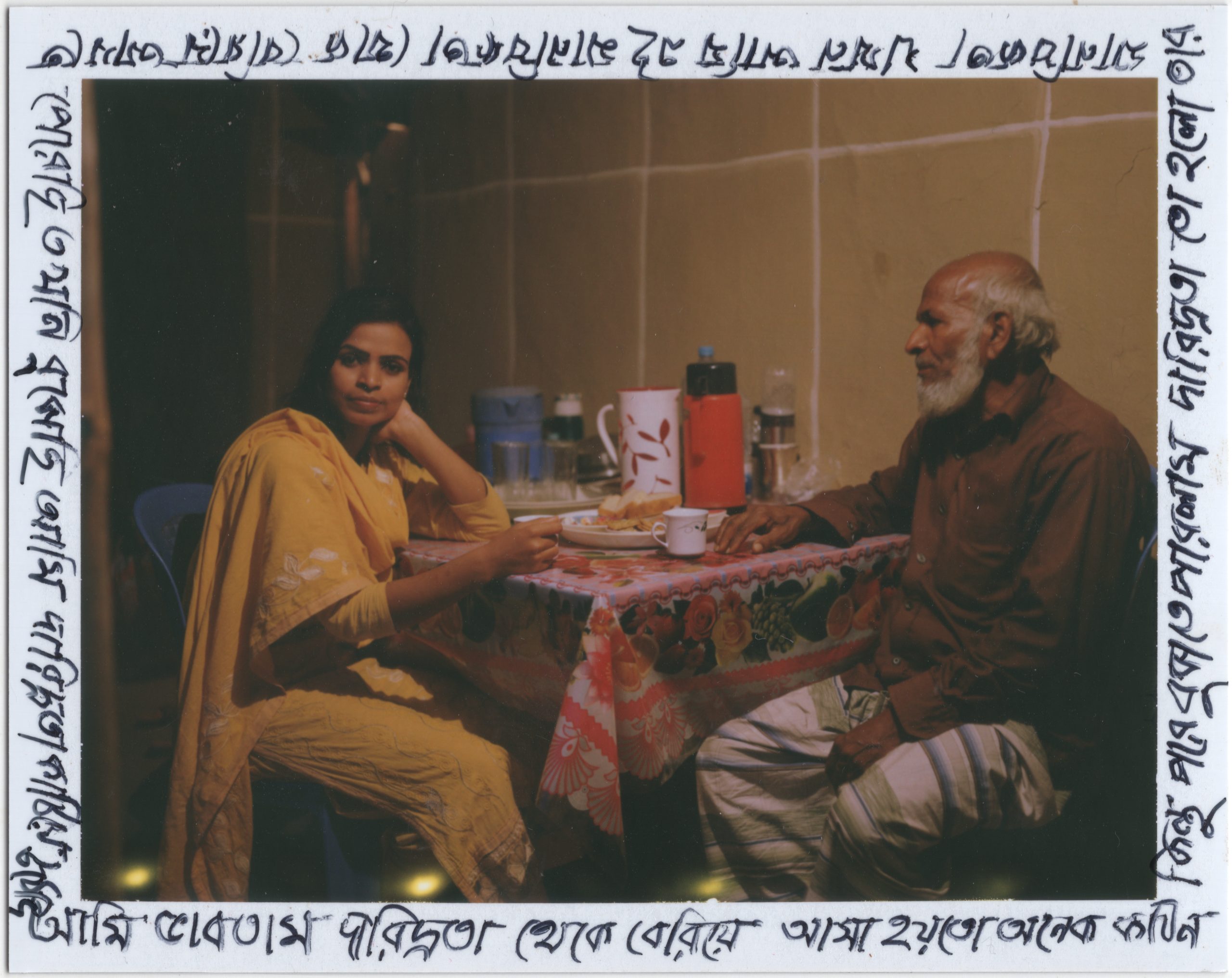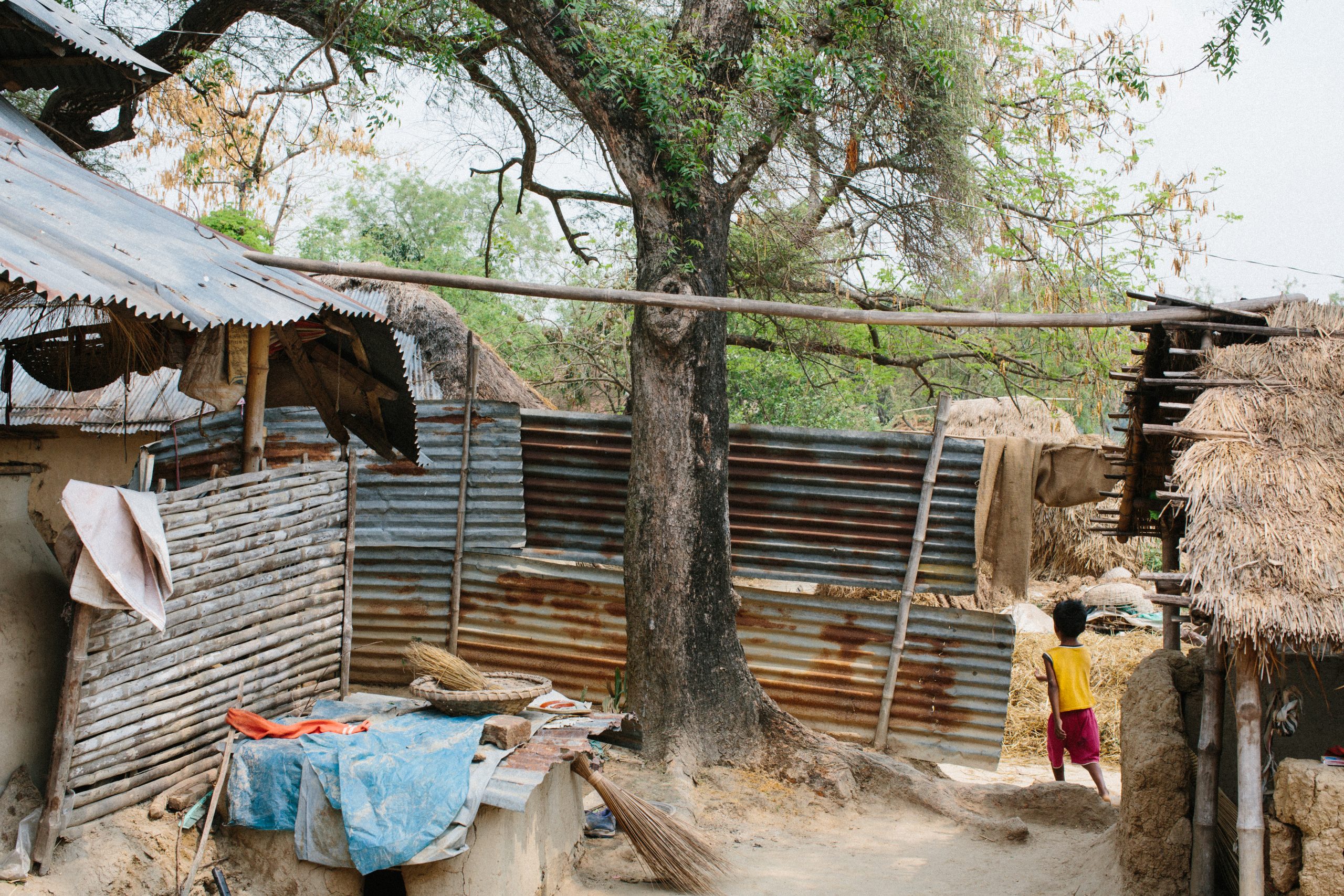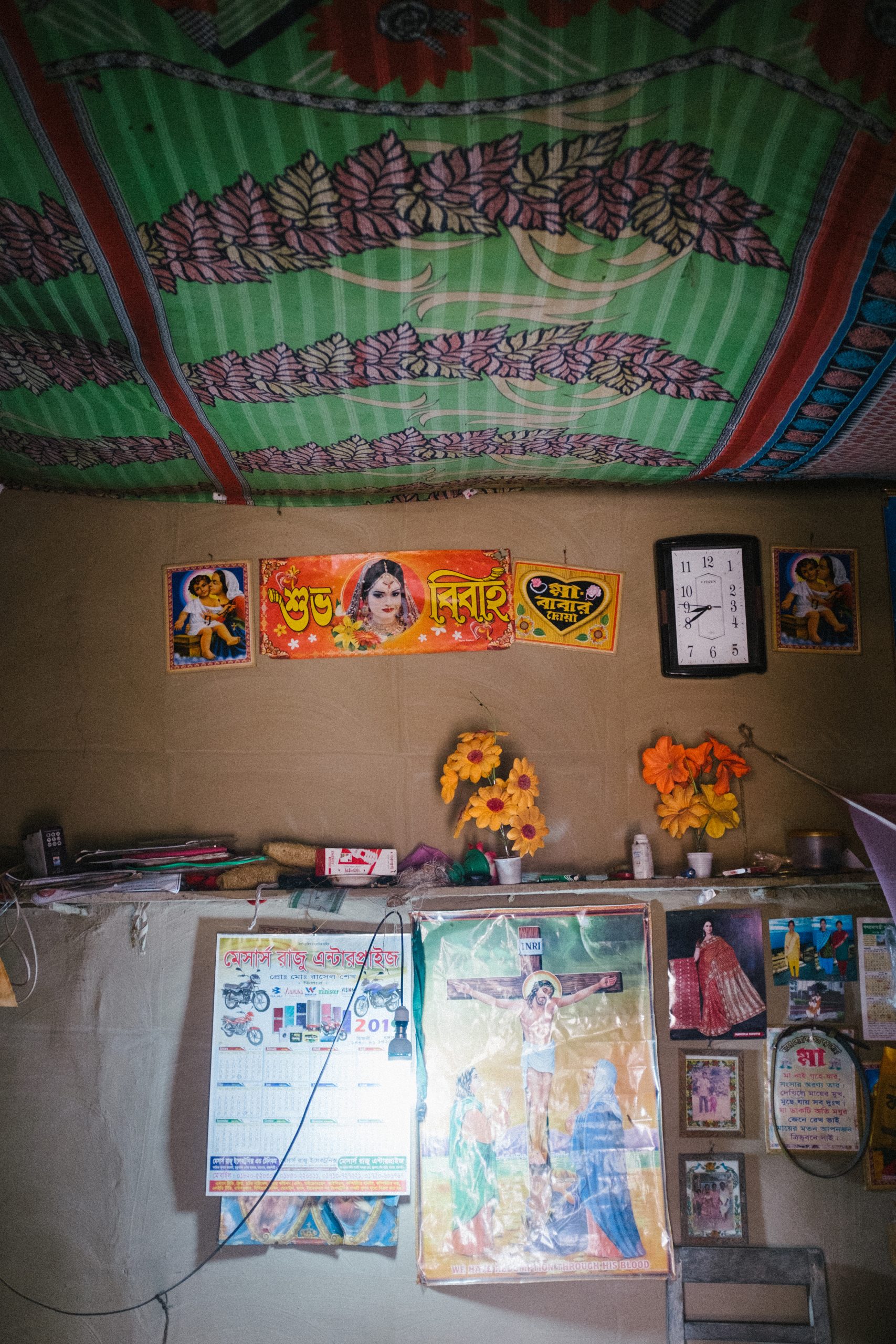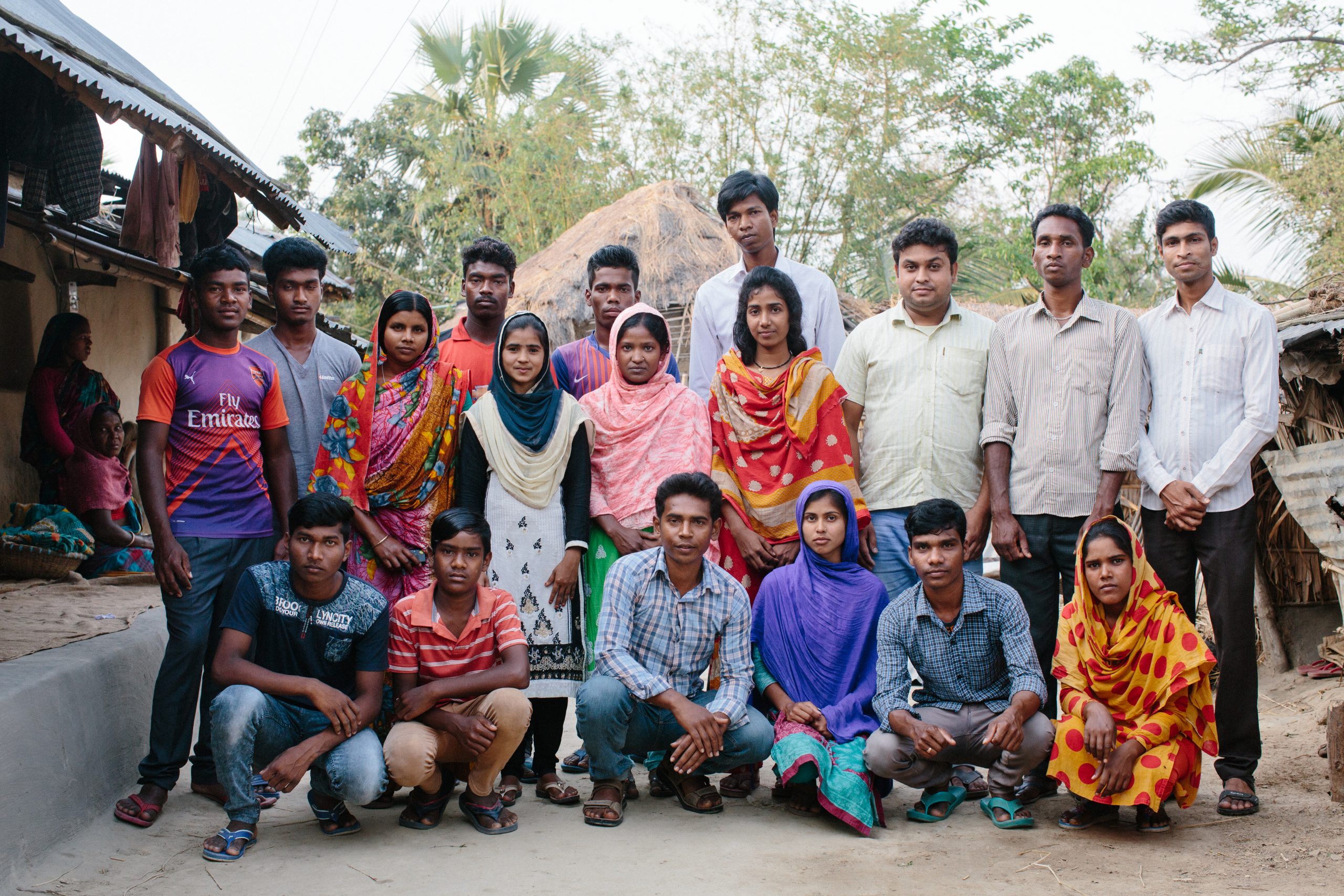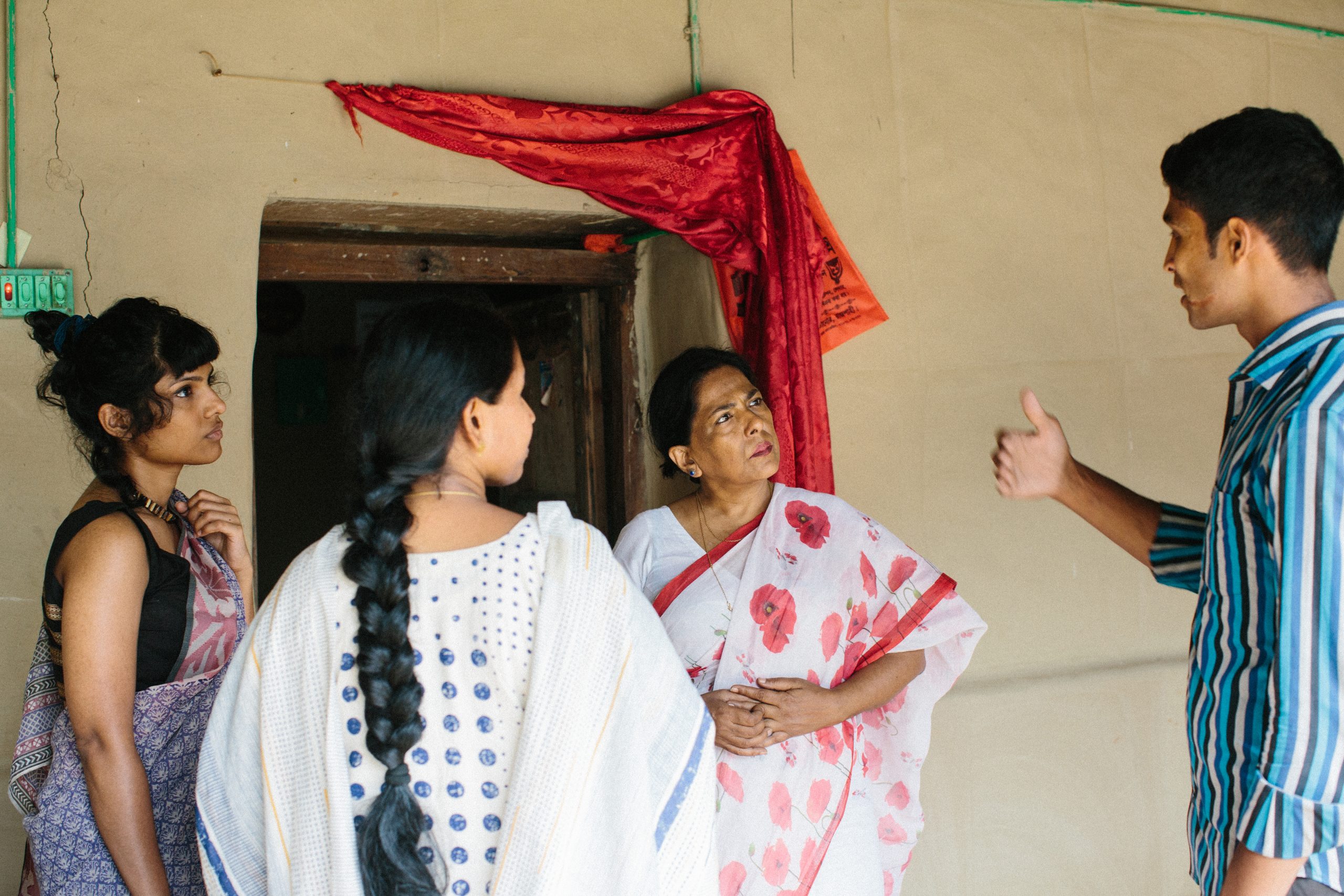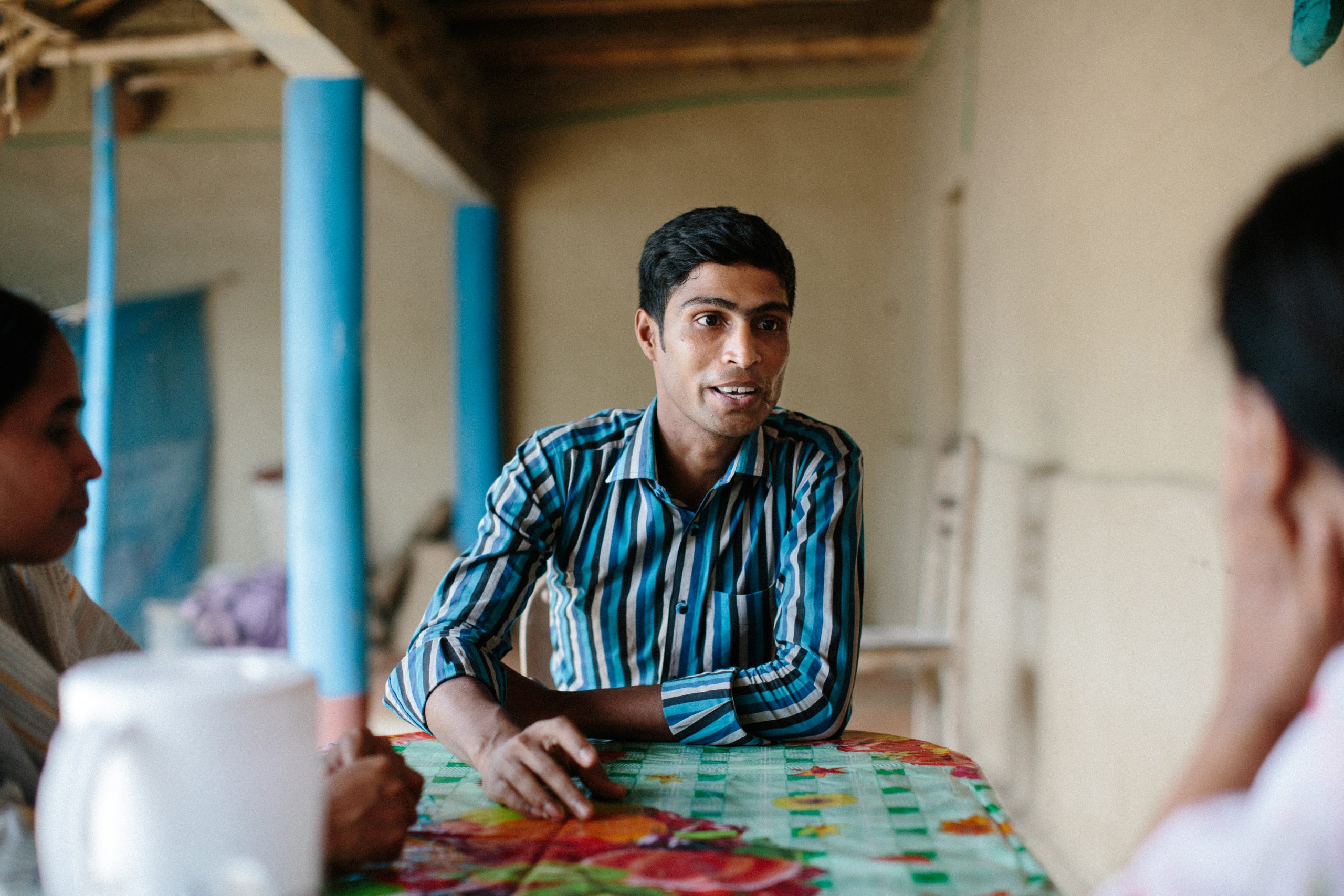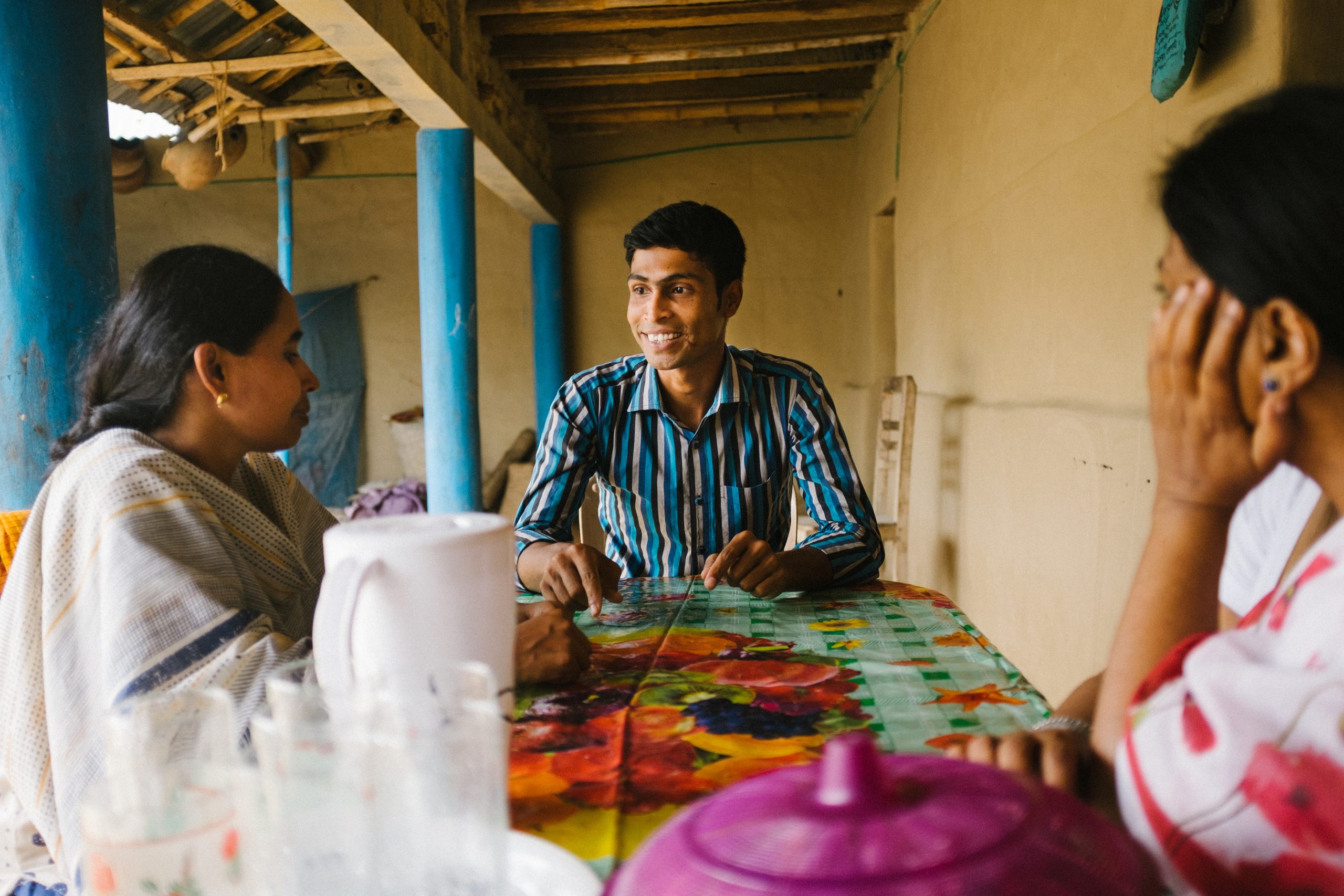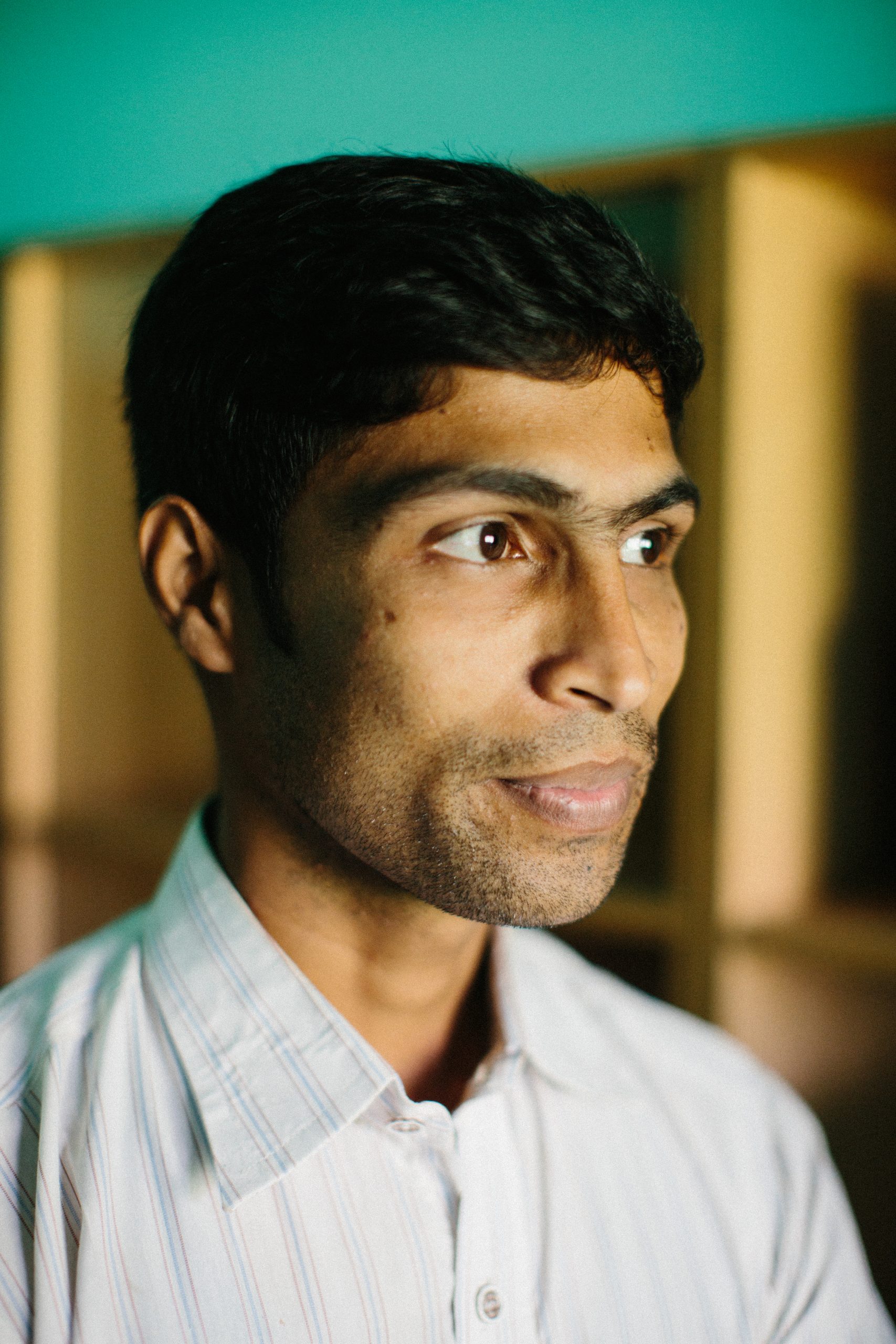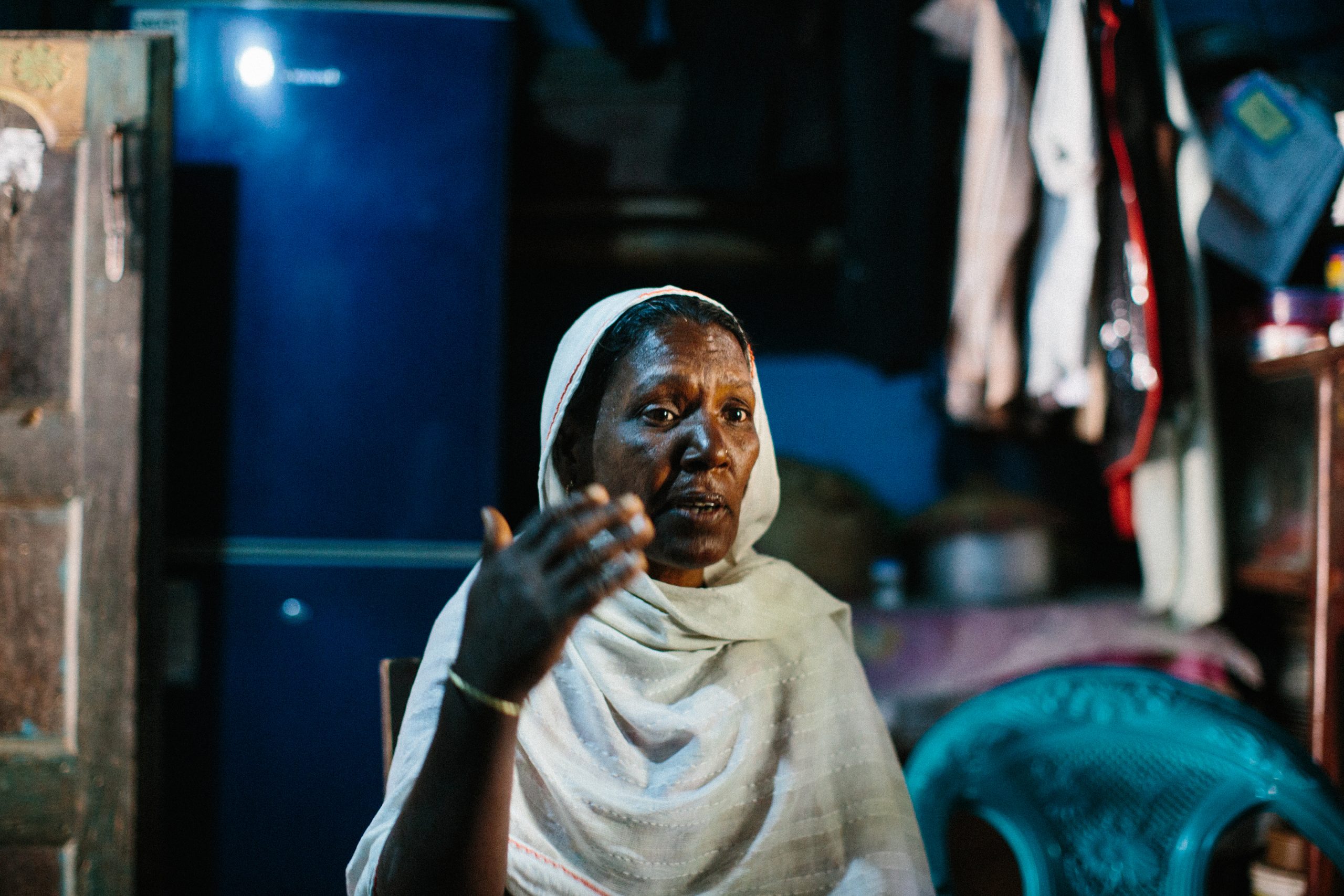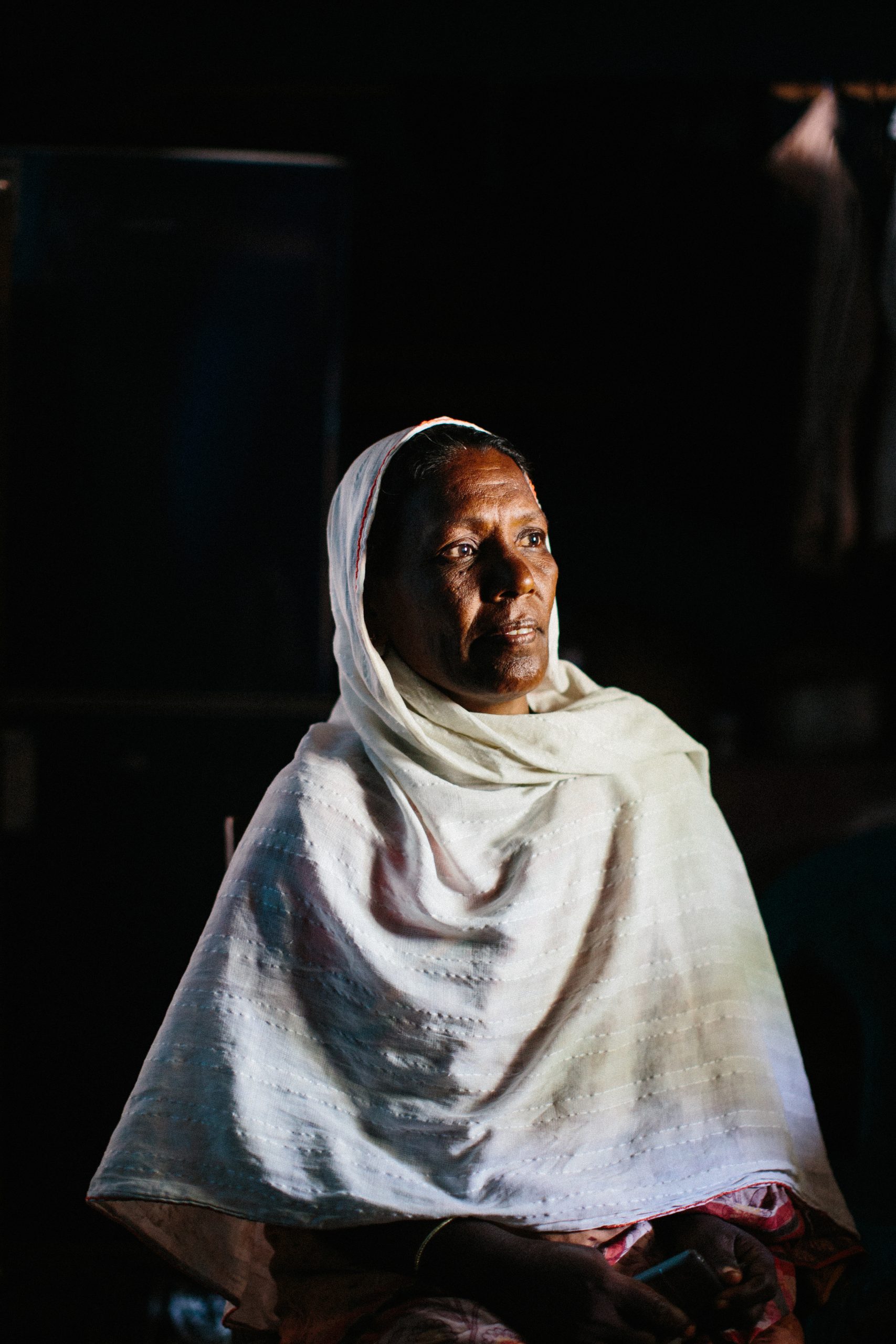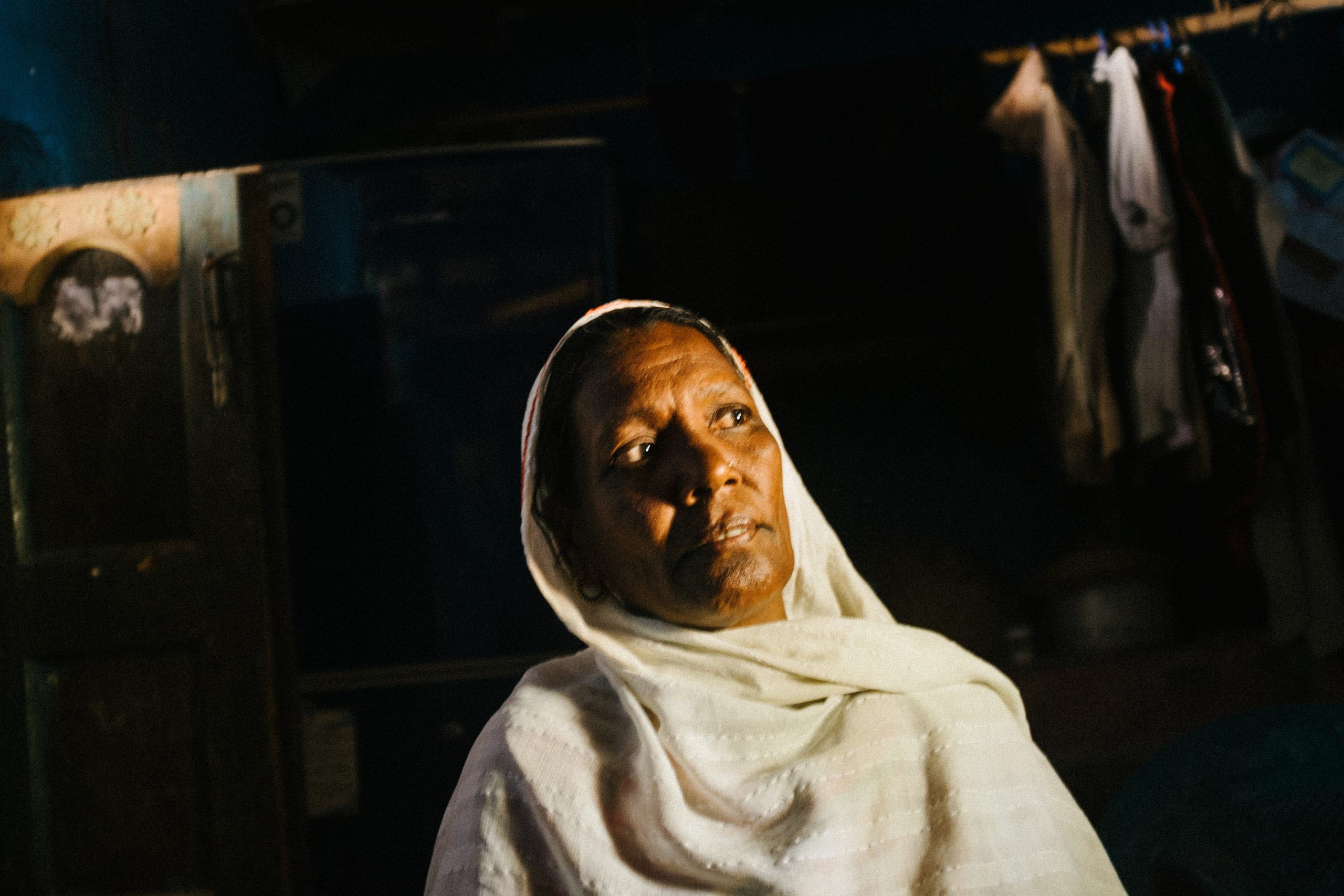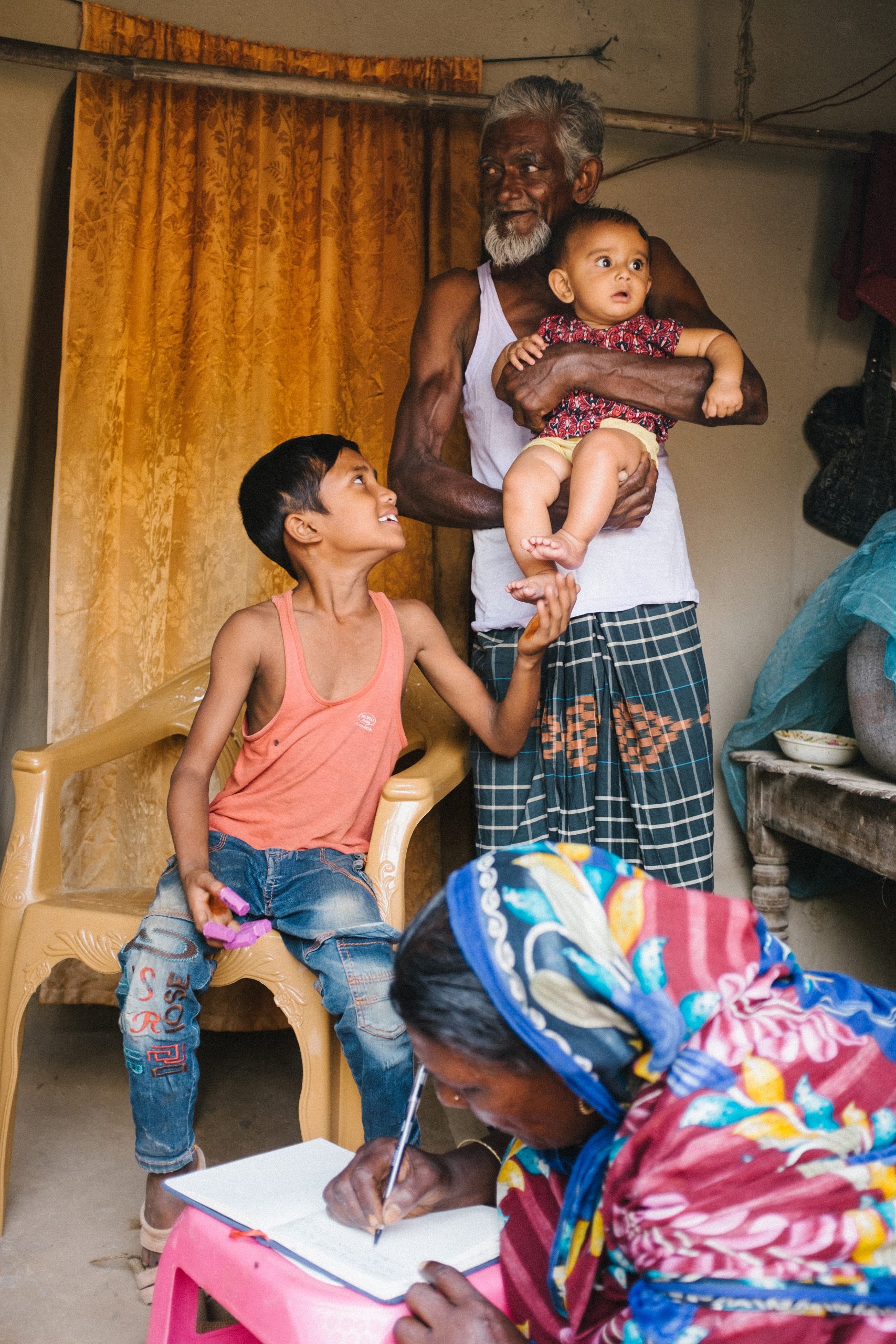
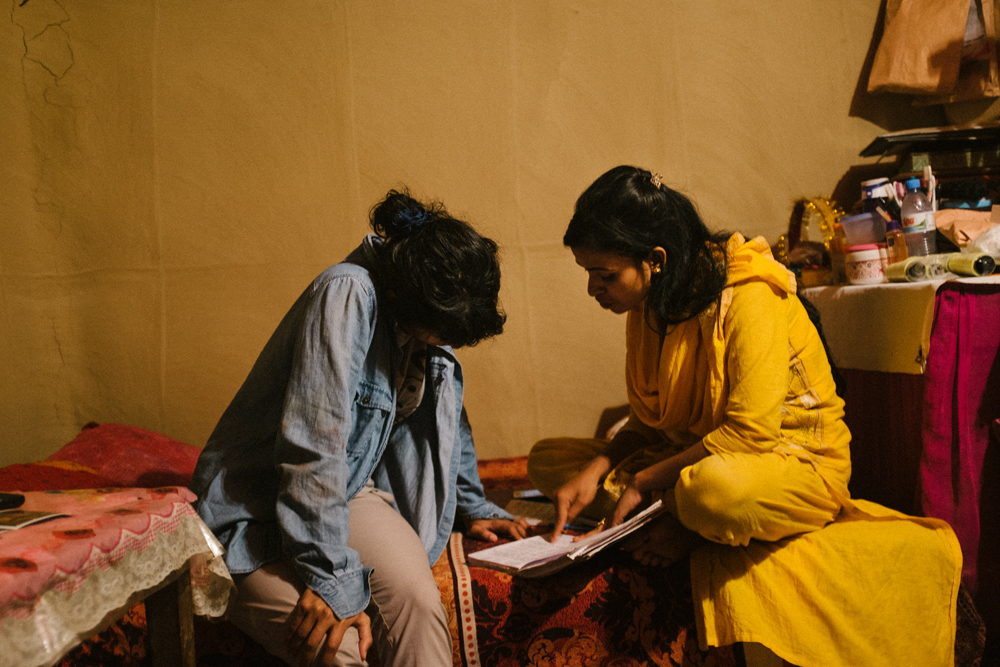
Saiq'a S. Chowdhury and Shahanara during Brotee fieldwork, Rajshahi, 2019. Photo: Tom Bradley.

Brotee: Stories from the Field

2015–2019

Documentary portraits from rural Bangladesh. Photography: Tom Bradley.

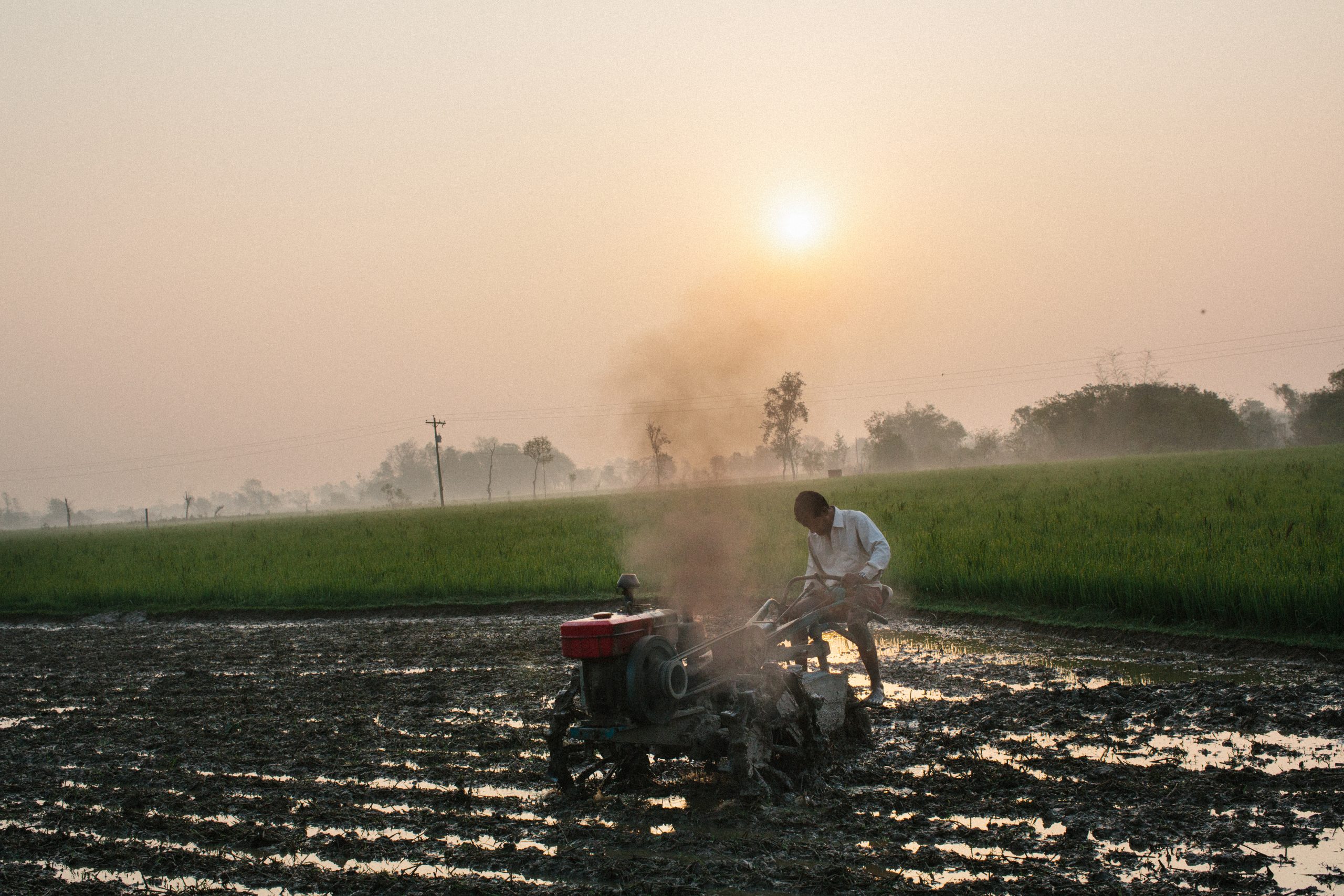
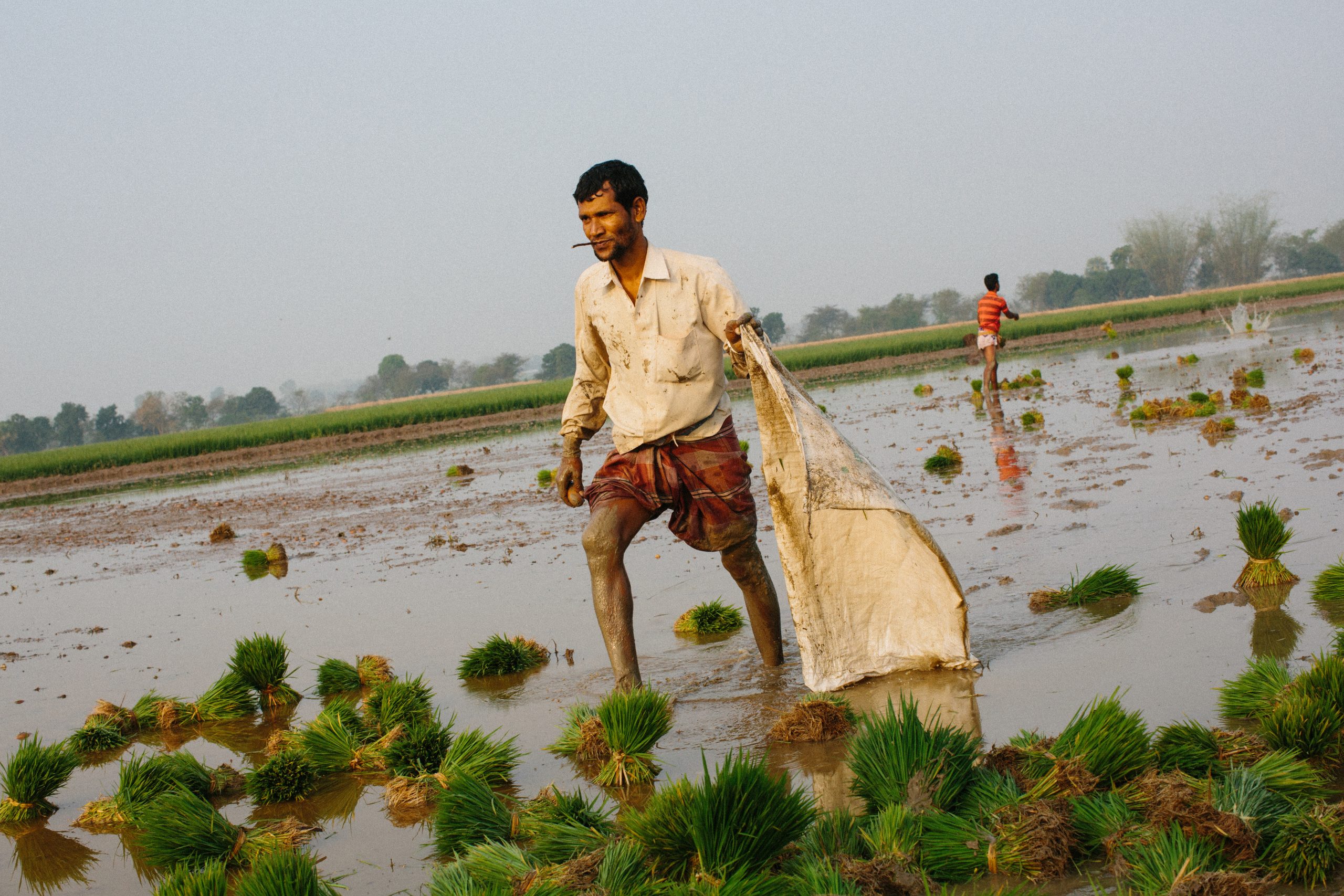
Between 2015 and 2019, working as Creative Director for Brotee Samaj Kallyan Sangstha, I travelled into the villages of greater Rajshahi and the south-western coastal belt of Shyamnagar to collect stories. Brotee’s method — Gonokriya Gobeshona, or people’s action research — had been running for over a decade in these communities, facilitating a quiet, unglamorous process of self-transformation: young people learning to identify the problems in their own lives and find their own solutions.

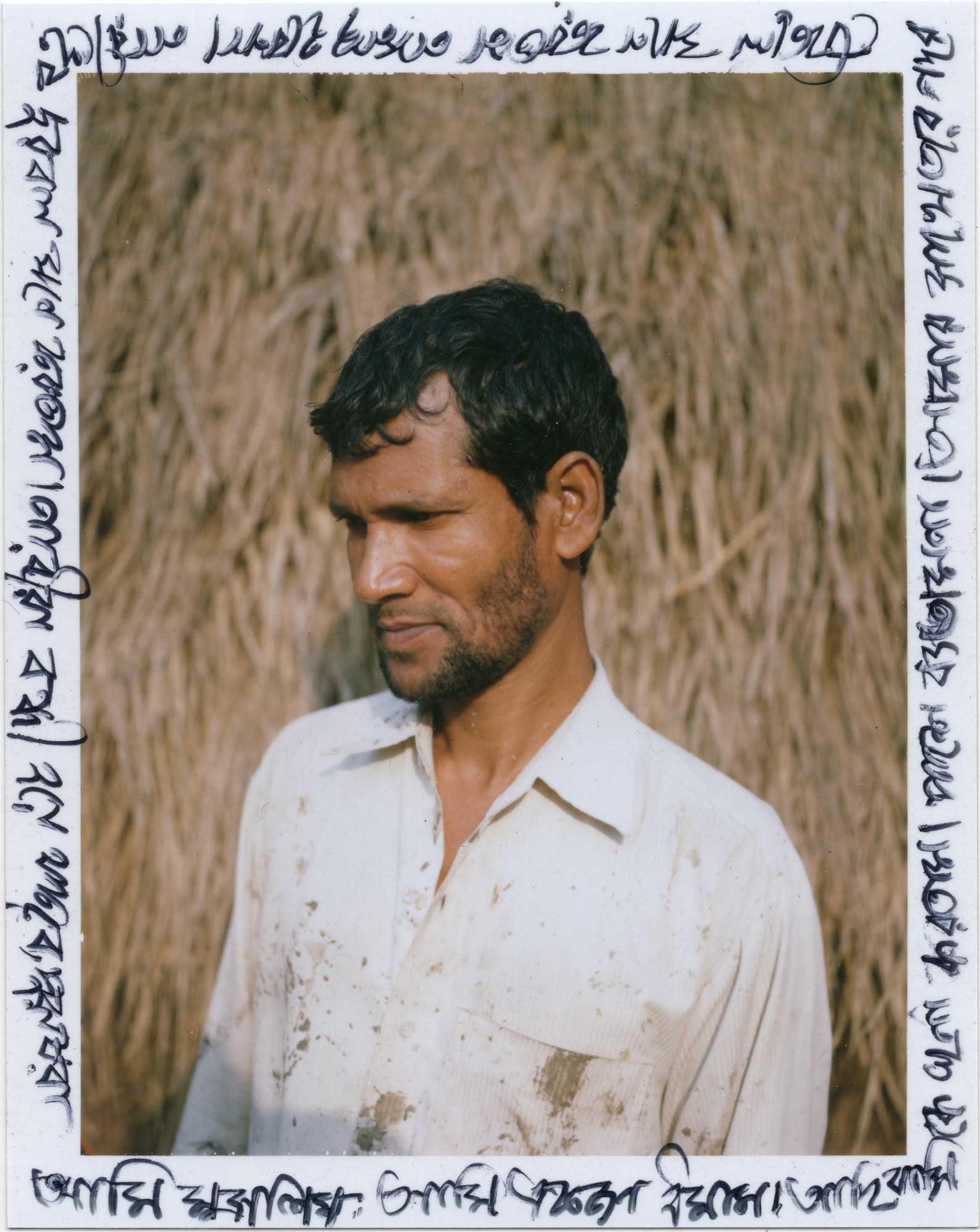
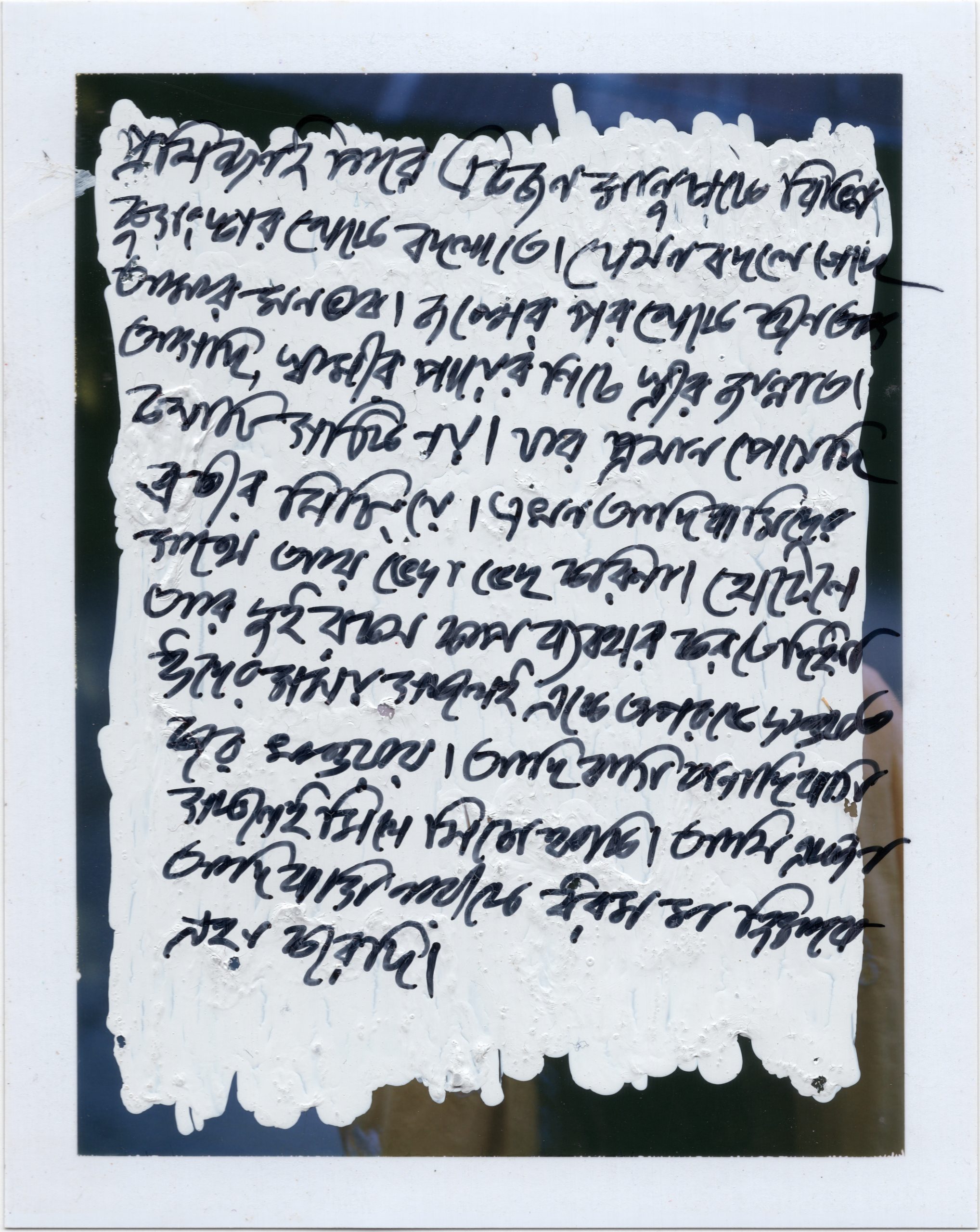
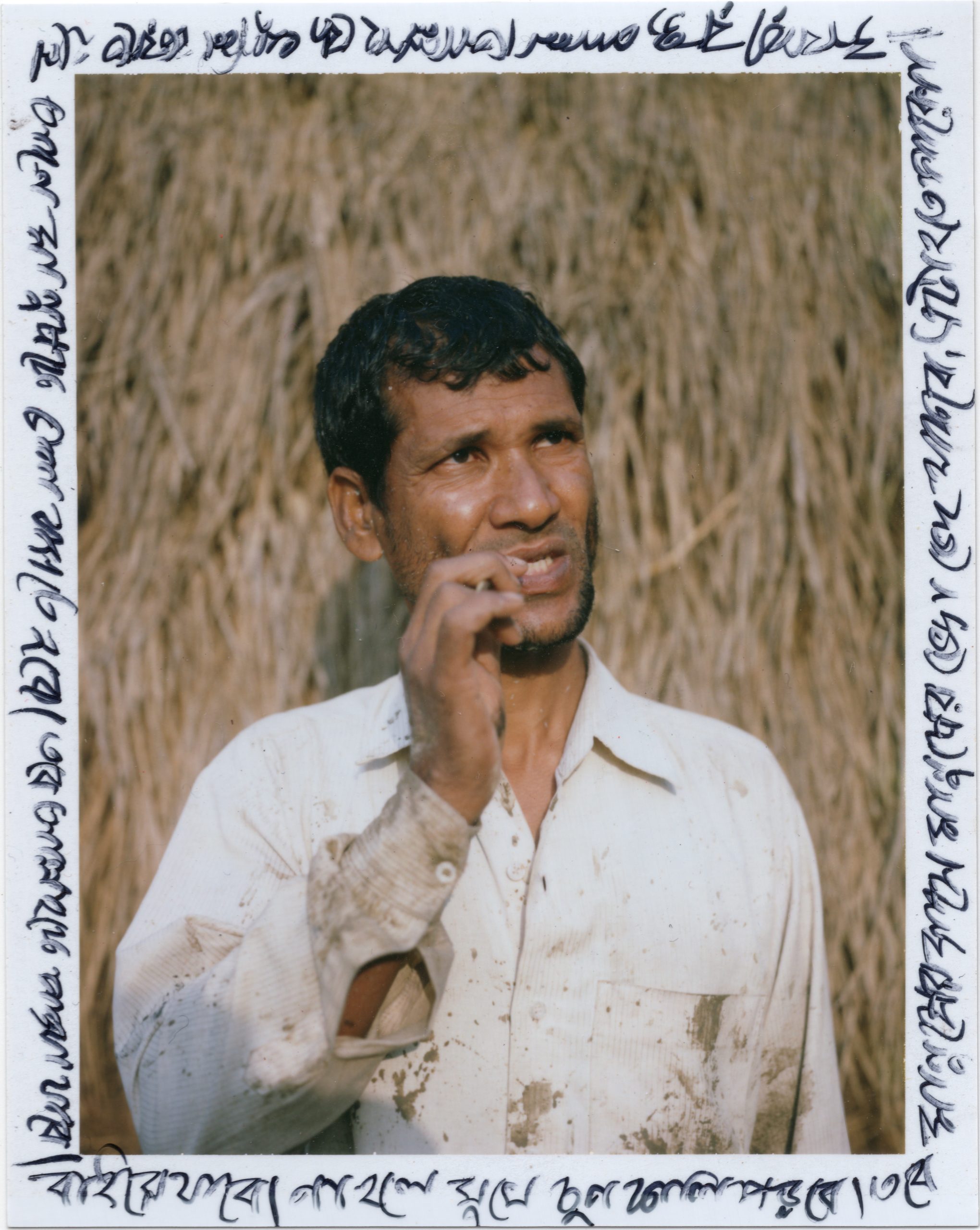
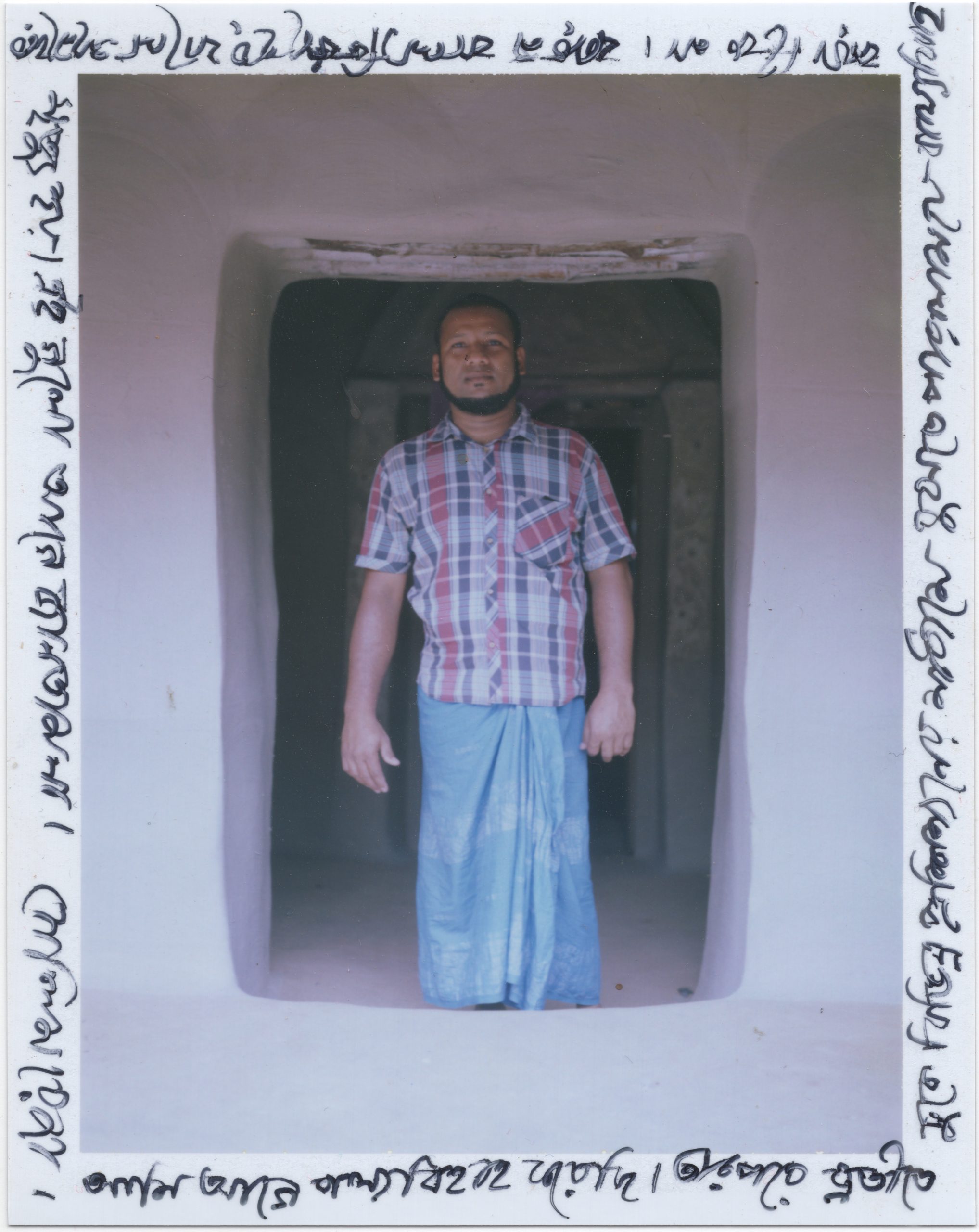
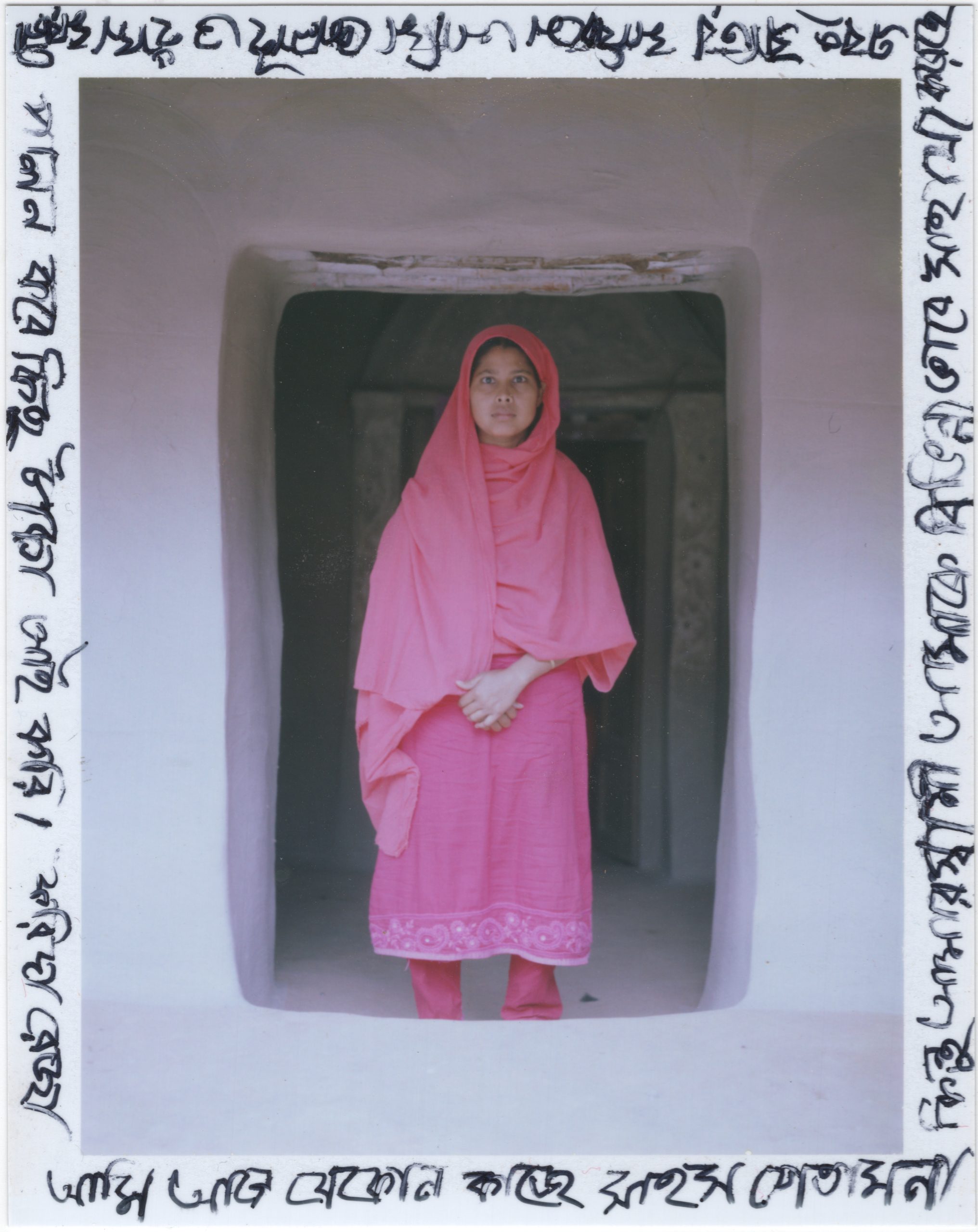
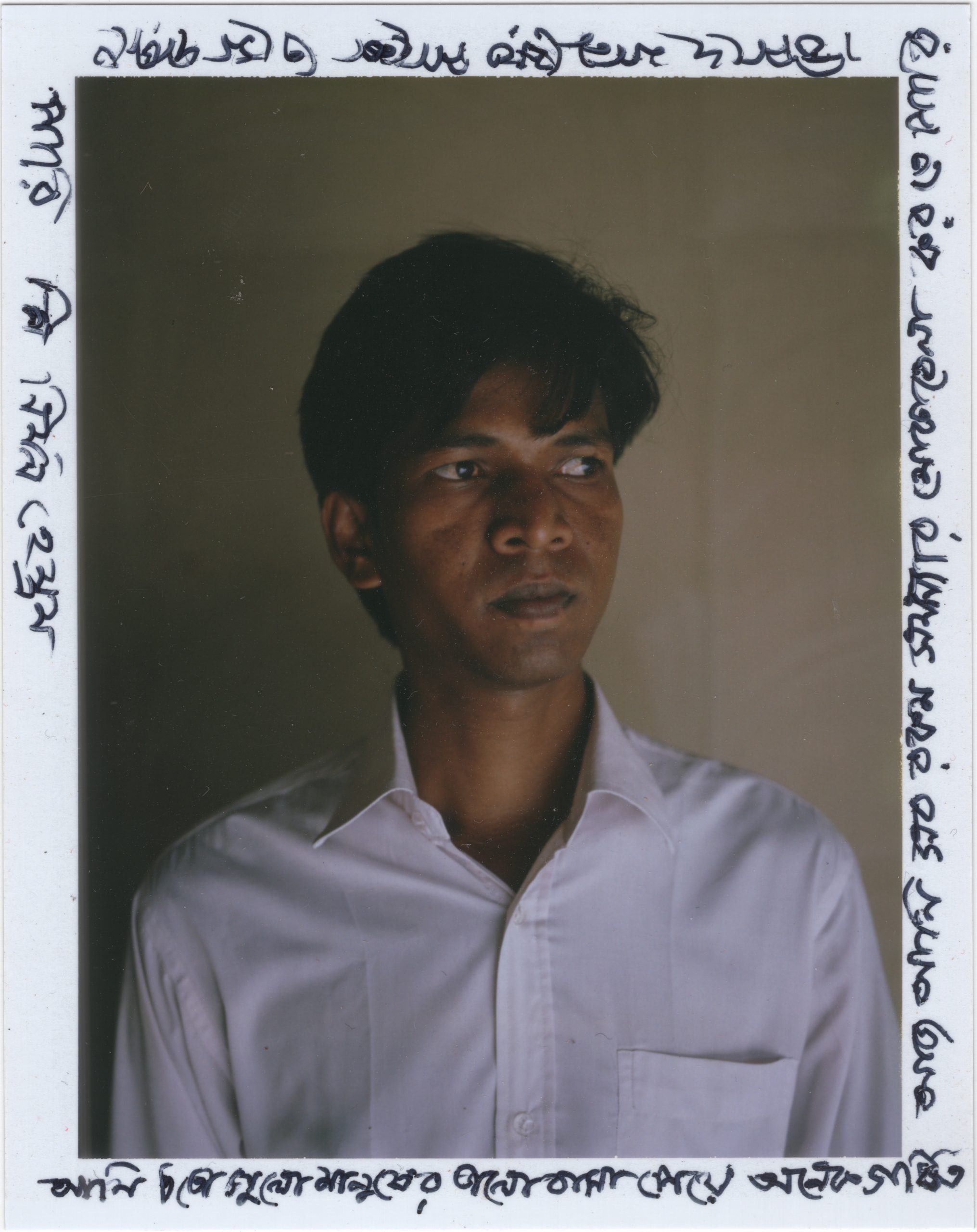
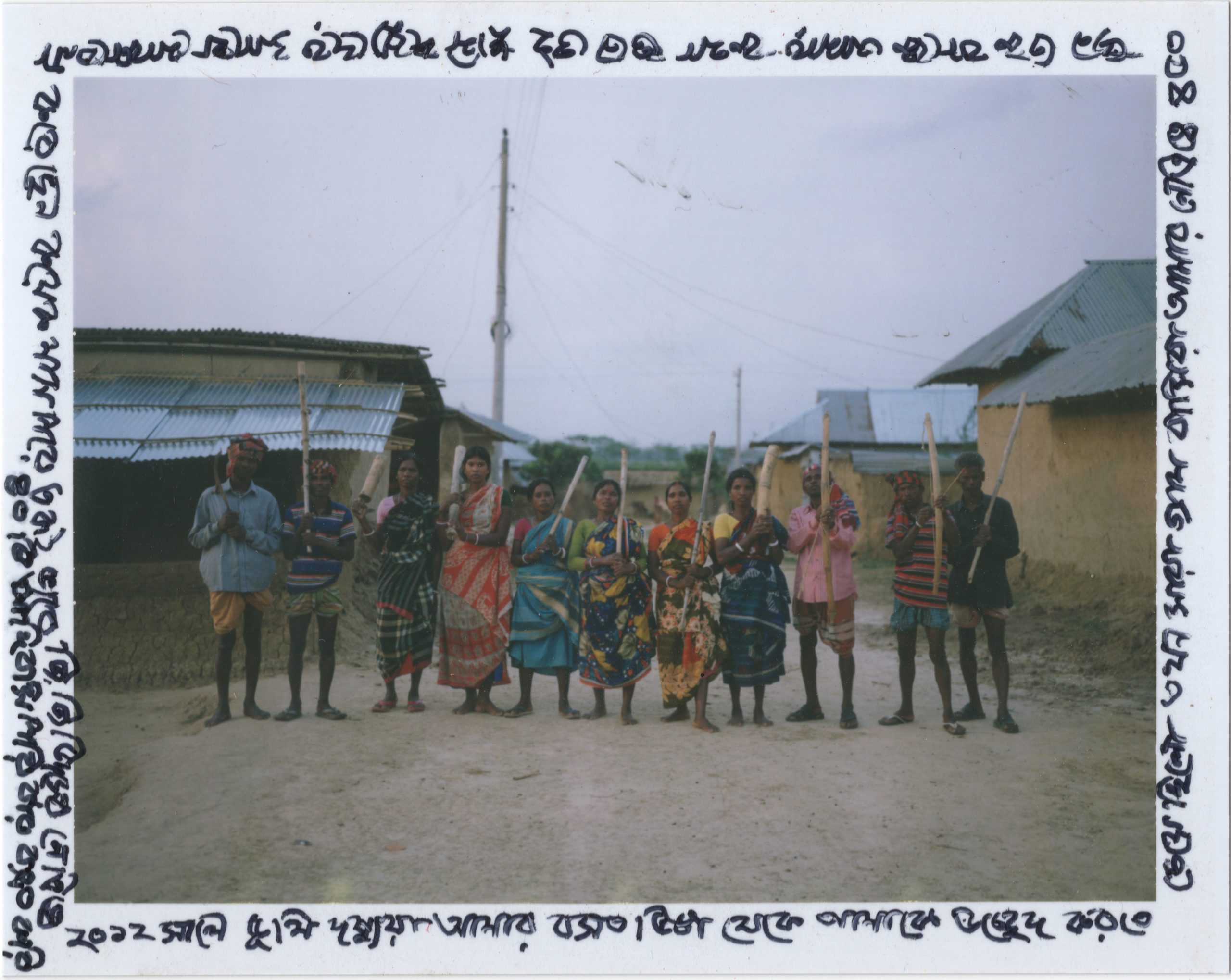
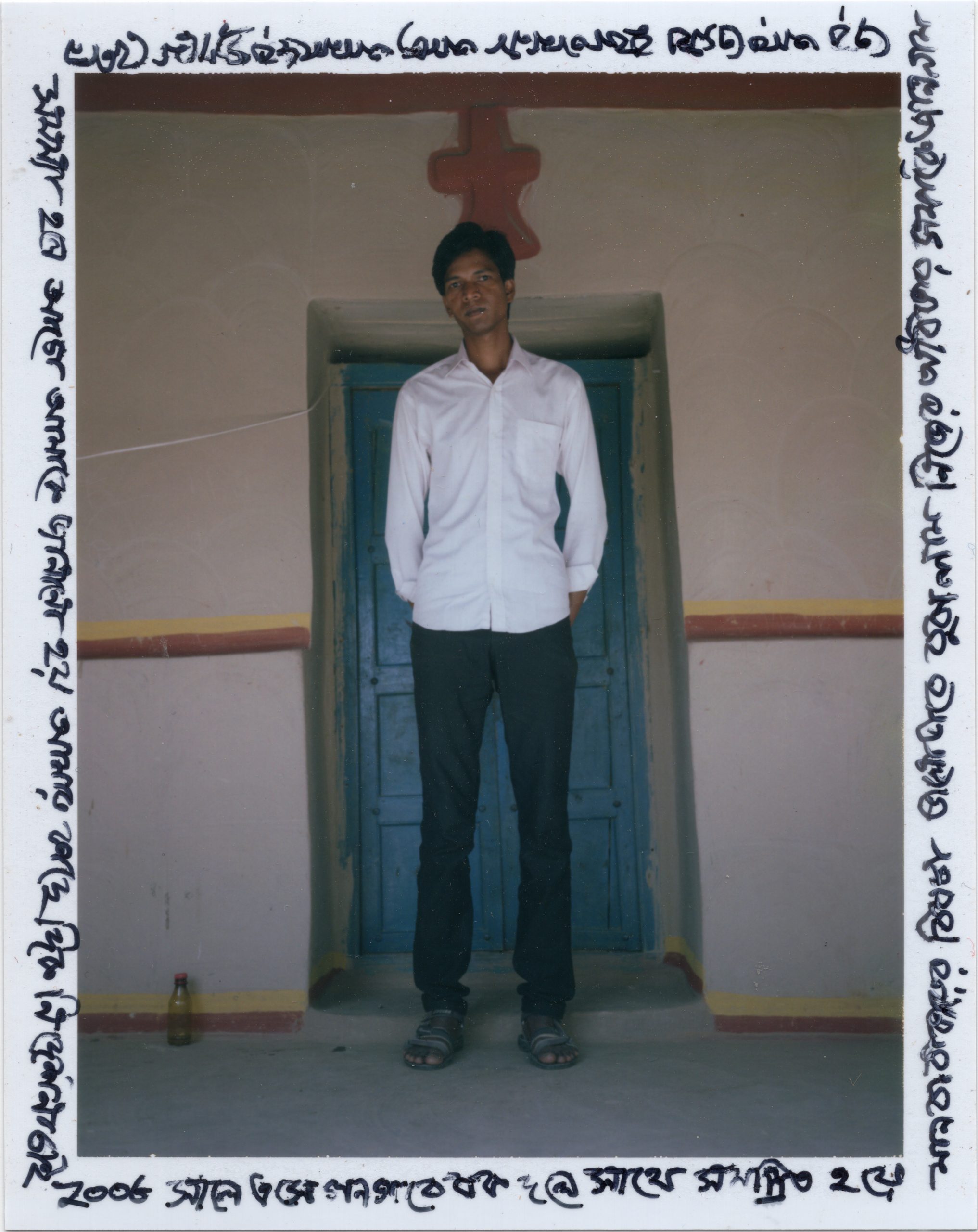
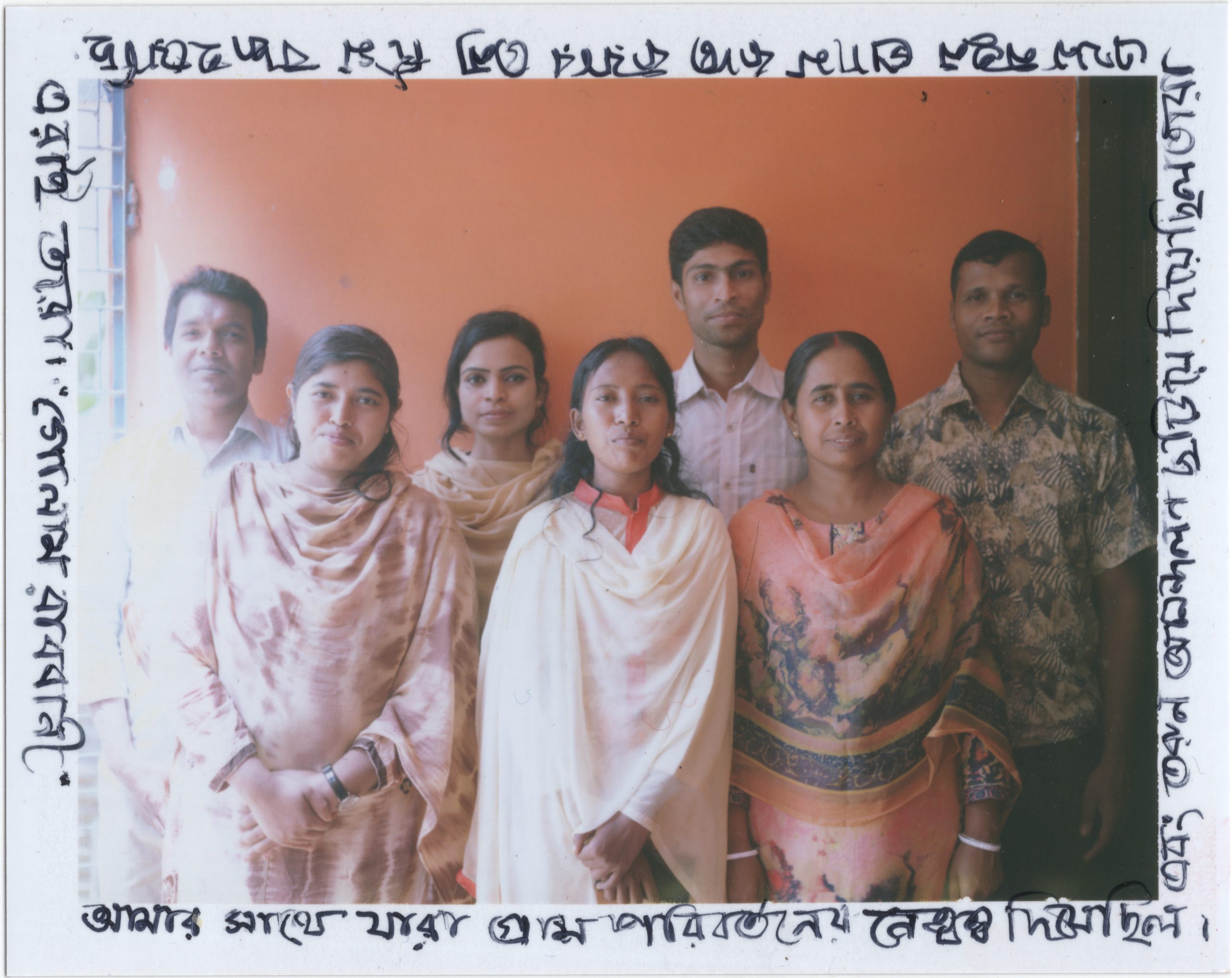
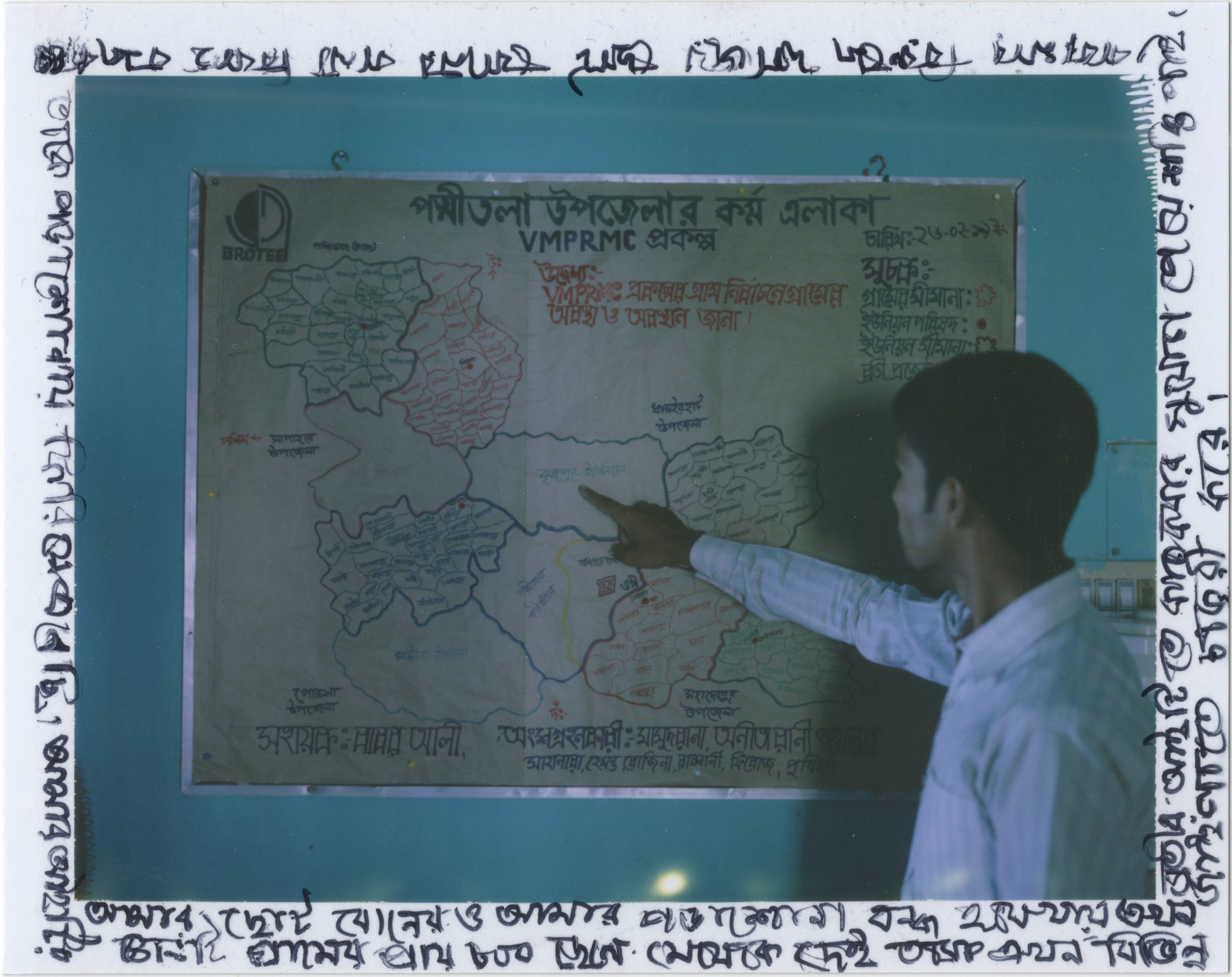
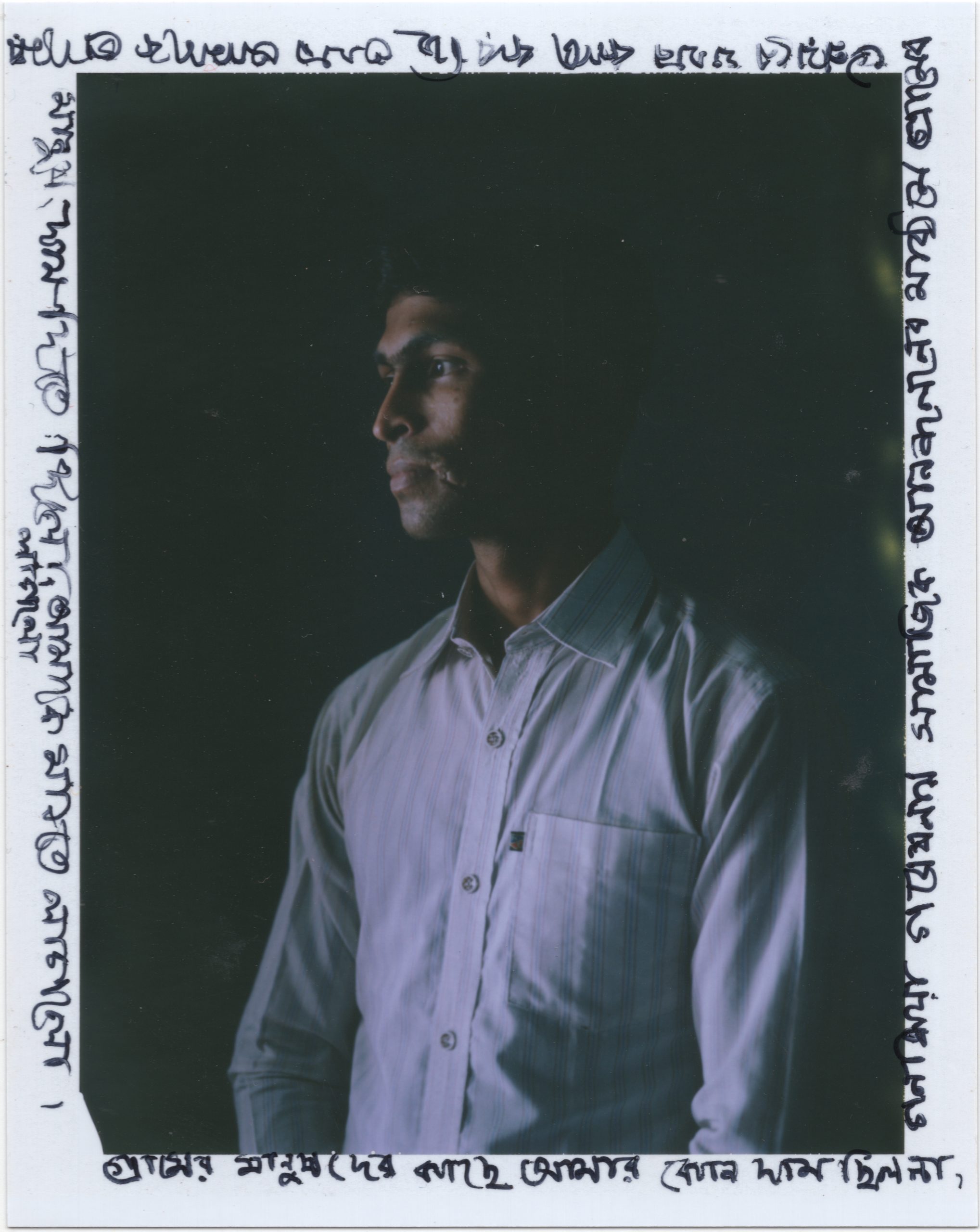
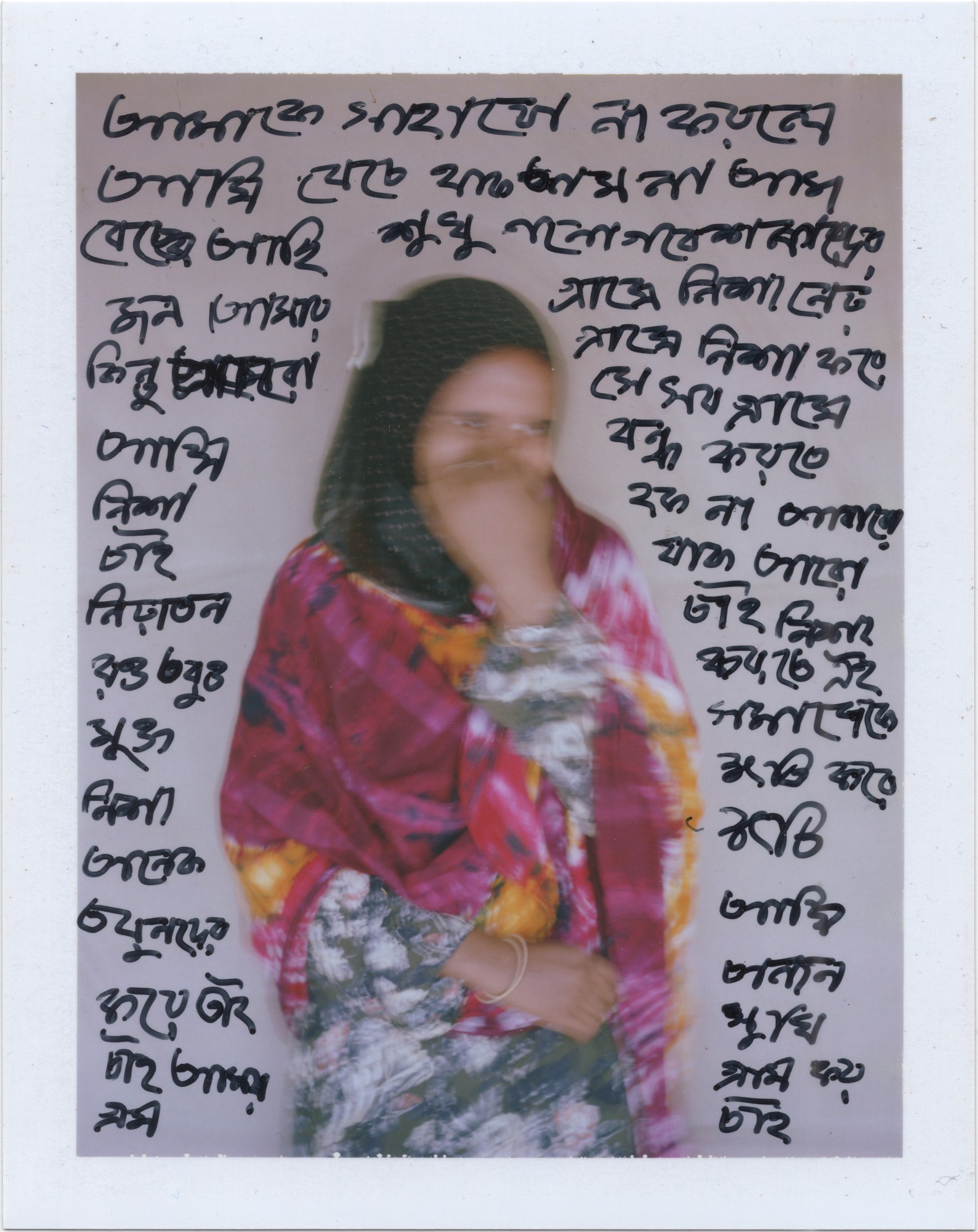
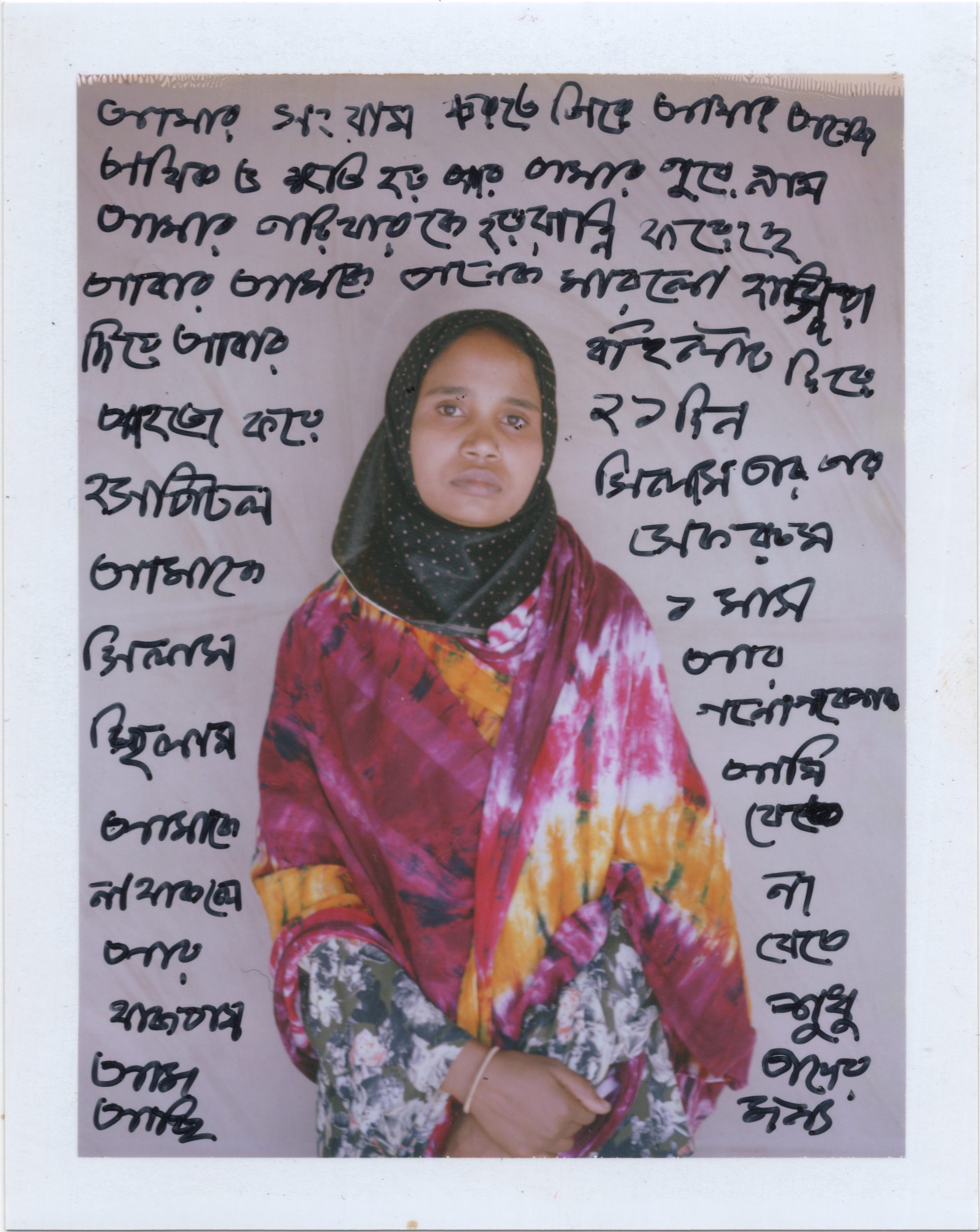
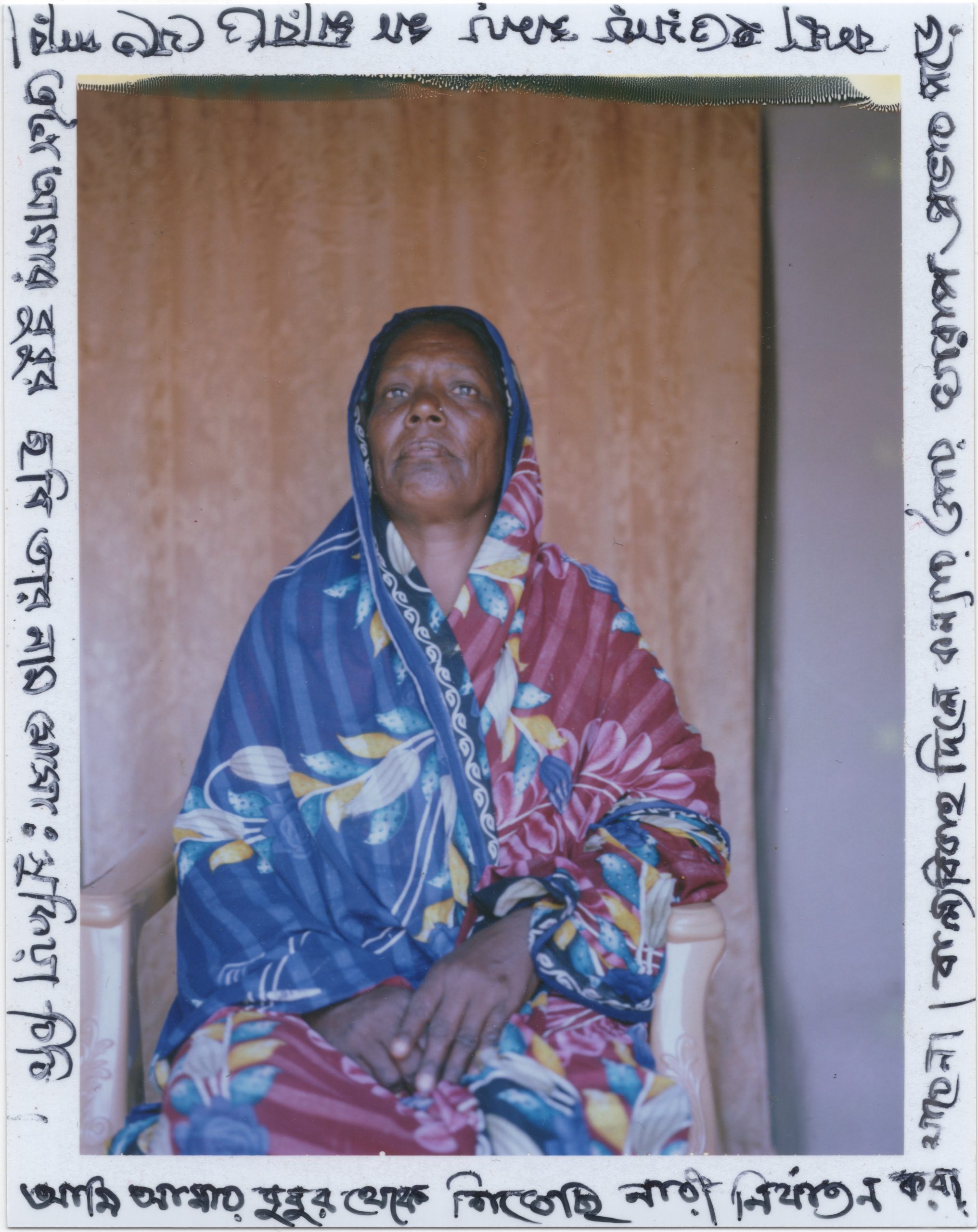
In 2019, photographer Tom Bradley joined the fieldwork. What we made together were these polaroids — his photographs, and handwritten expressions of the people we interviewed written directly onto the image borders in Bangla. The handwriting is not caption. It is the voice of the subject: striking phrases and fragments of lived experience, collected through the process of story-gathering and embedded into the image itself. Tom’s original process of photographic documentation paired with my work of collecting narratives became an artistic record that we used specifically for Brotee’s stories — memorable precisely because the people’s own words refuse to stay outside the frame.

The full stories — Moslem the feminist Imam, Arifa who led a village movement at thirteen, Hemanta from the adibashi community in Naogaon, and others — are published separately. The polaroids stand on their own.

Process

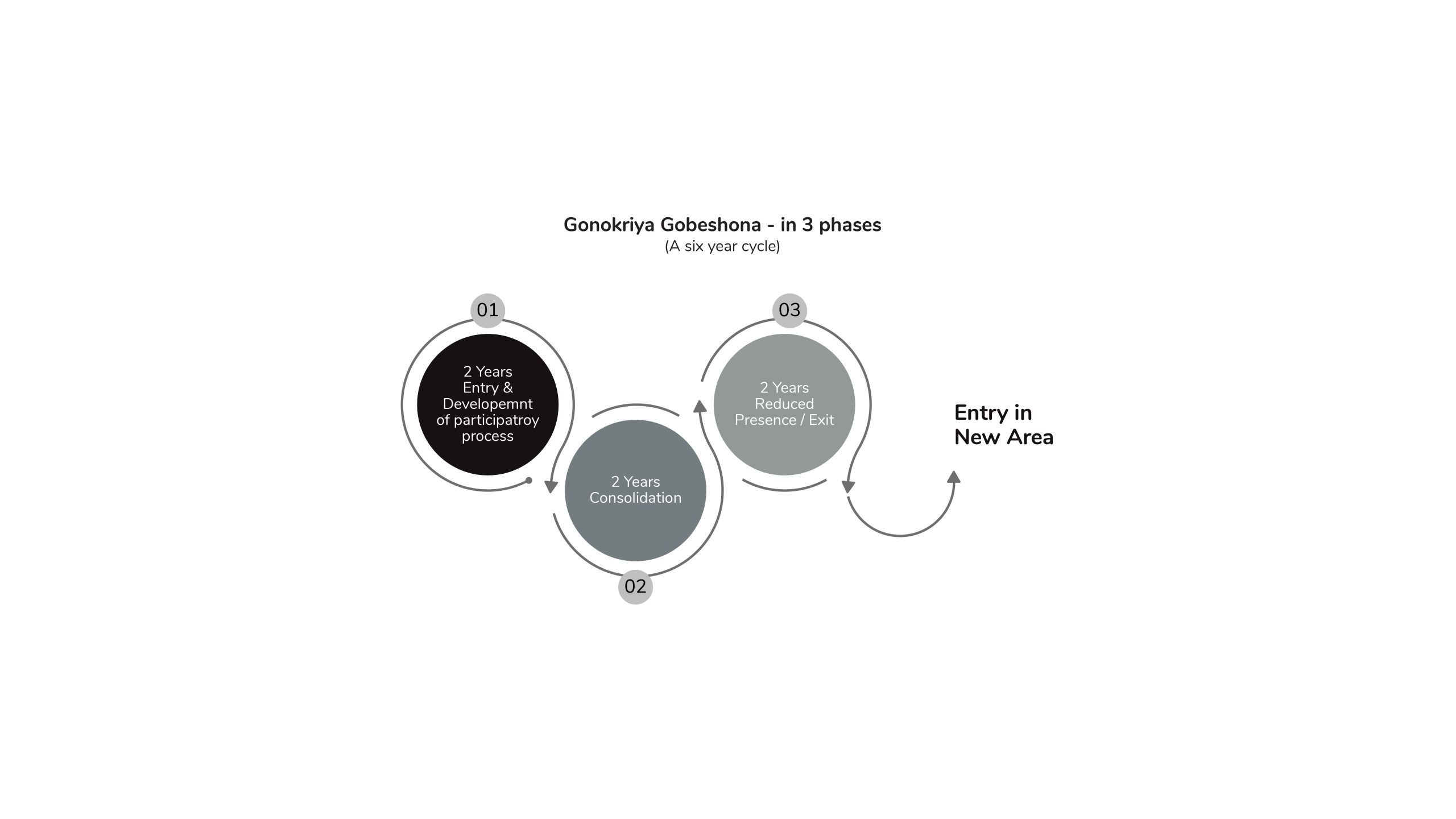
Brotee’s Gonokriya Gobeshona (GKG) model operates in over 200 villages. Youth groups, aged 13 to 25, facilitate their own communities toward what Brotee calls zero child marriage, zero dowry, zero addiction, full literacy. The process takes four years per village. The change is structural and self-sustaining.

My role was narrative: collecting stories, translating between Bangla and English, shaping individual lives into text that could carry the model’s logic beyond the villages where it was born. Tom’s photography gave the faces. The polaroid format — film, the white border, the handwritten Bangla — was a way of keeping something analogue and immediate inside a documentation process that could easily become bureaucratic.

Gonokriya Gobeshona — in 3 phases. A six-year cycle.
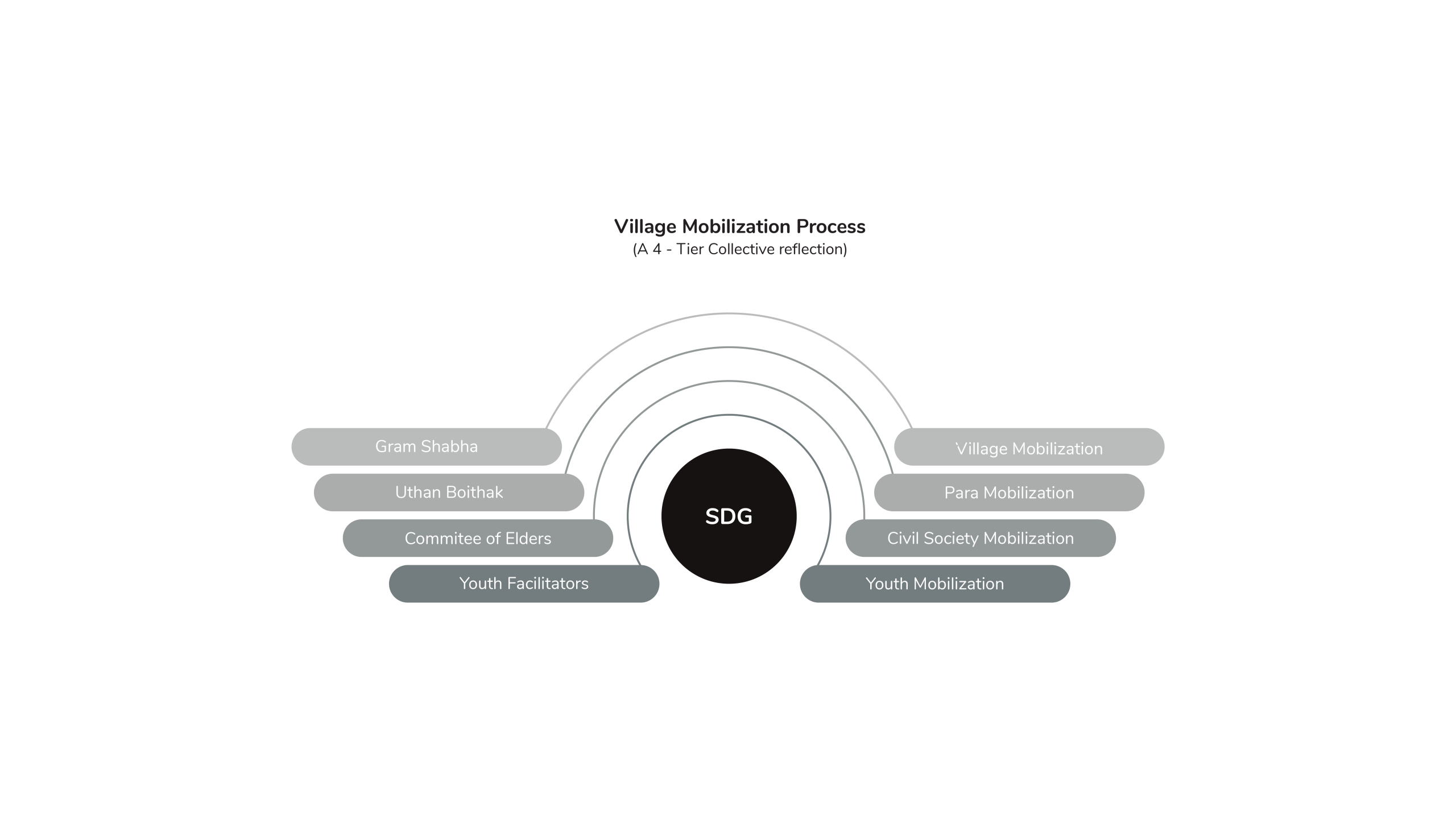
Village Mobilization Process. A 4-tier collective reflection.
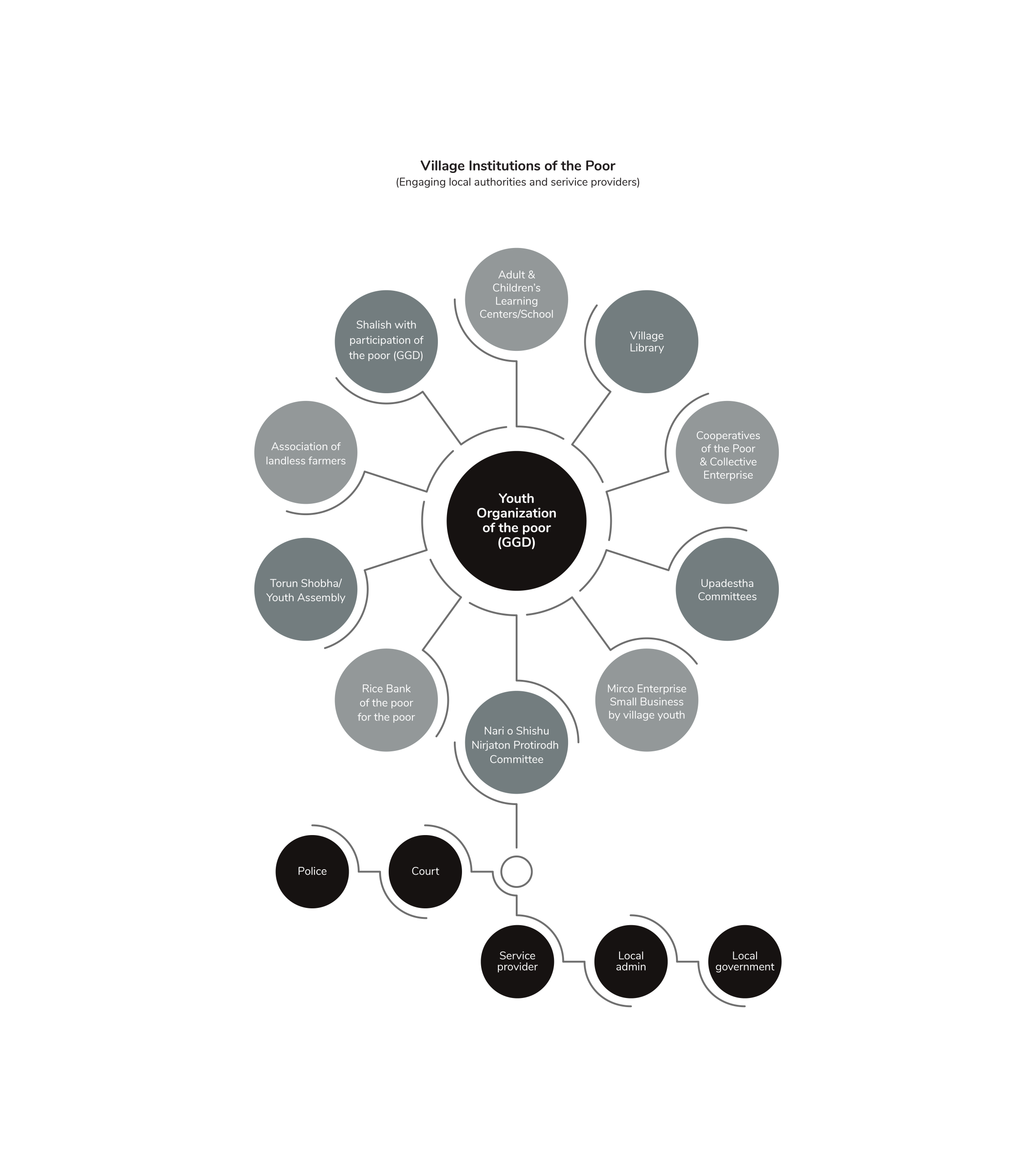
Village Institutions of the Poor. Engaging local authorities and service providers.
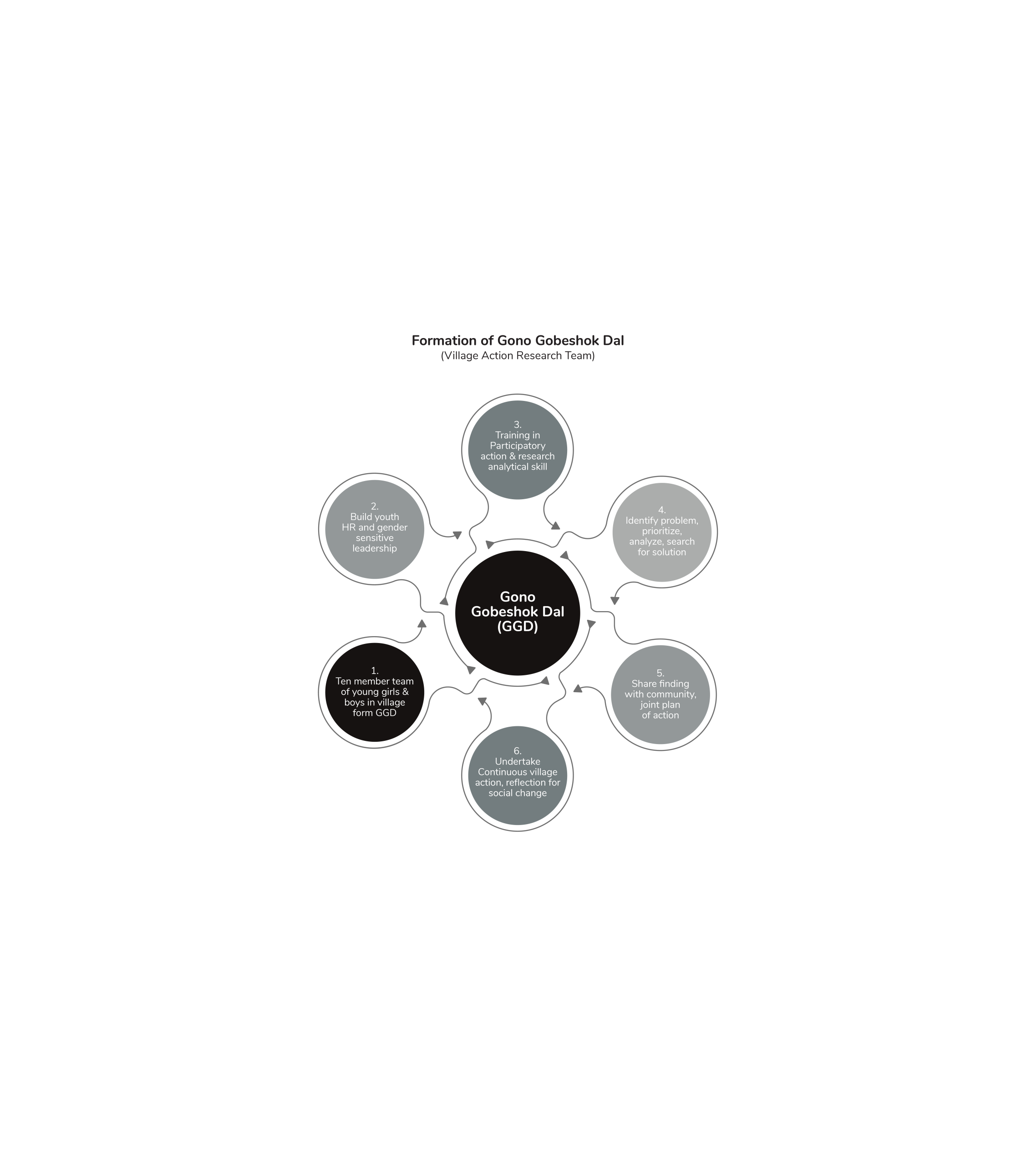
Formation of Gono Gobeshok Dal. Village Action Research Team.
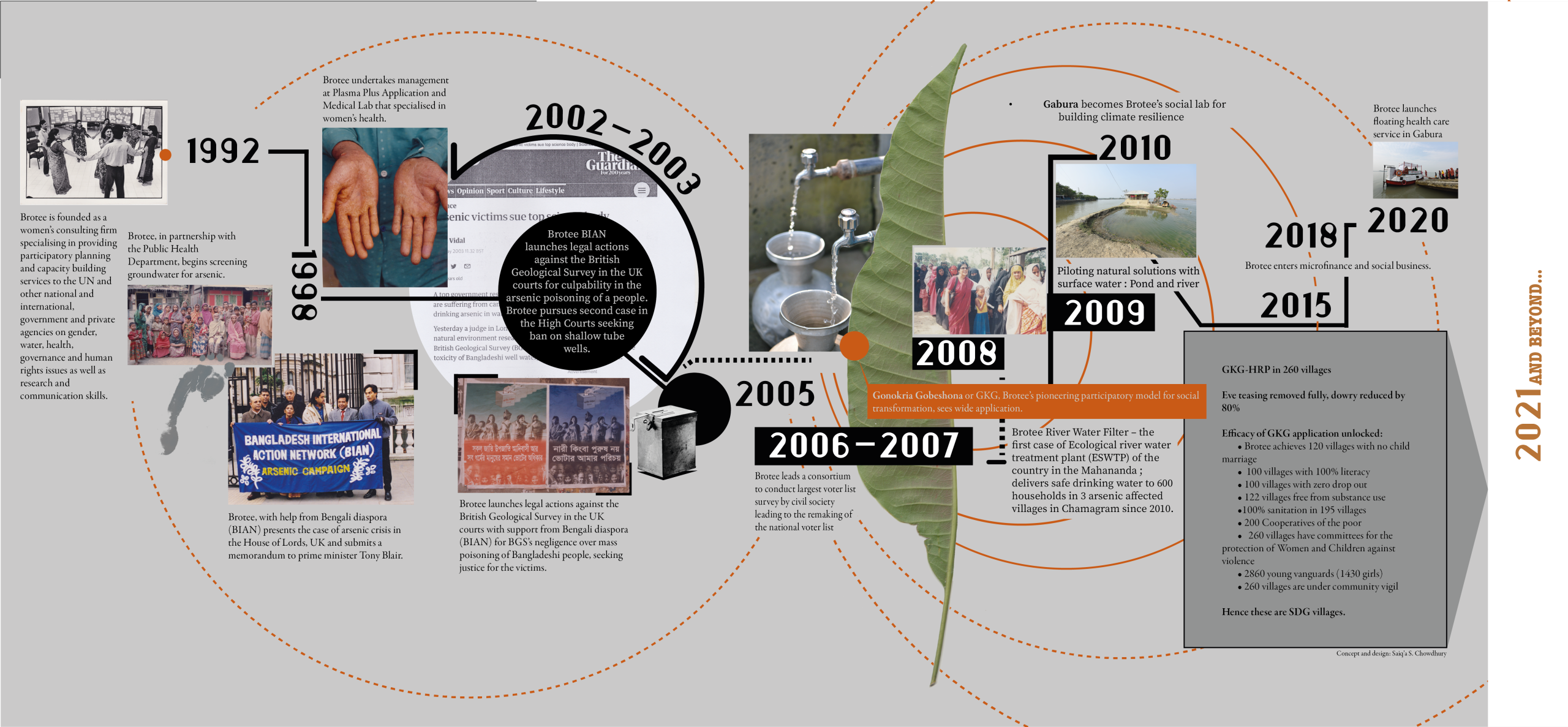
Brotee 20-year timeline, 1992–2021 and beyond.

Arifa

Brotee Polaroid — Arifa. Nonapukur, Rajshahi, 2019. Photo: Tom Bradley.
Mosammat Arifa grew up in Nonapukur, a poor village in Tanor, Rajshahi. She was thirteen and in grade 7 when she dropped out of school; her parents could not sustain it. Around the same time she began attending Brotee’s Gono Gobeshona youth meetings: too young to be a member, but watching everything. When the youth group identified alcohol production as the root of domestic violence in the village, Arifa led them to the spots where they were hidden. The producers retaliated. She was stalked, chased, and struck hard on the head on her way home from school, spending 21 days in hospital before being moved to a safe house in Rajshahi for her own protection. She wore a burkha to visit her own home to conceal her identity and stay out of harm’s way. . The producers were eventually arrested. Nonapukur has had no addiction-related violence since. At 23, Arifa holds a graduation degree, leads a women’s group in Ansar VDP, and supports her brothers through school.
“During the fight, my family and I were harassed and hurt. I was beaten with heavy wood and bamboo sticks. I was in hospital for 21 days, and after that I was put in a safe house for a month. If my GG team weren’t there, I wouldn’t be alive today. There is no addiction in my village now, but the problem persists in neighbouring villages. I want to stop addiction in these villages. So be it if I’m assaulted again, if I lose more blood — I still want to make these places free of addiction. I want to build a happy village.”

Photographs: Tom Bradley. Rajshahi, Bangladesh, 2019.
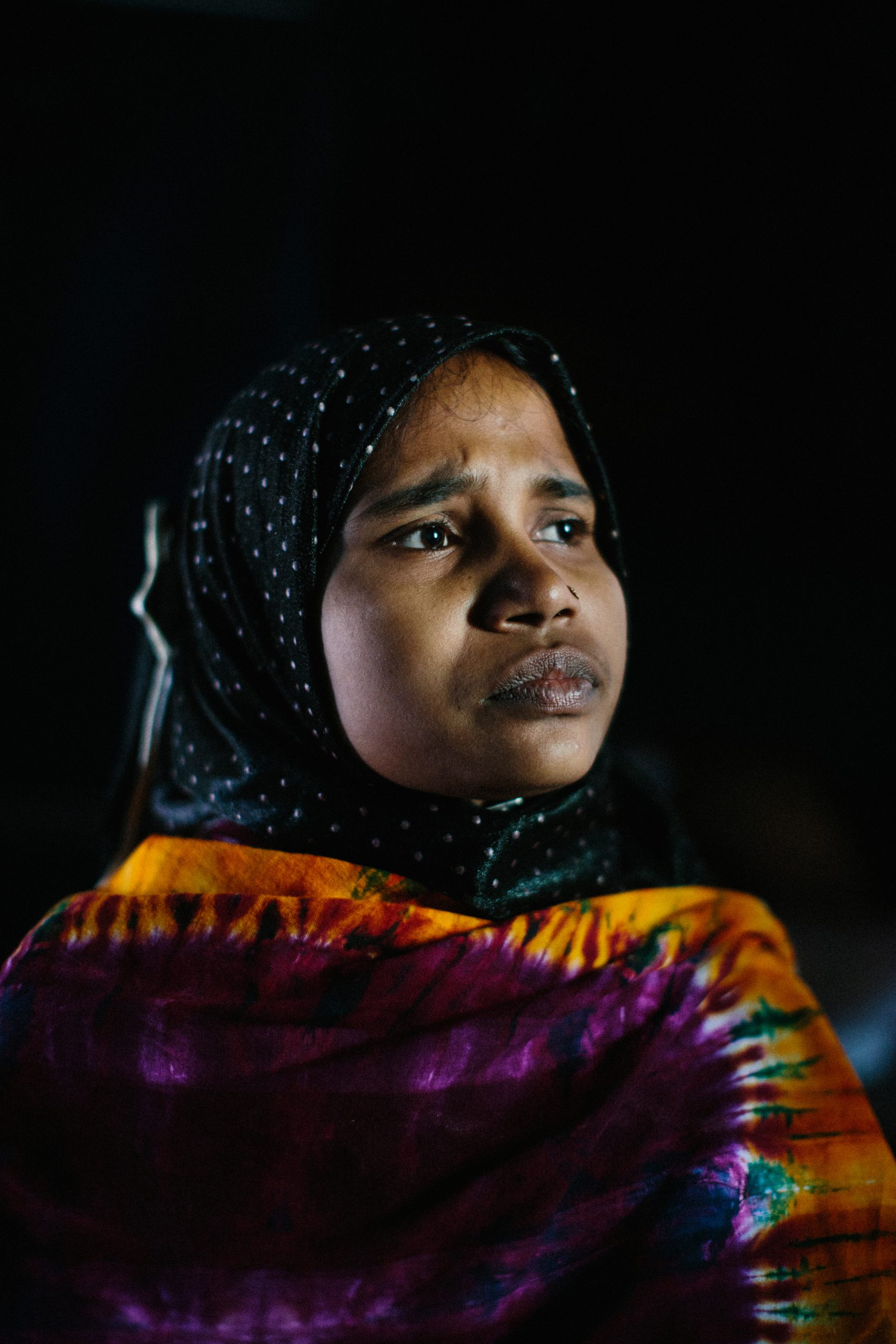
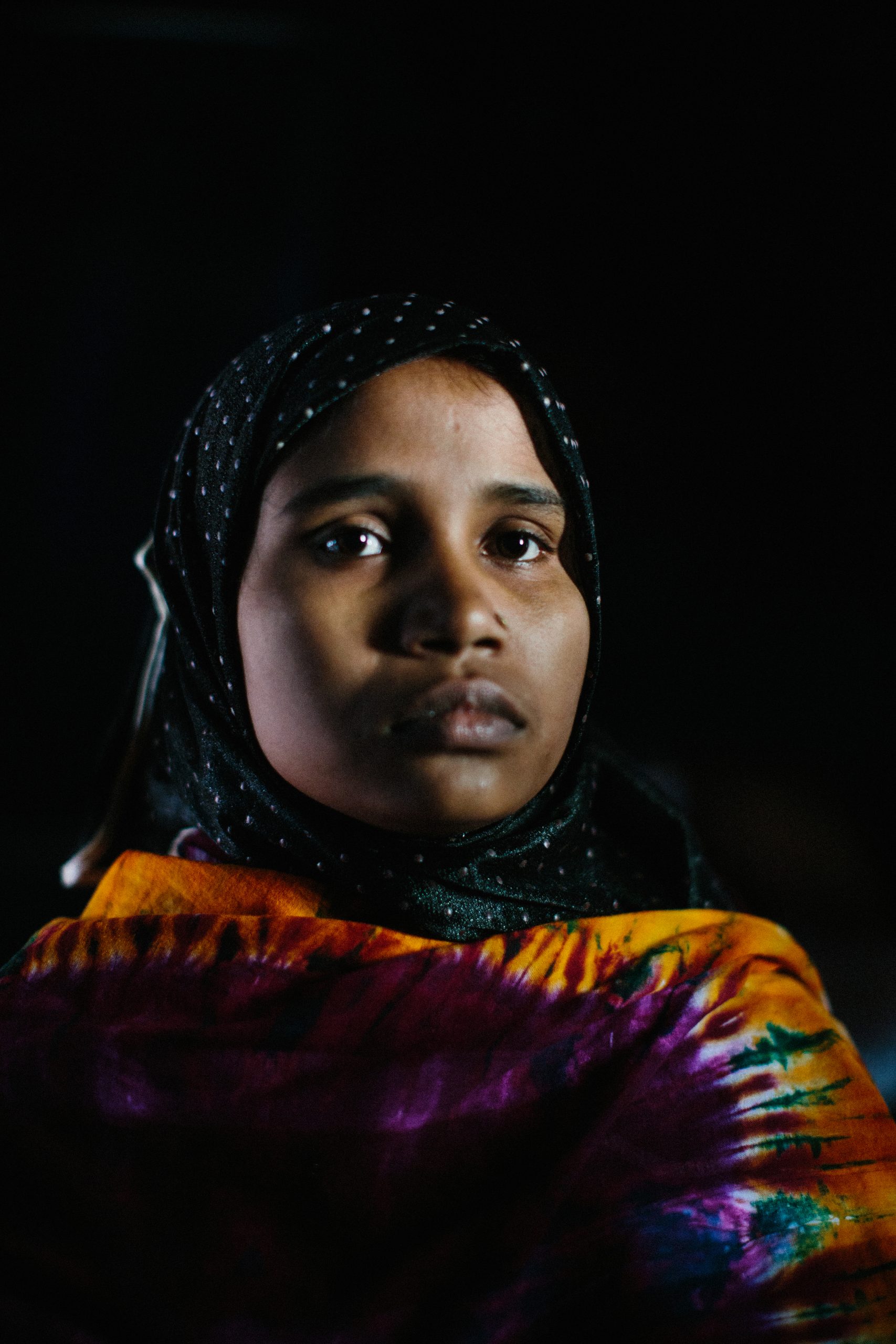
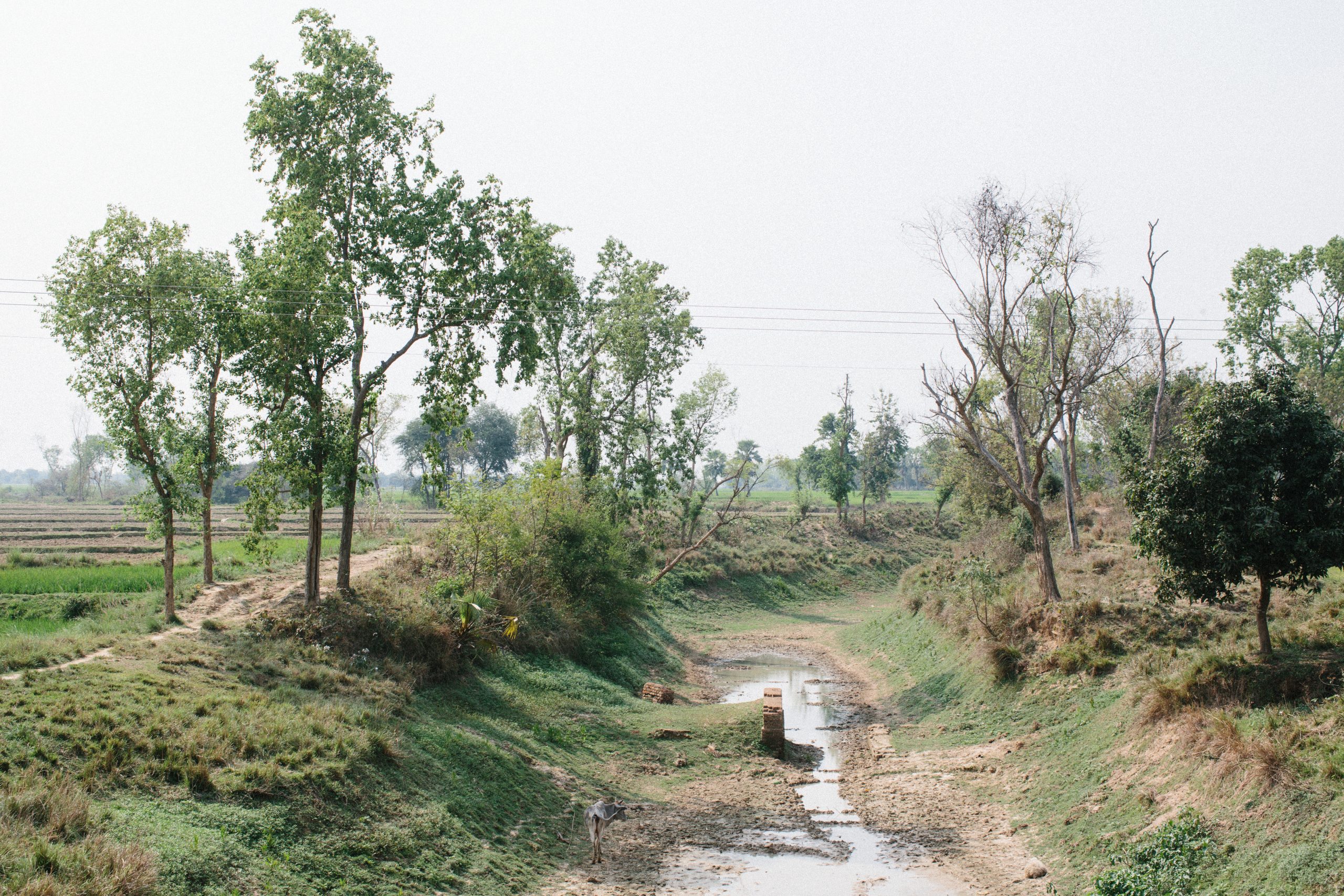
Arifa — Nonapukur, Rajshahi, 2019. Photo: Tom Bradley.Arifa — Nonapukur, Rajshahi, 2019. Photo: Tom Bradley.Arifa — Nonapukur, Rajshahi, 2019. Photo: Tom Bradley.Arifa — Nonapukur, Rajshahi, 2019. Photo: Tom Bradley.Arifa — Nonapukur, Rajshahi, 2019. Photo: Tom Bradley.Arifa — Nonapukur, Rajshahi, 2019. Photo: Tom Bradley.Arifa — Nonapukur, Rajshahi, 2019. Photo: Tom Bradley.Arifa — Nonapukur, Rajshahi, 2019. Photo: Tom Bradley.

Moslem

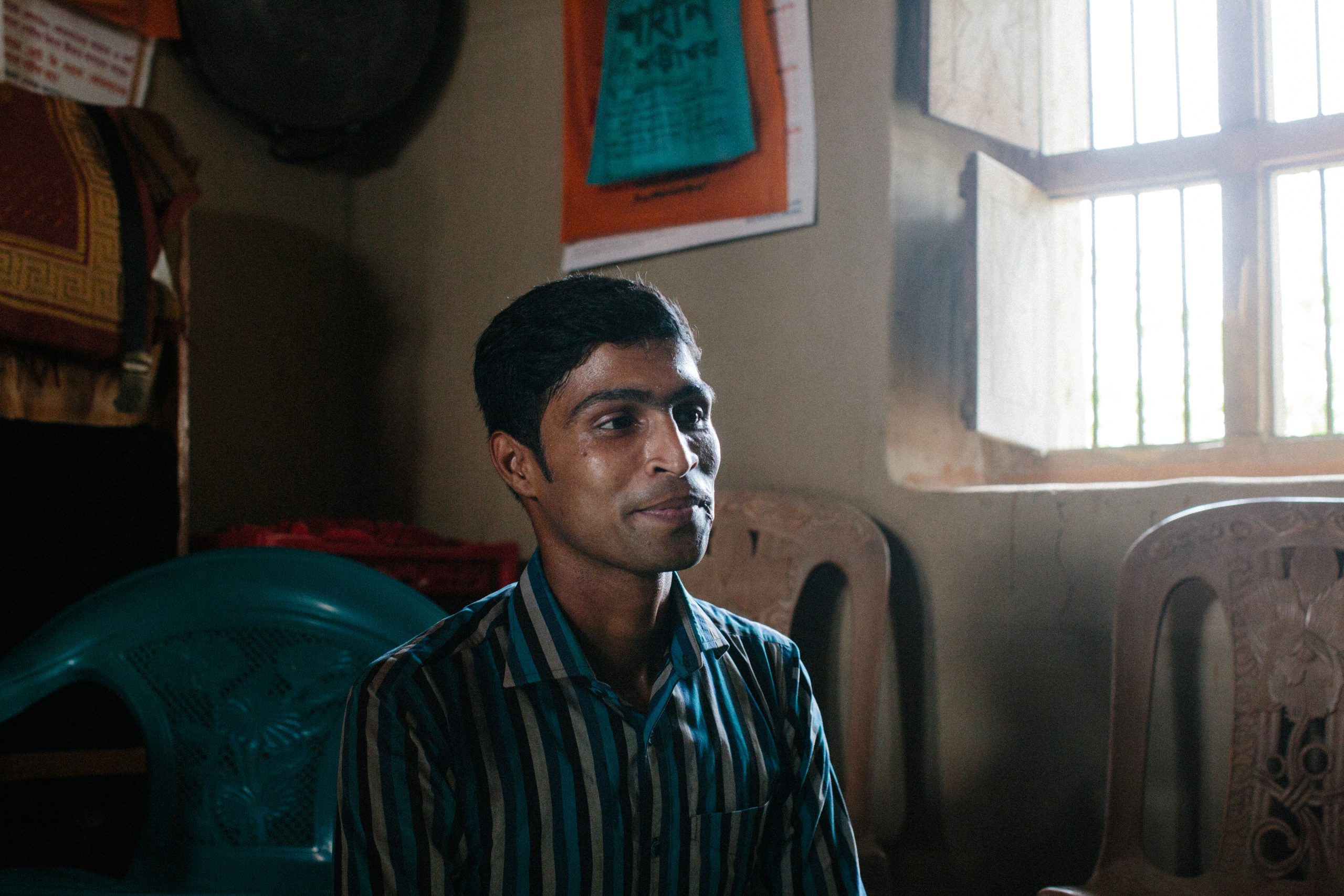
Brotee Polaroid — Moslem. Galla, Rajshahi, 2019. Photo: Tom Bradley.
Moslemuddin grew up in Galla, Badhair Union, Rajshahi — eighth of ten children in a low-income conservative farming family. By his own account, he was not a man who thought much about the plight of women. Under financial pressure, he dropped out of school. Fourteen years ago, he walked into a Brotee community youth meeting and kept coming back. Through the practice of Gono Kriya Gobeshona — critical thinking, collective problem analysis, he began seeking answers. He went back to school, and became an Imam. He spread GKG to over thirty villages, teaching three hundred young people the method. He abolished racism practices in the village tea stalls that had kept separate cups for Bengali and Adibashi people. He is an adopted son of an Adibashi woman. He preaches gender equality during Friday khutbah. He is a feminist Imam.
“Ever since I was born, I learnt that a woman’s heaven is beneath the feet of her husband. In one Brotee meeting, I learnt that this is male prejudice. I was asked to go and look through the holy Book and find out where it was written. I looked and looked and could not find it anywhere. Instead I found, ‘a man’s heaven is at the feet of his mother.’ I do not see divide between a man and a woman; I do not see divide between a Muslim and a non-Muslim, between a Bengali and an Adibashi. Today, we eat at each others’ homes during our festivals and theirs. There is better community harmony and bonding.”

Photographs: Tom Bradley. Rajshahi, Bangladesh, 2019.
Moslem — Galla, Rajshahi, 2019. Photo: Tom Bradley.Moslem — Galla, Rajshahi, 2019. Photo: Tom Bradley.Moslem — Galla, Rajshahi, 2019. Photo: Tom Bradley.Moslem — Galla, Rajshahi, 2019. Photo: Tom Bradley.Moslem — Galla, Rajshahi, 2019. Photo: Tom Bradley.Moslem — Galla, Rajshahi, 2019. Photo: Tom Bradley.

Farida and Selim

Brotee Polaroid — Farida. Rajshahi, 2019. Photo: Tom Bradley.

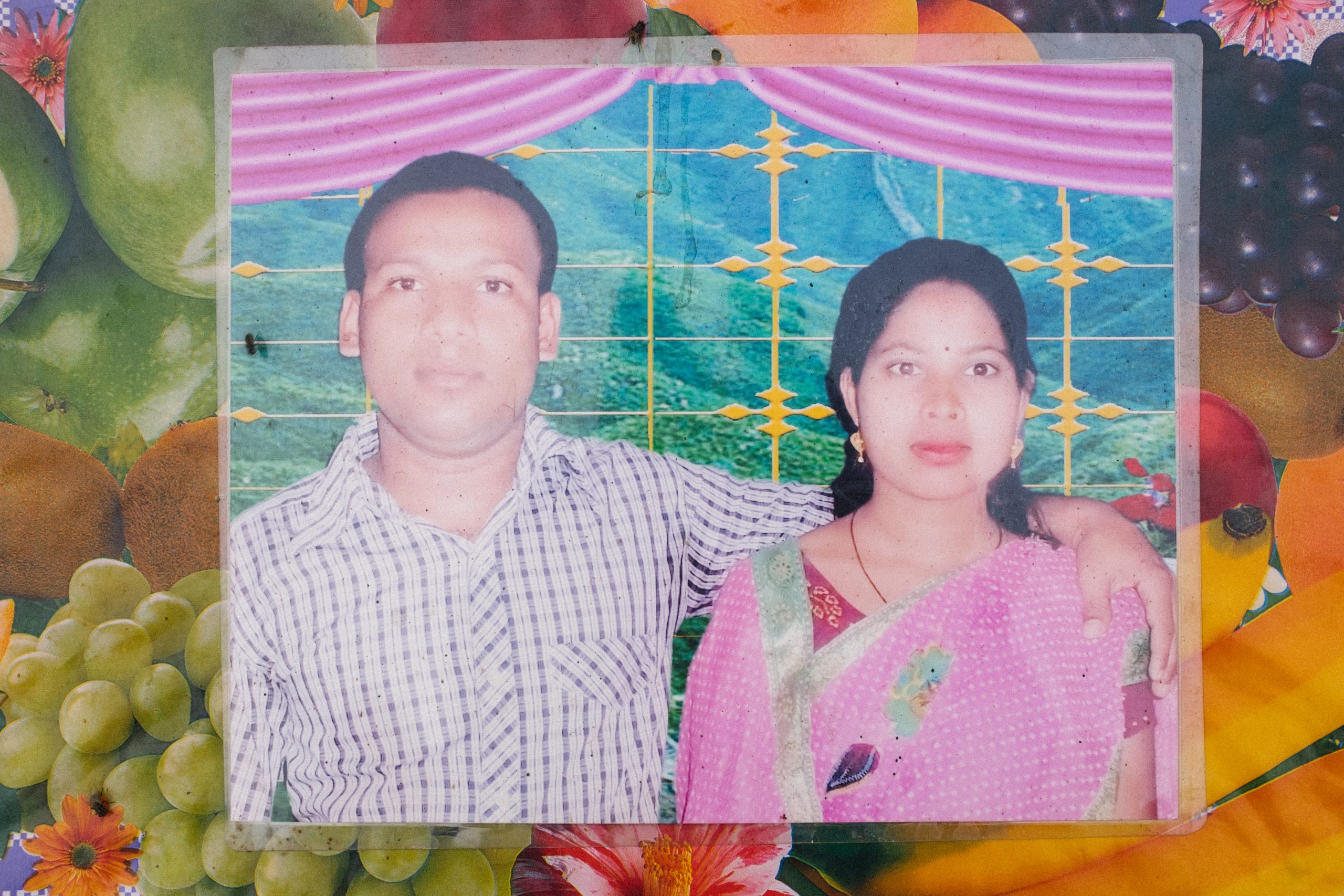
Selim married a child bride, Farida. In his own words

“I was married to a child. But through the training programs from Brotee, I learnt that this is not healthy for the woman, or her future child and the society at large. So I try my best to support my wife as she takes steps to live and learn and grow up”

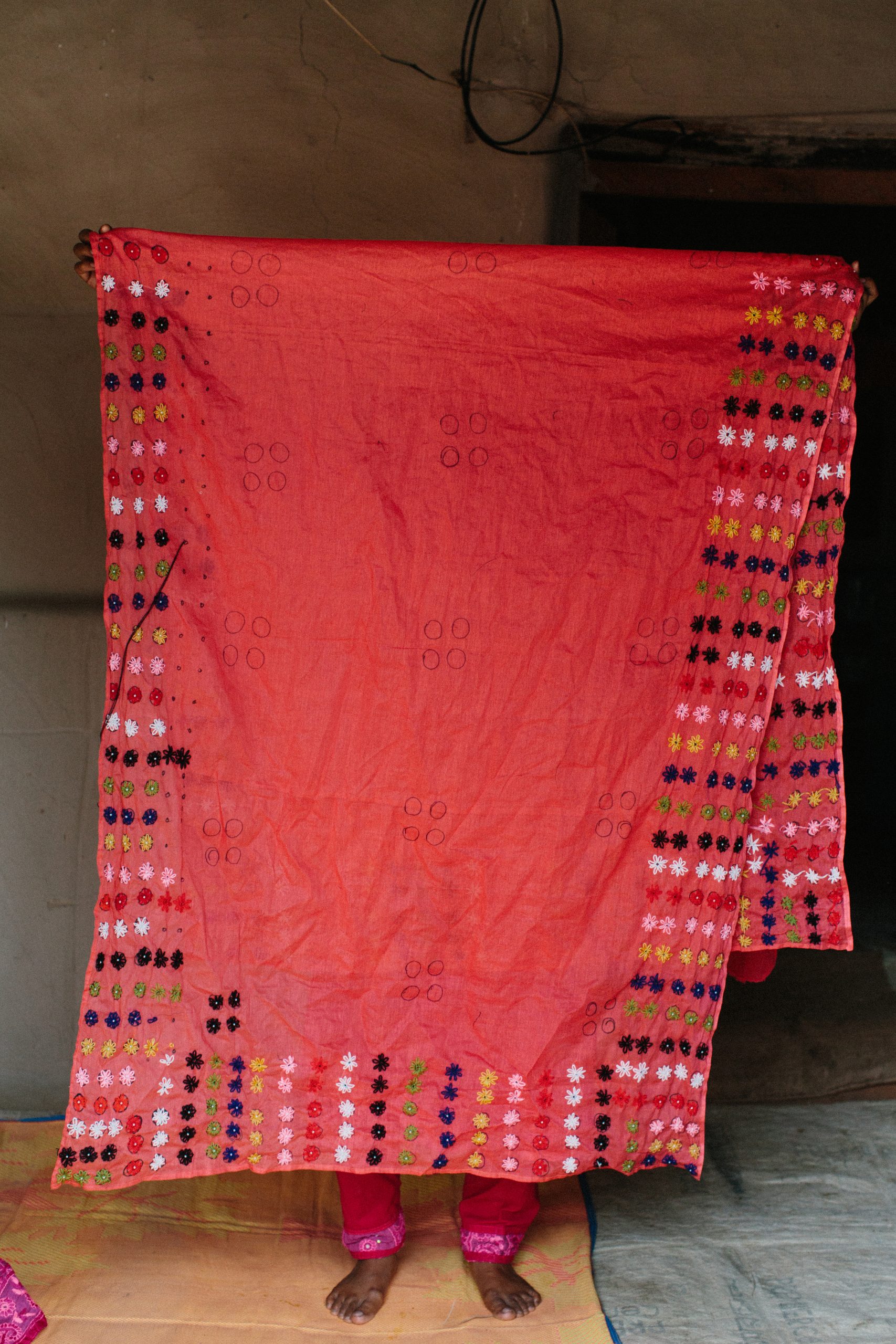
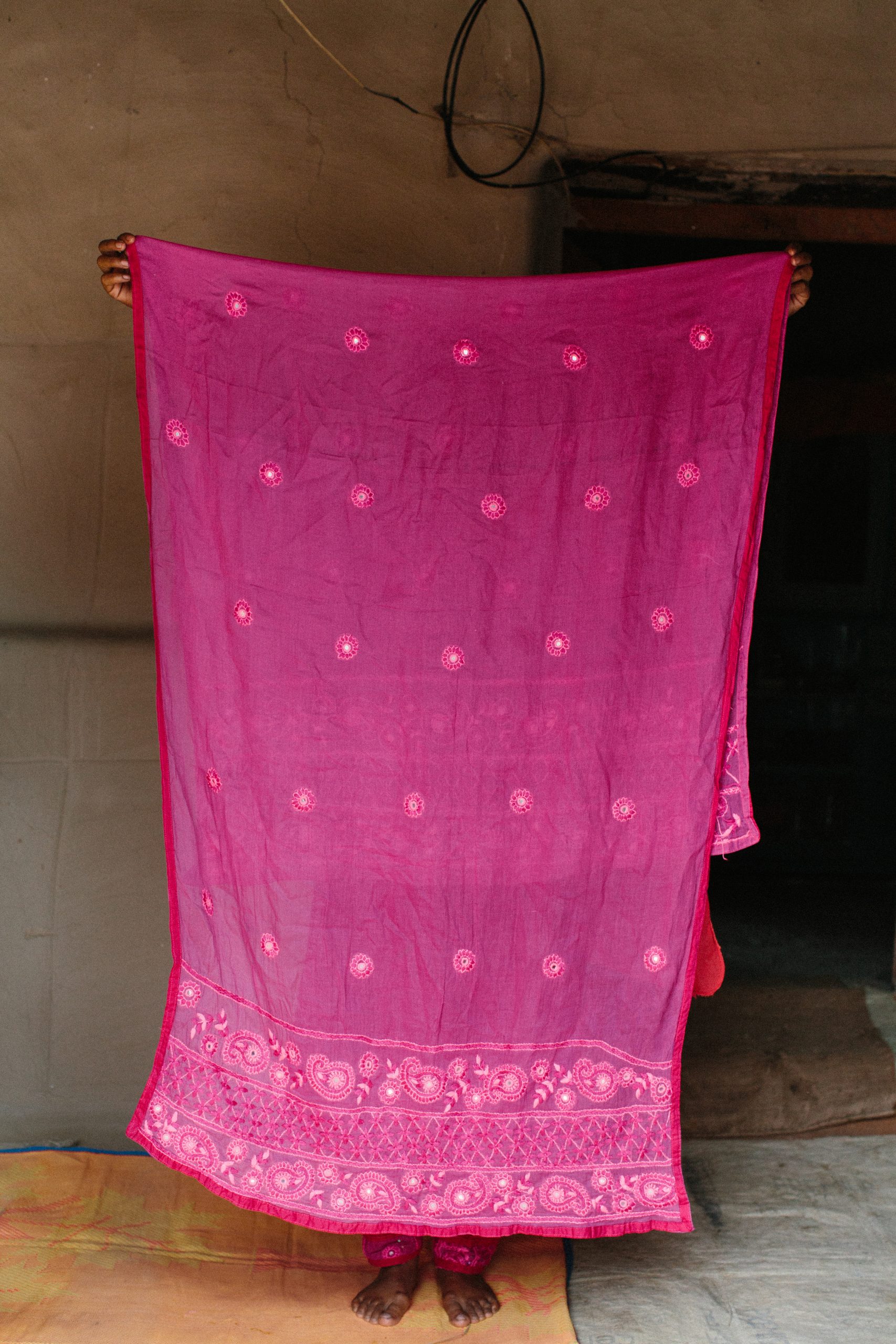
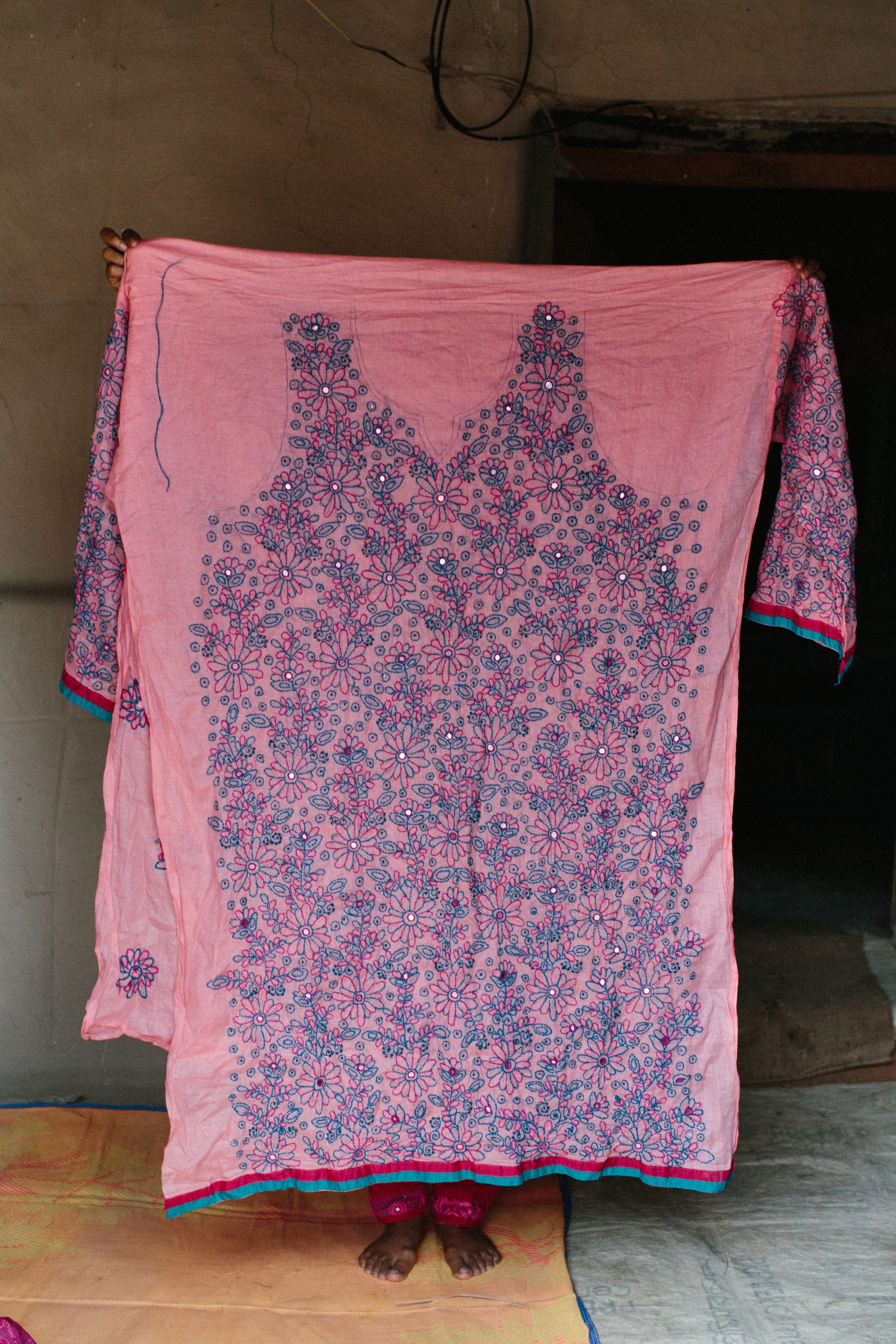
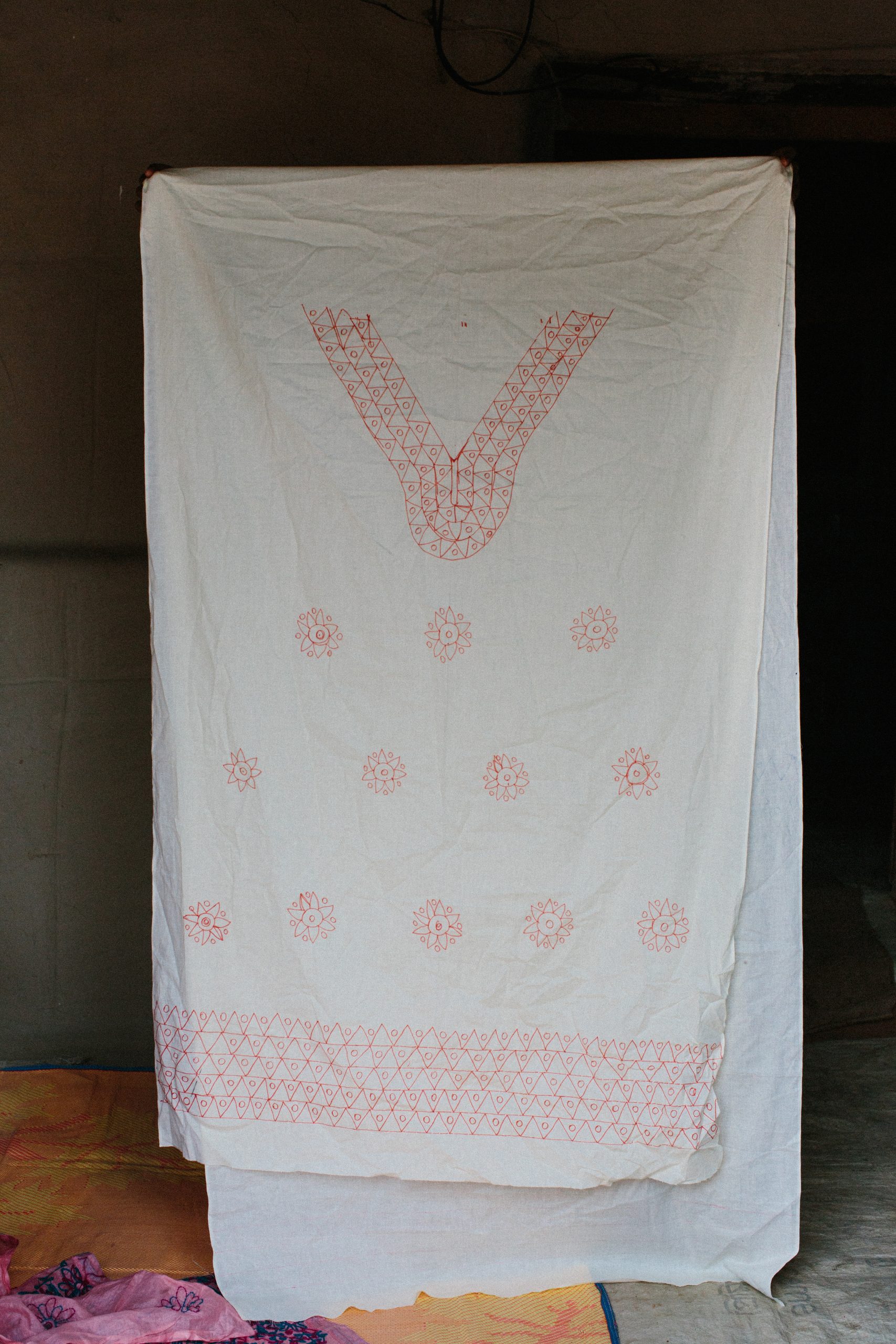
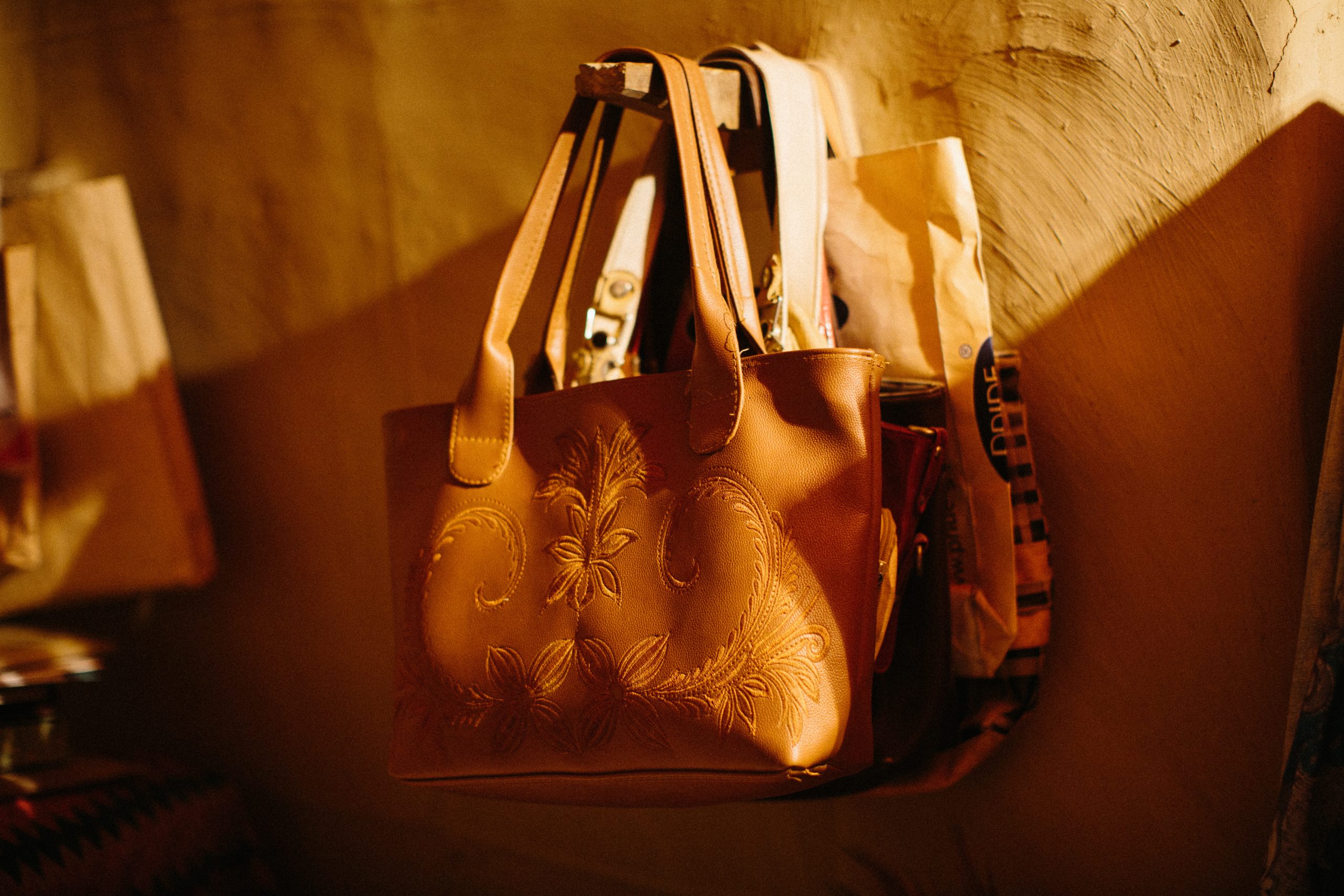
Farida confirms her story and experience of child marriage. But their story remains a happy one as Farida is supported by her husband and she pursues a passion for embroidery and designing women’s clothes. She part takes in village sessions where women come together and make garments for sale and economic freedom. In her own words, Farida explains “I used to feel very intimidated by everything. But my husband’s support and through Brotee’s training programs, I gradually began growing confidence. I now have my own little means of income.” Photographs: Tom Bradley. Rajshahi, Bangladesh, 2019.
Farida — Rajshahi, 2019. Photo: Tom Bradley.Farida — Rajshahi, 2019. Photo: Tom Bradley.Farida — Rajshahi, 2019. Photo: Tom Bradley.Farida — Rajshahi, 2019. Photo: Tom Bradley.Farida — Rajshahi, 2019. Photo: Tom Bradley.Farida — Rajshahi, 2019. Photo: Tom Bradley.Farida — Rajshahi, 2019. Photo: Tom Bradley.Farida — Rajshahi, 2019. Photo: Tom Bradley.

Shahanara

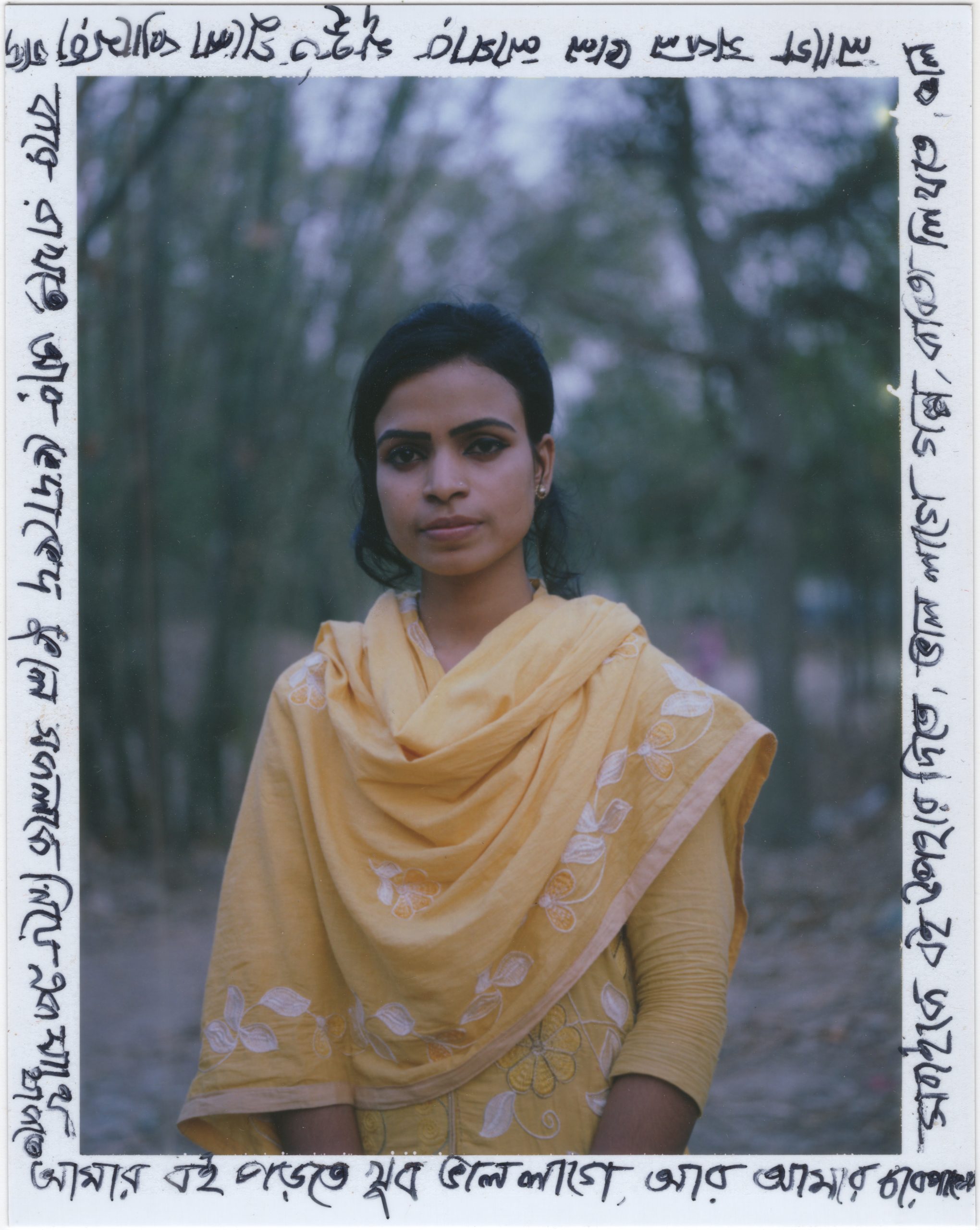
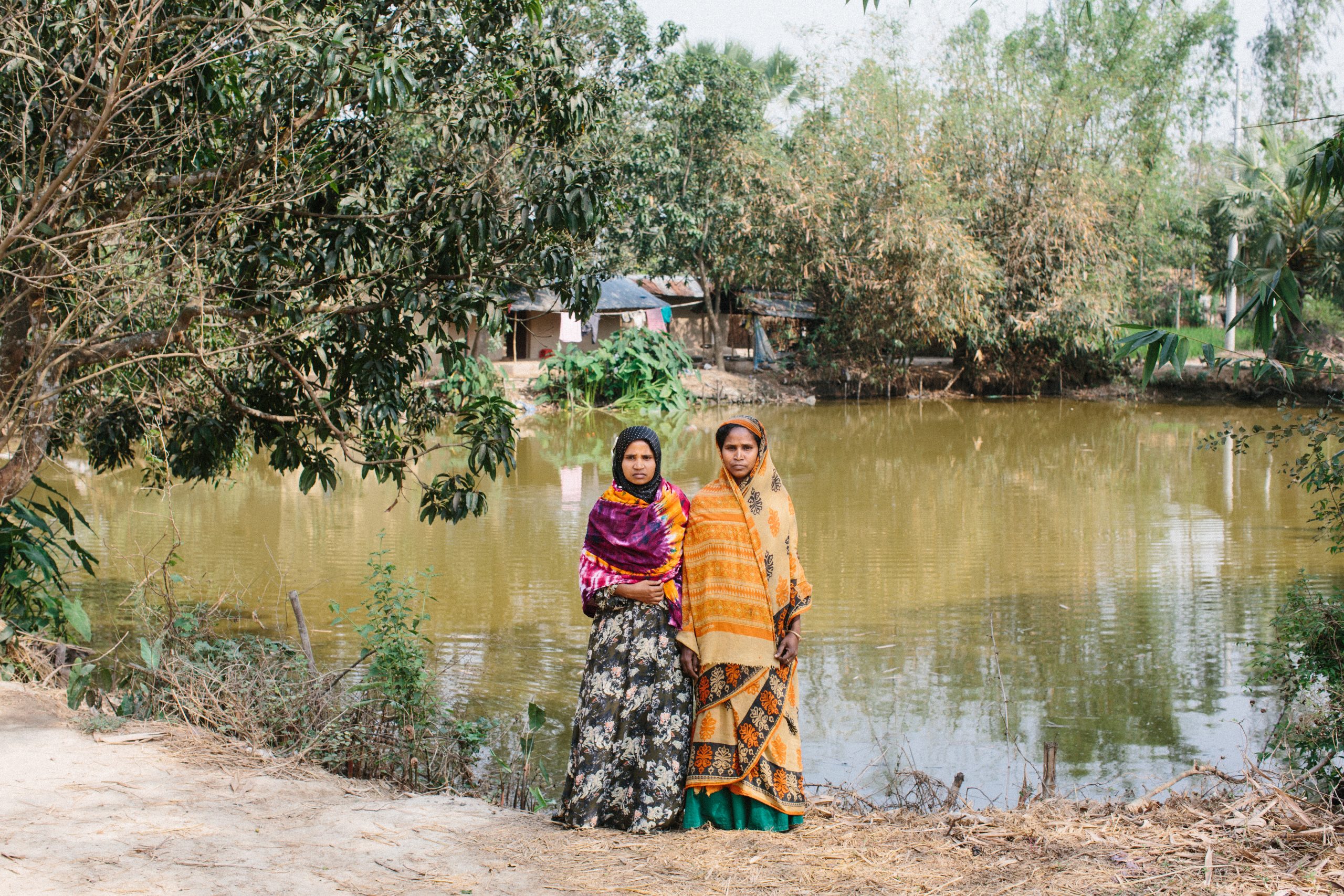
Brotee Polaroid — Shahanara. Rajshahi, 2019. Photo: Tom Bradley.

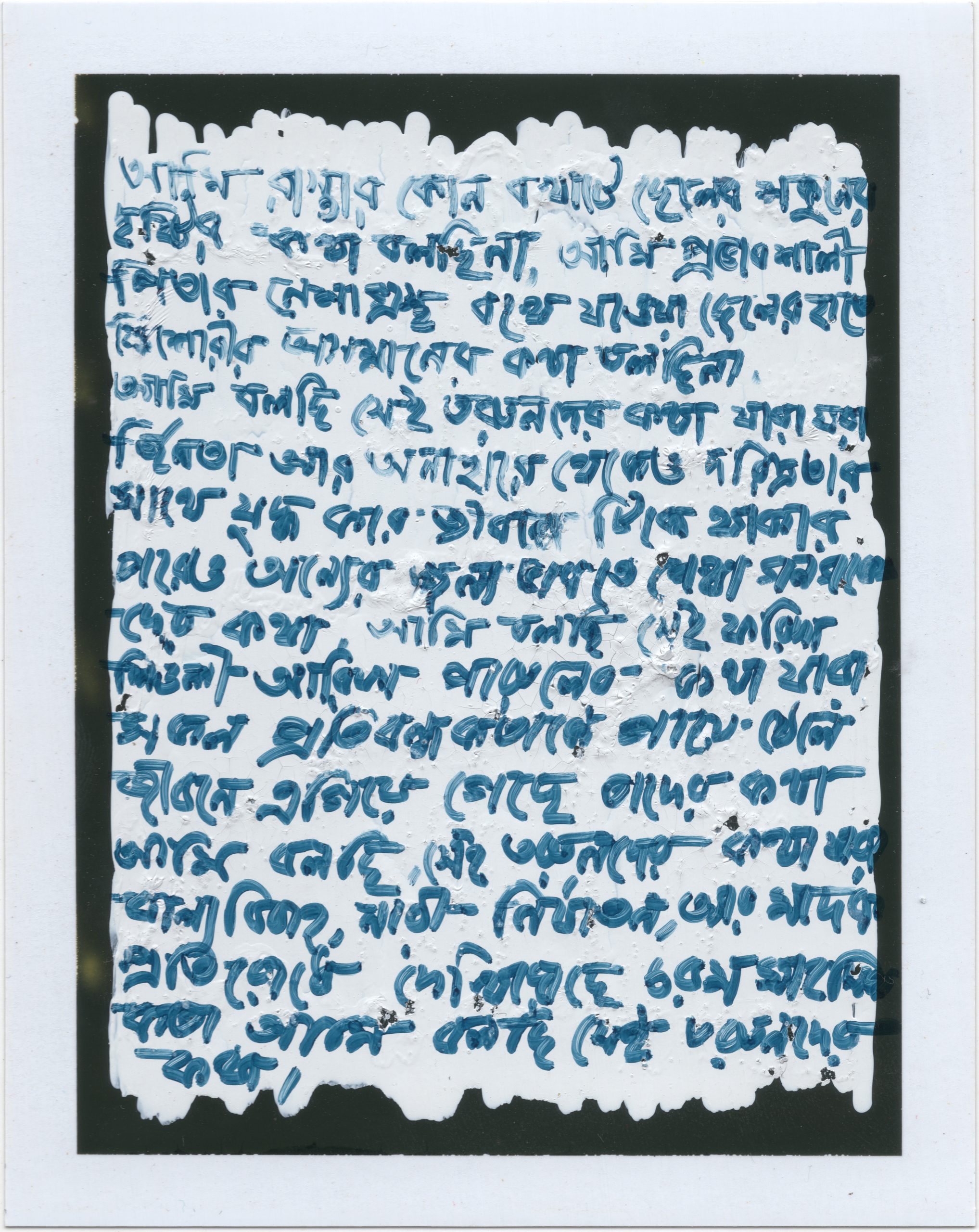
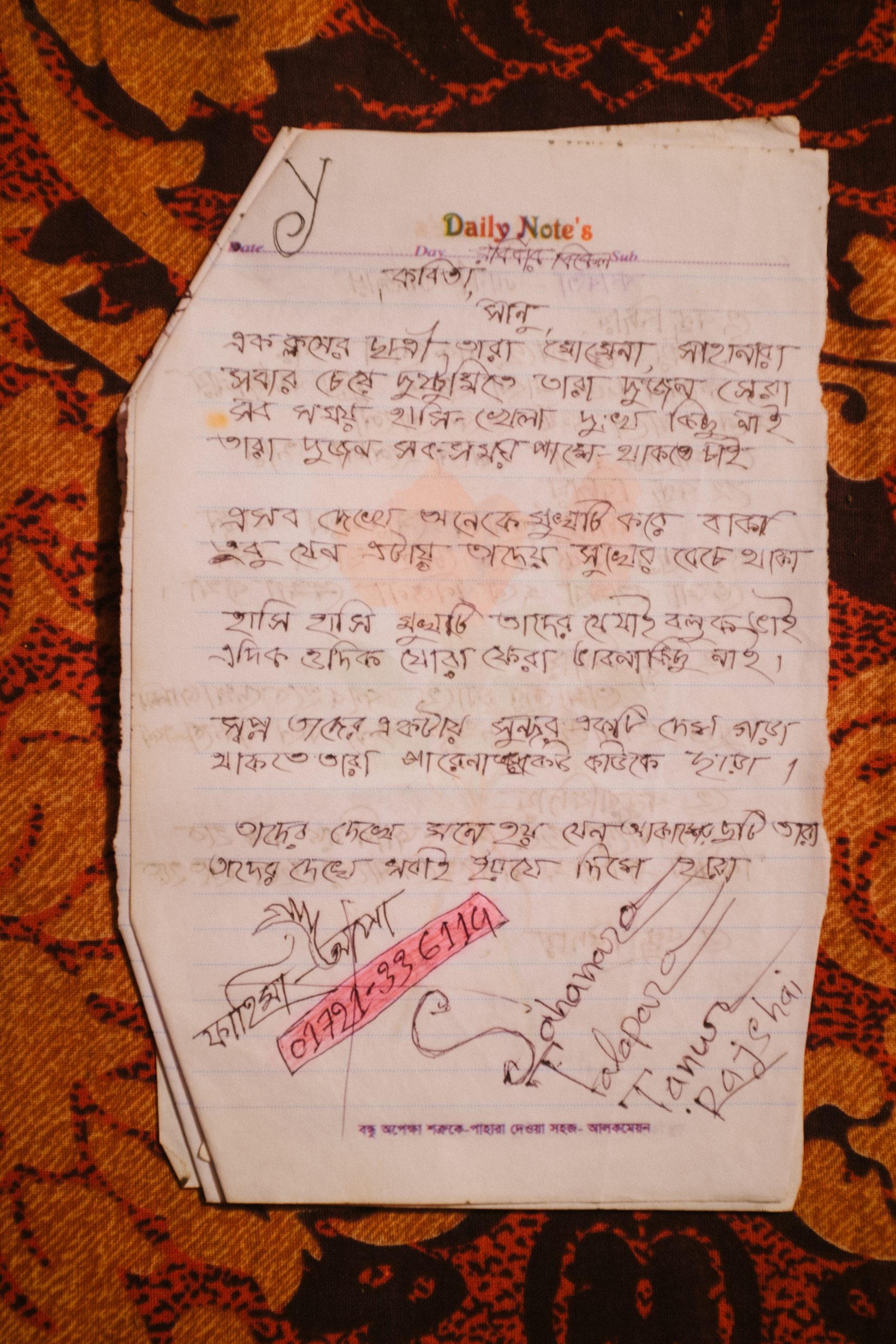
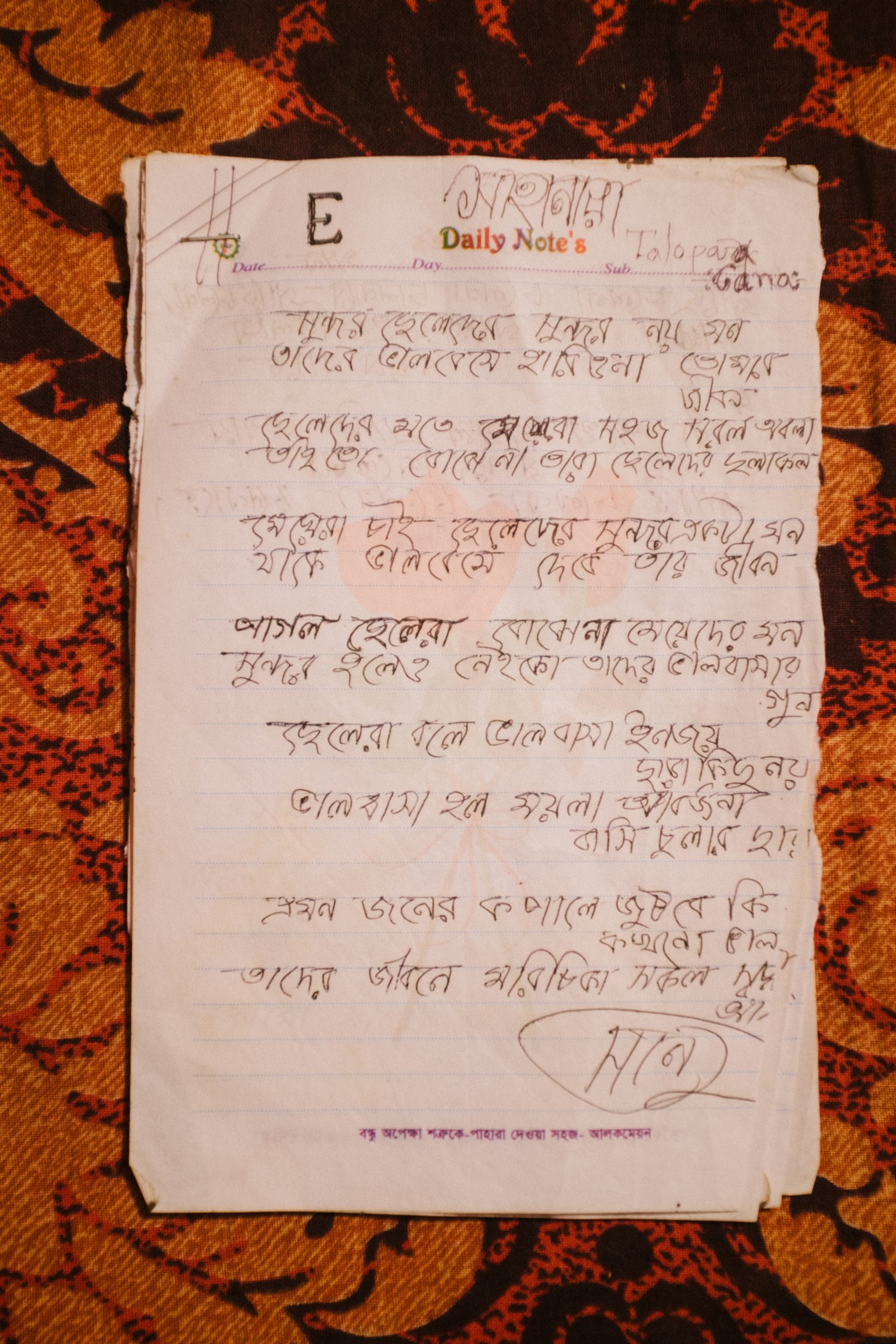
Shahanara, an exceptionally bright young woman enjoys writing and self expression through words and poetry. She speaks her mind about societal and women’s issues and shares her story about how her father has supported her education and how she has learnt to dream. She writes

“I used to think it was impossible to come out of poverty. But today, I recognize poverty to be a state of mind. I feel empowered to think that I will not be brought down by poverty. I love to read and enjoy giving books as gifts to others. I wish to forget all notions of divide and discrimination, and dwell in harmony with everyone.  I do not speak of the rowdyboy on the streets. I am not talking about the spoilt son of someone powerful. I am speaking of and for the youth, who despite poverty and road blocks, come out of their difficult circumstances. I speak of the young women and men who, despite all odds, embrace life and commit to the well-being of others in the society. I speak of young women who have overcome harrassment, assault and suppression and stood tall telling their stories and bringing about change in their communities.” Photographs: Tom Bradley. Rajshahi, Bangladesh, 2019.
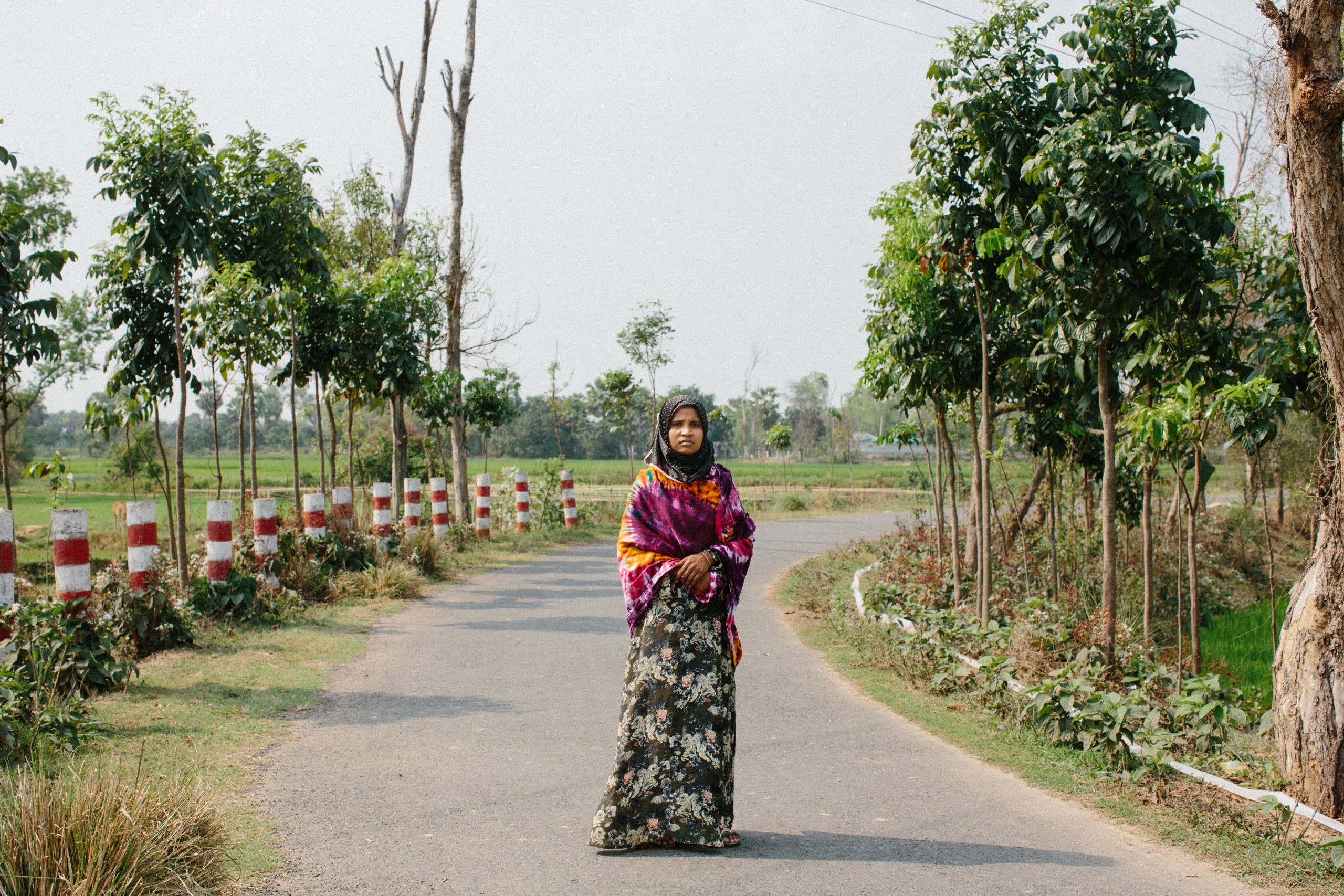
Shahanara — Rajshahi, 2019. Photo: Tom Bradley.Shahanara — Rajshahi, 2019. Photo: Tom Bradley.Shahanara — Rajshahi, 2019. Photo: Tom Bradley.Shahanara — Rajshahi, 2019. Photo: Tom Bradley.Shahanara — Rajshahi, 2019. Photo: Tom Bradley.

Nirmol

Brotee Polaroid — Nirmol. Rajshahi, 2019. Photo: Tom Bradley.

Nirmol spearheaded a village movement to fight Bengali attackers on their Adibashi land and community. He became a leader that brought peace and harmony in his village. He writes

“Through Brotee’s training programs, I learnt about my rights. This empowered me. In 2012, when my village was attacked, I mobilised my people to take a stance against the attackers and fight back. Today we have got back our home and we live in harmony. I feel blessed by the love I’ve recieved from my community. It encourages me to keep moving forward and provide leadership to my people when they need me the most. “ Photographs: Tom Bradley. Rajshahi, Bangladesh, 2019.
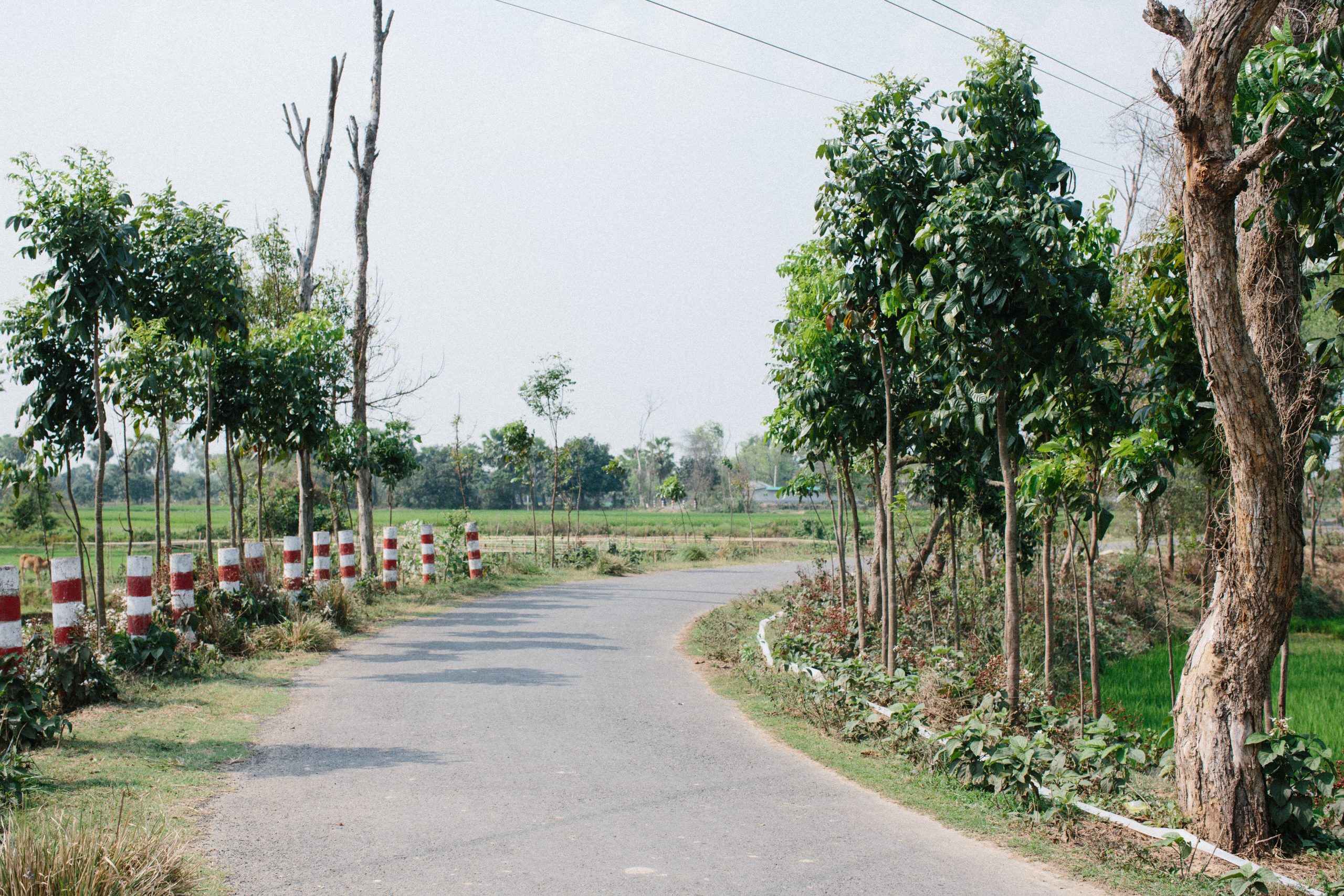
Nirmol — Rajshahi, 2019. Photo: Tom Bradley.Nirmol — Rajshahi, 2019. Photo: Tom Bradley.Nirmol — Rajshahi, 2019. Photo: Tom Bradley.Nirmol — Rajshahi, 2019. Photo: Tom Bradley.

Rabbani

Brotee Polaroid — Rabbani. Rajshahi, 2019. Photo: Tom Bradley.

Rabbani became a leader in generating employment under Brotee’s IT Matabbor scheme where training programs were built around computer literacy. In his own words

“I was once rather disregarded by my community. I lacked confidence. But through training programs, I learnt how I can serve my community better. I have a little sister and her education stopped due to poverty related issues. I intervened and eventually successfully created employment for about 800 people. I am grateful to those who accompanied me in the journey. Today, I am well respected in the community and I am proud to be serving it.” Photographs: Tom Bradley. Rajshahi, Bangladesh, 2019.
Rabbani — Rajshahi, 2019. Photo: Tom Bradley.Rabbani — Rajshahi, 2019. Photo: Tom Bradley.Rabbani — Rajshahi, 2019. Photo: Tom Bradley.Rabbani — Rajshahi, 2019. Photo: Tom Bradley.Rabbani — Rajshahi, 2019. Photo: Tom Bradley.

Sufia

Brotee Polaroid — Sufia. Rajshahi, 2019. Photo: Tom Bradley.

Sufia, an elder in the village, spreads an important message condemning violence against women amongst the young in her community. A young man writes on Sufia’s polaroid expressing how he is learning about important social issues from her. “I learnt from Bubu that it is wrong to harrass or exploit a woman. Child marriage is harmful and it can lead to health complications, including death, for the mother and even the child.” Photographs: Tom Bradley. Rajshahi, Bangladesh, 2019.
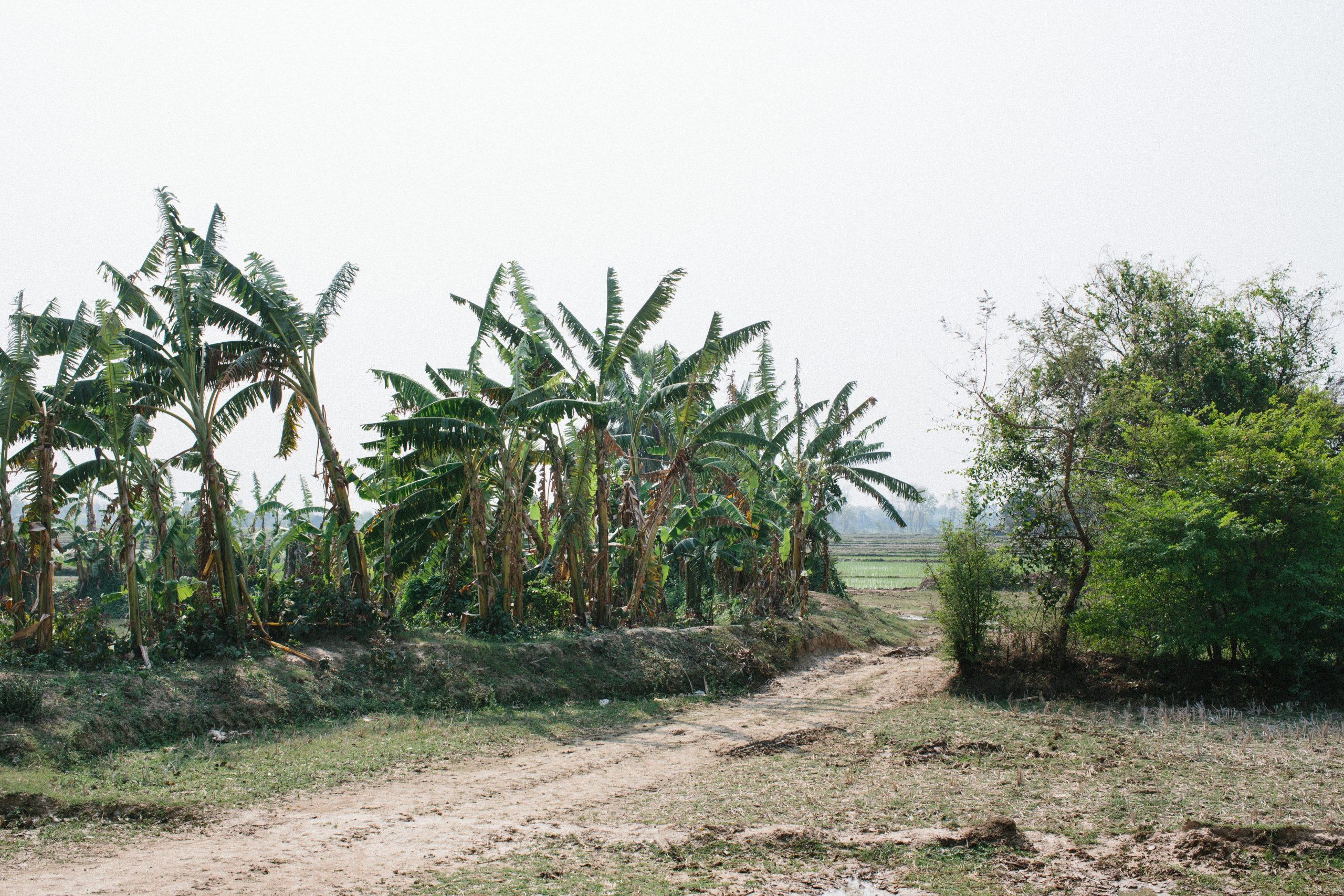
Sufia — Rajshahi, 2019. Photo: Tom Bradley.Sufia — Rajshahi, 2019. Photo: Tom Bradley.Sufia — Rajshahi, 2019. Photo: Tom Bradley.Sufia — Rajshahi, 2019. Photo: Tom Bradley.Sufia — Rajshahi, 2019. Photo: Tom Bradley.Sufia — Rajshahi, 2019. Photo: Tom Bradley.
Collaborators & context

Photography: Tom Bradley

Brotee Samaj Kallyan Sangstha